

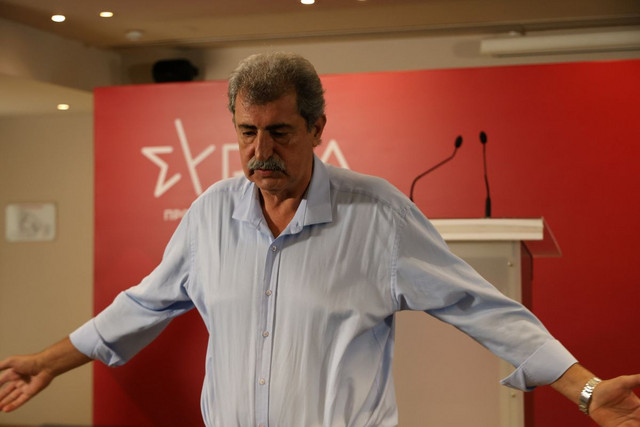
Greek Member of Parliament Pavlos Polakis has declared that his ambition to lead the opposition SYRIZA party is not over, leaving open the possibility of a renewed bid for the party leadership.
Speaking in an interview with local newspaper Chaniotika Nea, the lawmaker for Chania stated that the party is currently under collective leadership. He noted that the parliamentary group is led by Rena Dourou, who serves as parliamentary head rather than party president, and said the leadership question would be resolved ahead of or following the next general election.
SYRIZA, officially known as the Coalition of the Radical Left, served as Greece's governing party from 2015 to 2019 and forms the primary left-wing opposition in parliament. Polakis, a former deputy health minister known for his outspoken political style, represents the Cretan constituency of Chania.
Outlining his terms for SYRIZA joining any future progressive governing coalition, Polakis insisted that any agreement must include returning state control to major national infrastructure. He called for public ownership of the Public Power Corporation, increased state control over refiner Hellenic Petroleum, and returning the National Bank of Greece to the public sector.
Polakis also proposed restoring 13th and 14th month salaries for workers alongside a 13th pension payout for retirees. He argued that these economic measures could be funded through targeted taxes on corporate dividends and excess profits.
Addressing critics who claim his political position hinders alliances on the left, Polakis rejected accusations of populism, characterizing his proposals as a necessary and immediately actionable popular program. He stressed that SYRIZA would only back a broader progressive coalition if these specific policy demands were met.
The 13th and 14th monthly payments were traditional holiday bonuses granted to workers and retirees in Greece before being cut during austerity programs following the 2010 debt crisis. Public Power Corporation, Hellenic Petroleum, and the National Bank represent key economic assets that underwent partial privatization under international bailout agreements.
Party leadership disputes
During the interview, Polakis launched sharp criticisms at former SYRIZA leaders Alexis Tsipras and Stefanos Kasselakis. Commenting on his relationship with Tsipras, Polakis stated that he had not changed his principles but that Tsipras had departed from them.
Polakis asserted that between 2019 and 2023, Tsipras failed to mount effective opposition against the governing administration, claiming that only he and a few colleagues carried out genuine parliamentary opposition during that period. He also referenced a recently published book by the former prime minister, noting he had consciously chosen not to respond yet but might do so in the future.
Regarding Kasselakis, Polakis acknowledged supporting him during the internal party election that followed Tsipras's resignation. However, he subsequently mounted a fierce attack against Kasselakis, referring to him as a fraud.
Tsipras led SYRIZA for fifteen years and served as prime minister during the European debt crisis before resigning as party leader in 2023. Kasselakis, a former businessman, won the subsequent leadership contest before facing internal resistance from party factions.
Local governance and regional development
Polakis also indicated a potential return to local politics, stating that seeking election as mayor of Chania or governor of the region of Crete was a prospect that interested him. He expressed a strong fondness for local administration, adding that any final decision would depend on future political developments within SYRIZA.
Turning to municipal affairs, Polakis criticized the current economic development model in Chania, warning that city infrastructure had reached its limits. He argued against further large-scale hotel developments in the area, calling for limits on tourism expansion to protect local services.
Chania is the second largest city on Crete, Greece's largest island. The region is a major tourism hub, where rapid commercial development in recent years has strained municipal water, road, and waste management systems during peak holiday seasons.


