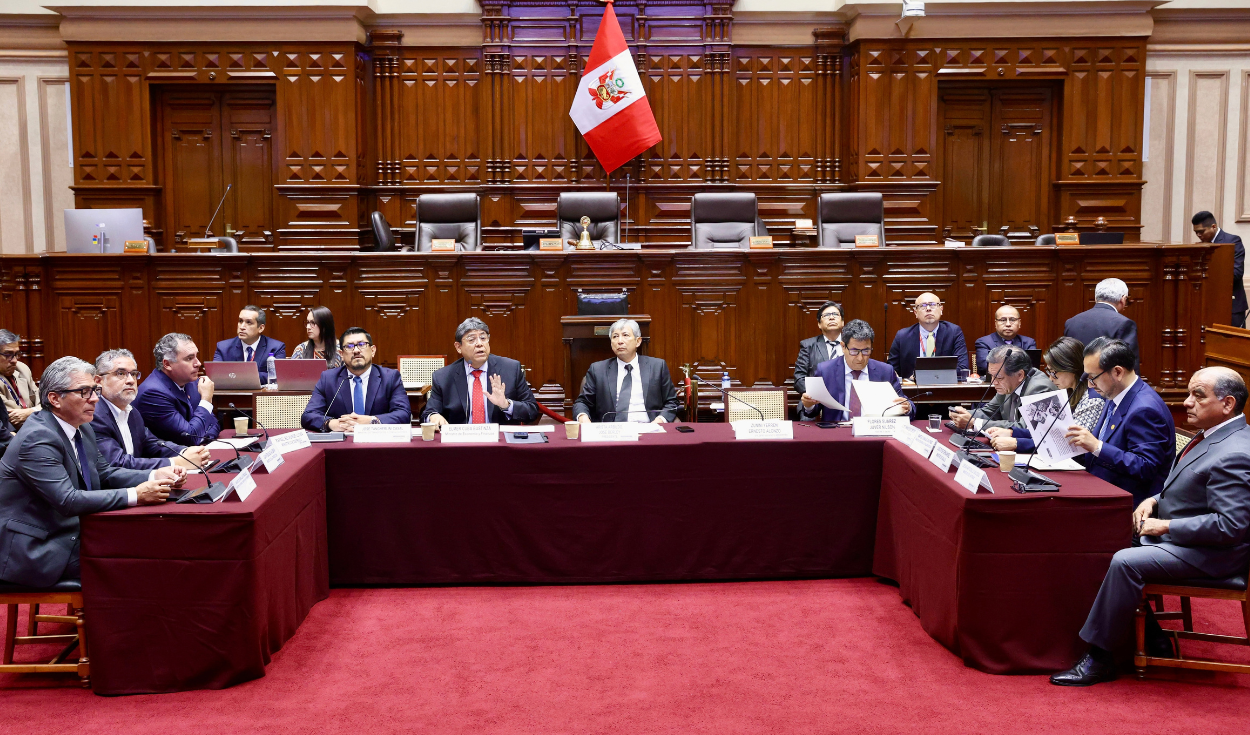
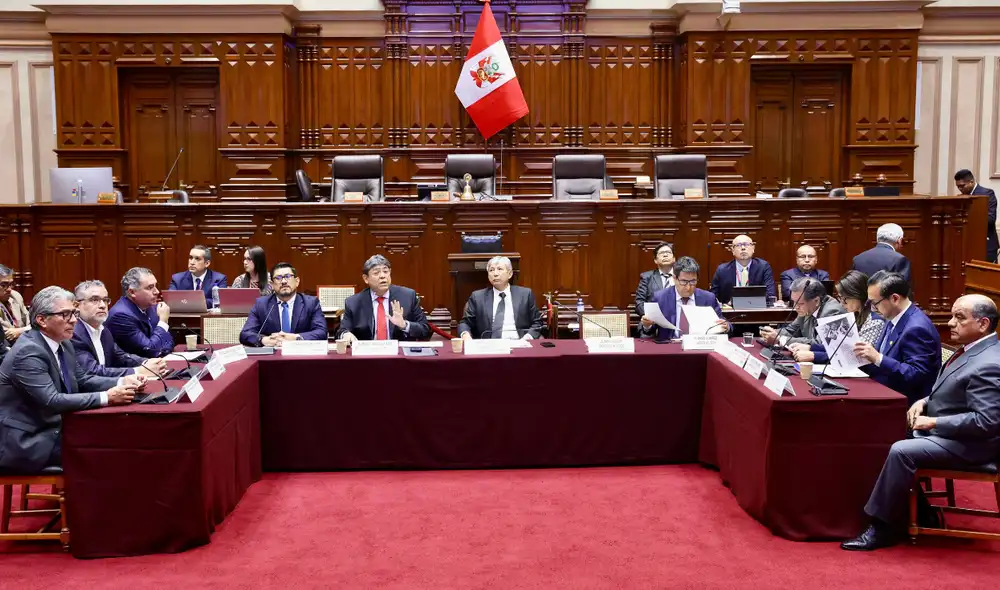
Peruvian lawmakers questioned the government's request for an S/8.228 billion supplementary credit during a hearing before the Bicameral Budget Commission of the Congress of Peru on Tuesday. The executive branch submitted Legislative Proposal 00005-2026-2031-CR to secure additional funding to cover remaining commitments and operational needs for the 2026 fiscal year. Economy Minister Elmer Cuba explained that the supplementary budget would be financed through ordinary state revenues boosted by higher tax collection and rising raw material prices, as well as credit operations involving sovereign bond issues.
According to official data presented to congress, 54 percent of the requested S/8.228 billion total is allocated to current expenditure, while 46 percent is designated for capital expenditure. The request covers multiple government sectors, including Defense, Interior, Transportation and Communications, Education, Health, Economy and Finance, Production, and Housing.
Defense spending and F-16 fighter jet commitments
A major focal point of congressional debate was an S/1.832 billion allocation for the defense sector. Official documentation indicates these funds are intended for obligations under the Military and Police Retirement Fund, fuel for the Navy, mechanical engineering equipment for the Army, and payments for F-16 Block 70 Phase II fighter jets.
Senator José Moisés Chipana challenged the decision to prioritize military hardware over urgent social needs. He stated that the government was asking to indebt the children of Peru so warplanes could take off while schools continued to have leaking roofs, hospitals lacked medicines, and rural towns remained without river defenses. Chipana also questioned relying on debt financing and demanded that the Ministry of Economy and Finance specify the exact amount allocated for El Niño climate phenomenon prevention and response before lawmakers authorize the bill.
Deputy César Hugo Tito Rojas also criticized the military spending, questioning why a supplementary credit was needed in October to pay for F-16 fighter jets rather than prioritizing public service gaps. In response, Senator Juan Carlos del Águila defended the expenditure, stating that the acquisition of the F-16 jets had been incorporated as a public investment project in 2022 and that the current administration was simply fulfilling commitments previously undertaken by the state.
Addressing concerns about borrowing, Cuba stated that money is fungible and cannot be tracked directly to specific items. He explained that it is impossible to assign one portion of debt specifically to the Pensión 65 social assistance program and another portion of general revenue to a specific capital asset.
Concerns over current expenditure allocation
The composition of the supplementary credit also drew criticism from Tito Rojas, who expressed concern that 54 percent of the total amount was dedicated to current spending. He warned that more than half of the requested budget could be absorbed by consultancies, administrative payrolls, and financial costs, questioning whether such a structure justified approving a new credit line.
Cuba rejected the claim that current expenditure represents only administrative costs or payroll. He stated that current expenditure includes essential maintenance for schools and roads, military and police pensions, funding for Pensión 65, and health crisis response programs. He emphasized that current expenditure is also maintenance, describing the bill as a necessary supplement to cover unbudgeted state obligations and emerging needs.
The Ministry of Economy and Finance, which manages Peru's fiscal policy, outlined the broader context of national spending. Cuba noted that the existing 2026 national budget already allocates approximately S/49 billion to education, S/32 billion to health, and S/27 billion to transportation and communications, with the supplementary credit serving to address newly identified operational requirements.
Southern regions and agricultural funding requests
Lawmakers representing southern Peru questioned the regional distribution of proposed investments. Tito Rojas pointed out that Puno was omitted from the list of major water and sanitation projects, despite being under an active state of emergency due to severe water deficits. He asked why a region declared in emergency over water shortages was excluded from top sanitation investments if the credit was justified by El Niño and climate emergencies.
Senator Wilfredo Verano Sarabia expanded the criticism to the broader southern region, warning of impending drought conditions. He stated that he heard no funding allocations designated for Cusco, Puno, Madre de Dios, or Tacna. Additionally, Deputy Gloria Irache Pizarro argued that the agricultural sector received an insufficient share of the budget, demanding targeted funding for dams, regulatory basins, and irrigation systems.
Representatives from the Ministry of Economy and Finance responded that southern Peru had not been neglected. Officials stated that the government's El Niño response plan already incorporates 100 water reservoirs across the southern region, alongside veterinary vaccines and medicines for livestock. Cuba acknowledged existing cash constraints, noting that the executive branch must prioritize investments that prevent contractual defaults.
Satellite connectivity data error and parliamentary support
Specific scrutiny was directed at a satellite connectivity budget item requested by the Presidency of the Council of Ministers. Senator Carlos Caballero León questioned an item linked to an advertising strategy and argued that spending 52 million dollars on satellite connectivity for only 339 public facilities lacked any sense of proportion, asking officials to review what he believed was an error in the documentation.
During the session, Cuba acknowledged that an error had occurred in the presentation slides used before the commission. The minister clarified that the 52 million dollar investment was actually designed to provide satellite connectivity to 39,000 schools across Peru, rather than 339 facilities.
Despite the criticisms, several parliamentarians spoke in favor of approving the supplementary credit. Senator Jorge Portocarrero Velázquez argued that the state must honor its commitments, highlighting allocations for pensions, healthcare, education, and infrastructure maintenance. He asked how lawmakers could deny a supplementary credit that acts as a vital lifeline for public services.
Senator Víctor Flores Ruiz similarly rejected arguments labeling the bill a Trojan horse or a blank check, supporting funding allocated for national security, education, and health services. Other lawmakers requested expanding the bill to include additional funds for regional infrastructure, hospital operations, social programs, pensions, and preparations for the Pan American Games. The legislative proposal now requires further parliamentary review and approval before the government can disburse the requested funds.