

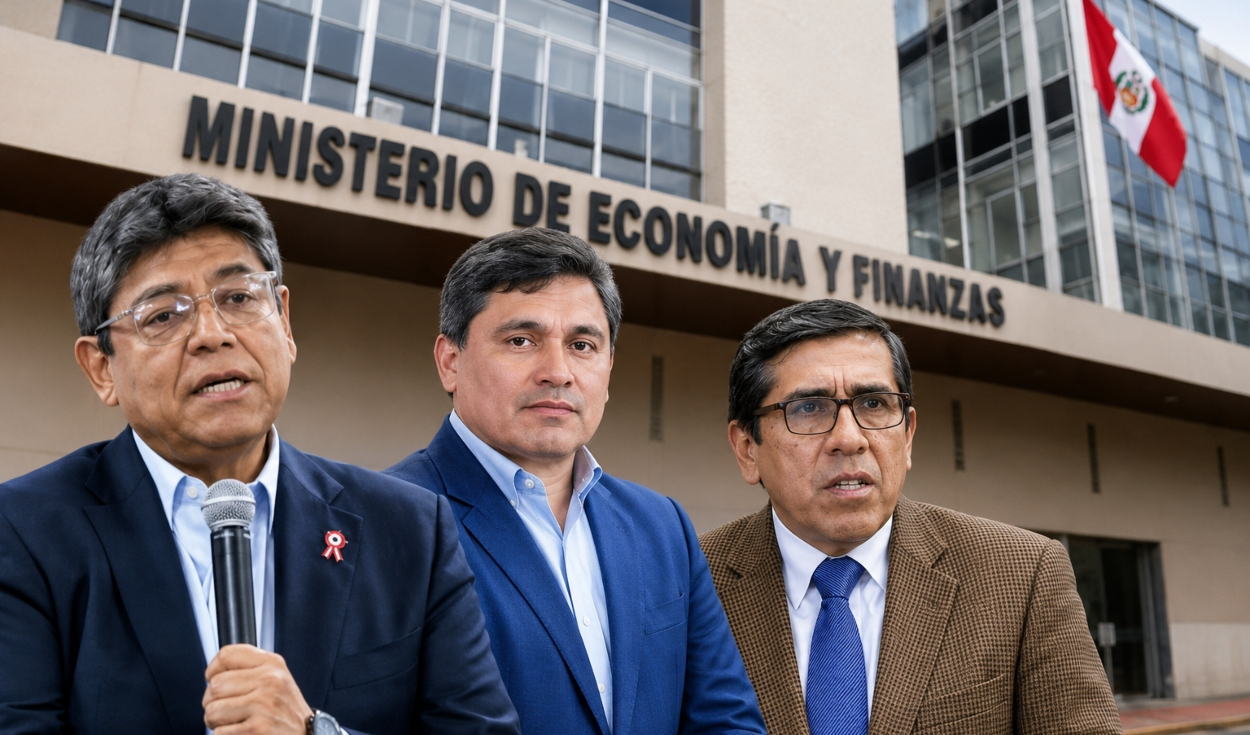
Peru's Ministry of Economy and Finance (MEF) has overhauled its top leadership, naming Fabrizio Orrego Peche as viceminister of economy and bringing in Kitty Elisa Trinidad Guerrero as secretary general, as the ministry under new minister Elmer Cuba prepares to tackle the fiscal deficit, speed up public investment and shore up business confidence amid slower economic growth.
The new team combines officials with backgrounds in economic policy, taxation and public administration. Beyond the individual profiles, the central challenge will be responding to an economy that still shows signs of slowdown in some sectors while facing pressure for higher public spending.
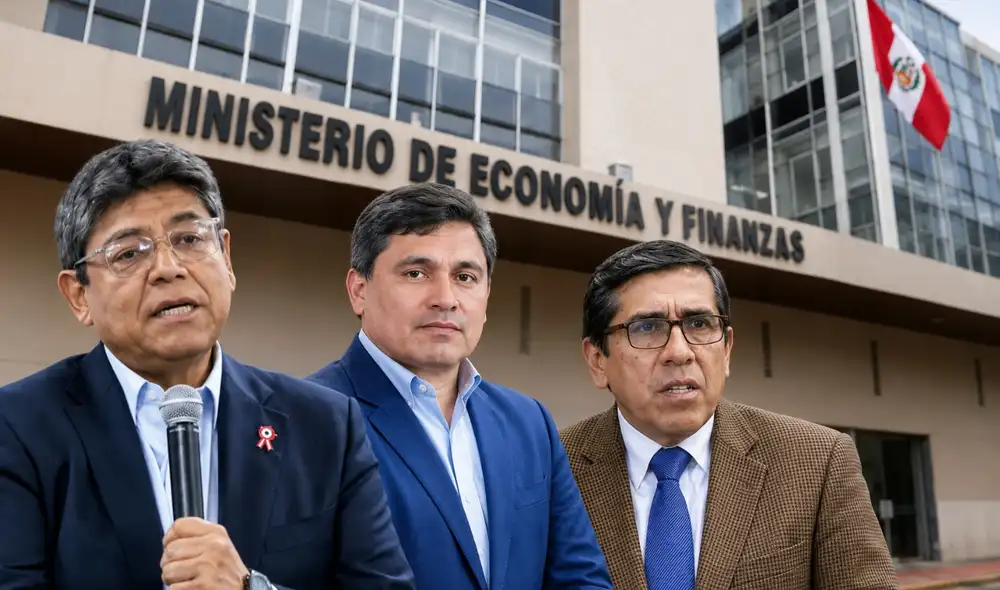
Cuba takes over in a demanding fiscal climate
Cuba arrives at the MEF after a career in macroeconomic analysis and consulting. His tenure will be shaped by the need to balance fiscal discipline with economic growth.
He studied economics at the Pontificia Universidad Católica del Perú and holds a master's degree in economics from the Pontificia Universidad Católica de Chile. He has served as a director of the Central Reserve Bank, as a partner at the consultancy Macroconsult, and has worked as a university professor and author of economic research.
Among the most sensitive issues he faces are reducing the fiscal deficit, meeting macrofiscal rules, recovering tax revenue and pushing forward infrastructure projects that have been delayed at various levels of government. There is also pressure to unlock private investment in mining, energy, transport and construction, sectors that carry significant weight in economic activity and formal employment.
Orrego to oversee macroeconomic policy
One of the most significant changes in the ministry's structure is the appointment of Orrego as viceminister of economy. In that role he will be responsible for coordinating macroeconomic policy, tracking growth projections and overseeing public investment.
Orrego has built his career in technical areas linked to macroeconomic analysis and monetary policy. Before his MEF appointment he worked at the Central Reserve Bank of Peru (BCRP), where he held positions related to monetary policy analysis and structural policies, and took part in technical coordination with international organisations.
His office will also take part in evaluating measures aimed at improving competitiveness, productivity and the investment climate. With economic expansion slowing, decisions on capital spending and project prioritisation will be decisive for the economy's performance in coming quarters.
Lahura returns to the Treasury viceministry
Erick Wilfredo Lahura Serrano returns to the Viceministry of Finance (Hacienda), once again taking charge of areas linked to the public budget, public debt, treasury operations and state revenue management.
Lahura is an economist from the Pontificia Universidad Católica del Perú, holds a PhD in economics from the University of London and completed postgraduate studies at the London School of Economics. His career in the public sector includes posts at the Central Reserve Bank, the Sunat tax authority, the Banco de la Nación and the MEF itself, with a specialisation in fiscal policy, financial regulation and macroeconomic analysis.
His return brings technical experience to the management of public finances. Even so, the current environment forces him to confront a complex combination of factors: greater spending demands for infrastructure, security and social programmes, alongside the need to avoid a further deterioration of the fiscal accounts. Coordination between the Treasury and Economy viceministries will be key to defining how much room exists to expand spending without compromising fiscal sustainability.
Trinidad takes over the General Secretariat
Another notable change is the arrival of Kitty Elisa Trinidad Guerrero as secretary general of the MEF. In that position she will handle the ministry's administrative and operational coordination, the alignment of its support bodies, and the continuity of its internal processes. Although the role draws less public attention, it is key to the sector's institutional functioning, particularly during a period of reorganisation at the top and the need to keep administrative execution on track.
Arias joins the ministerial advisory cabinet
The new leadership team also brought in Luis Alberto Arias Minaya as chief of the Cabinet of Advisors to the Ministerial Office. His previous experience in tax administration and public finance places him in an influential position close to the minister.
Arias is an economist and formerly served as national superintendent of the Sunat customs and tax administration authority. His career has centred on tax policy design, fiscal administration and public finance analysis, areas in which he has held various technical and management posts within the Peruvian state. From his new post, he will take part in evaluating proposals related to fiscal revenue, tax efficiency and the sustainability of public finances, issues that have grown more pressing as the state's spending obligations increase.
The team's main challenges
The new MEF leadership faces a broad agenda with little room for error. Among the most urgent challenges are:
- Reducing the fiscal deficit and steering it toward the targets set out in Peru's fiscal rules
- Improving execution of public investment, particularly in infrastructure projects that have fallen behind schedule
- Recovering tax revenue amid slower activity in some productive sectors
- Strengthening the confidence of investors and businesses to encourage new private projects
- Coordinating with regional and municipal governments to prevent budgeted resources from going unspent
The team's ability to advance on these fronts will be watched closely by markets, the business sector and international organisations, particularly in a period when economic growth depends heavily on investment and the quality of public spending. Beyond the changes in personnel, the new MEF leadership will have to show whether it can turn its technical experience into concrete results: greater investment execution, more orderly fiscal accounts, and an economic environment that sustains productive activity without widening fiscal imbalances.


