


Nearly eight out of ten workers in Peru fear losing their employment as widespread market uncertainty reshapes job search behaviors across the South American nation.
According to the survey titled Job Hugging: Hold On Tight by employment portal Bumeran Peru, 78 percent of Peruvian workers worry about becoming unemployed, while only 22 percent report feeling secure in their positions.

The comprehensive regional study gathered responses from 4,646 workers and human resources specialists across five Latin American nations, highlighting a growing tension between employee desires for career mobility and anxiety over economic stability.
Bumeran is one of the leading online recruitment and job search platforms operating in Latin America, regularly monitoring employment trends and labor market dynamics in Peru, Chile, Ecuador, Panama, and Argentina. The nation of Peru, located on the western coast of South America, has faced evolving employment conditions that prompt workers to prioritize security over career advancement.
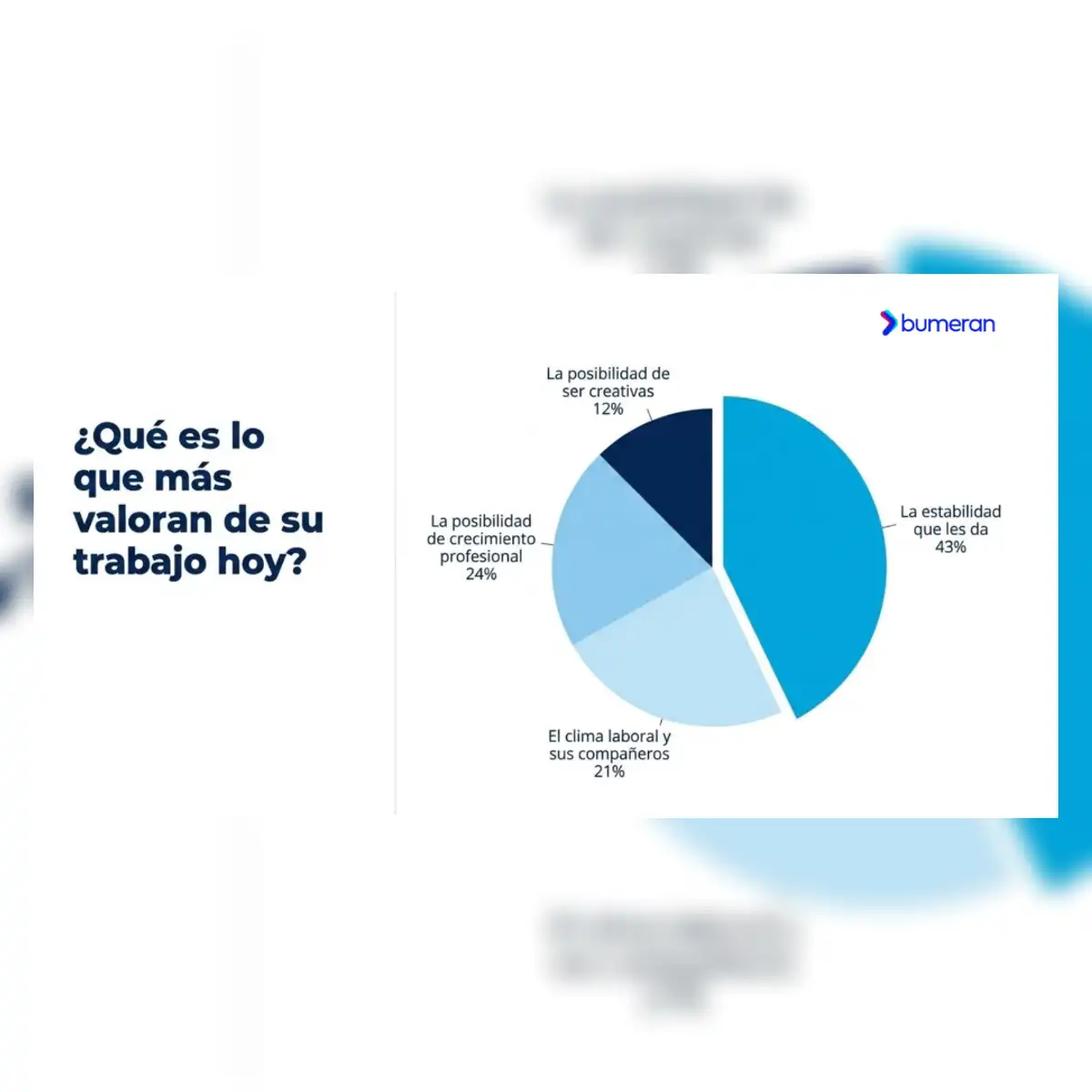
Job stability has emerged as the primary refuge for Peruvian employees facing workplace anxiety. The survey found that 43 percent of workers value stability above all other aspects of their current employment.
By comparison, 24 percent of respondents prioritize professional growth opportunities, while 21 percent value their work environment and colleagues most. Only 12 percent of workers listed the opportunity to be creative as the most valuable element of their job.
Regional Workplace Anxiety
The fear of losing employment is widespread across Latin America, though Peru recorded the lowest percentage among the five countries surveyed by Bumeran.
In Panama, 87 percent of workers reported fearing job loss, representing the highest rate in the region. Ecuador followed closely with 85 percent, while 81 percent of workers in Chile and 80 percent in Argentina expressed the same anxiety.
Beyond the fear of losing an existing role, reluctance to switch employers is also expanding. The study revealed that 31 percent of Peruvian workers feel afraid to seek a new job.
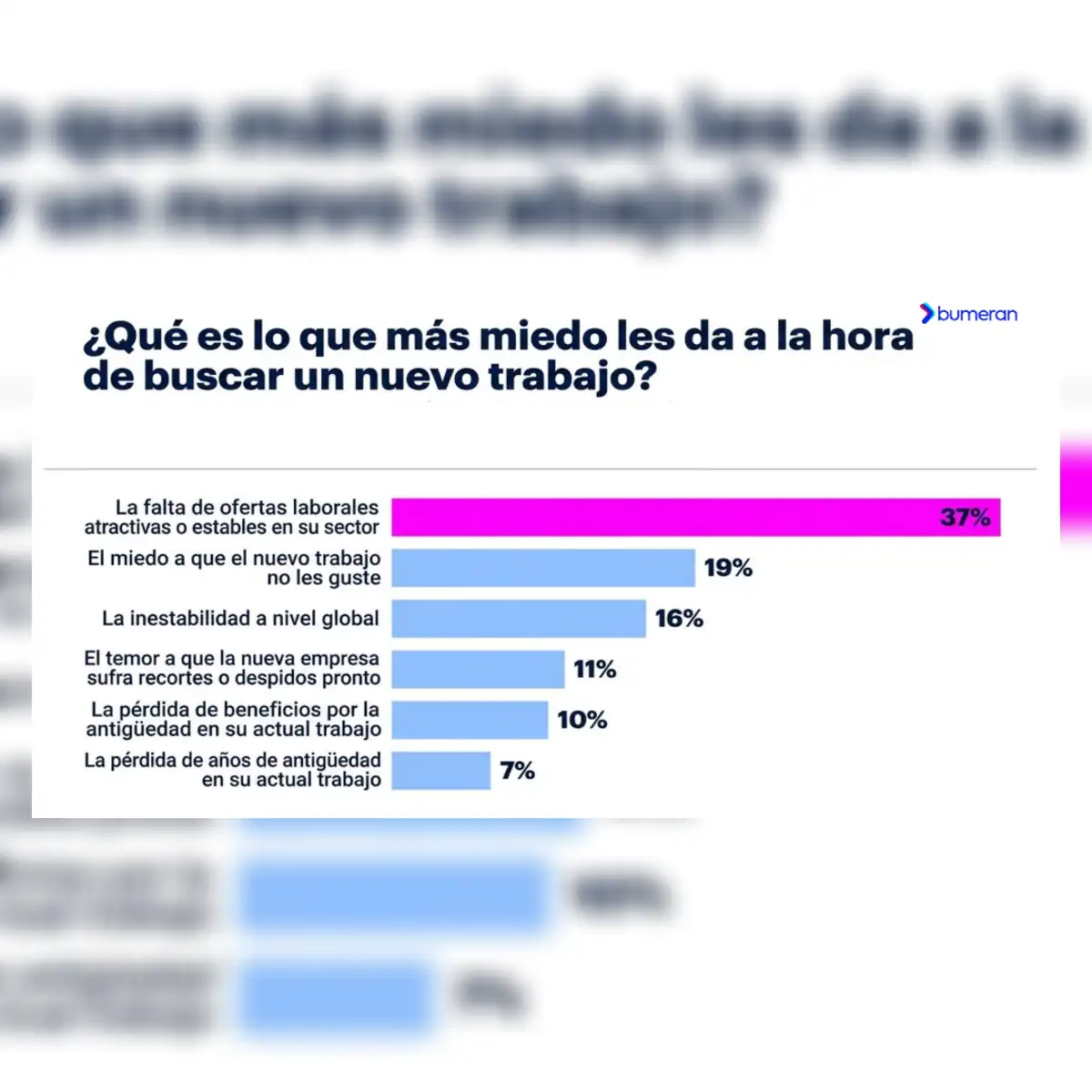
The primary driver behind this hesitation is the belief that suitable options are scarce, with 37 percent of respondents citing the fear of failing to find an attractive and stable offer within their sector.
Specific risks further deter employees from changing roles. Eleven percent of workers fear that a new employer might execute staff cuts or layoffs shortly after hiring them. Meanwhile, 10 percent avoid moving to retain accumulated seniority benefits, and 7 percent fear losing years of established effort in their present position.
The Job Hugging Paradox
These workplace dynamics align with a global trend known as job hugging, a phrase describing the behavior of holding onto an existing job out of fear of uncertainty. Researchers noted that staying in a position does not signal job satisfaction, as employees often remain because they view resigning as a riskier option than staying.
This risk aversion creates a sharp paradox in the labor market. While 79 percent of Peruvian workers state that they are actively considering a job change, six out of ten regularly review job openings without ever submitting an application.
For most of those contemplating a move, the impulse is relatively recent, with the majority reflecting on a change for less than six months. However, 13 percent of respondents reported lingering over a potential career move for between one and three years, or even longer.
This tendency to remain in place persists despite widespread feelings of professional stagnation. The survey showed that 62 percent of Peruvian workers feel their career progress has stalled.
Despite this high figure, Peru recorded the lowest rate of career stagnation among the five surveyed nations. In Argentina, by contrast, 75 percent of employees reported feeling that their career development had come to a standstill.
Widespread Workplace Disengagement
Career frustration is compounded by low workplace morale, with 43 percent of Peruvian workers acknowledging that they lack motivation in their current roles.
Among employees who demonstrated little to no commitment to their jobs, feeling unvalued was cited as the single largest cause, reported by 29 percent of disengaged respondents. Another 26 percent attributed their lack of commitment to general unmotivation.
Additional factors contributing to disengagement include discomfort with organizational values at 14 percent, toxic work environments at 12 percent, direct dislike of assigned job duties at 9 percent, and workplace burnout at 8 percent.
Future Outlook for Job Hugging
The survey revealed that 46 percent of Peruvian workers explicitly identify with the job hugging phenomenon. Among those who admit to holding onto their jobs due to caution, 24 percent have maintained this posture for over a year.
Human resources professionals expect the trend to intensify. Eighty-nine percent of specialists surveyed predicted that job hugging will increase in the coming years.
Specialists attributed the anticipated growth of job hugging to several factors. Twenty-eight percent identified the fear of being unable to find another job as the primary driver, while 24 percent cited the risk of losing job stability. Global economic uncertainty was highlighted by 14 percent of specialists, and 8 percent pointed directly to broader economic conditions.


