

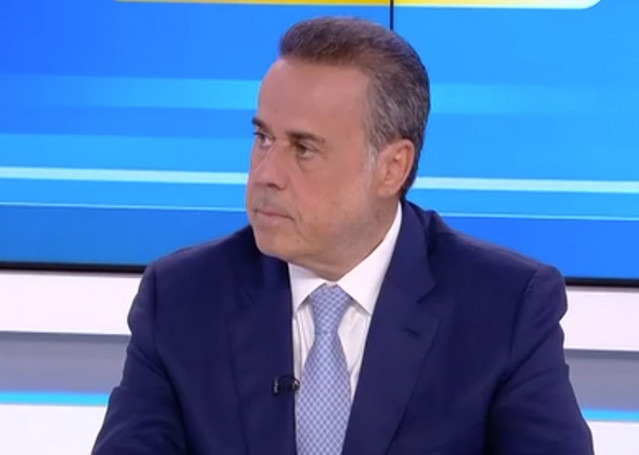
Greek Environment and Energy Minister Stavros Papastavrou has welcomed the entry of French investment firm Meridiam into the Great Sea Interconnector consortium, describing it as a major boost for the undersea power cable linking Greece, Cyprus and Israel.
Speaking on Greek television channel OPEN, Papastavrou said the agreement creates strong new momentum to accelerate the execution of the subsea energy bridge. Under the deal, Greece's Independent Power Transmission Operator, known as ADMIE, is partnering with the Paris-based infrastructure group, which previously funded and constructed a 1.2 billion euro electrical connection between the United Kingdom and Germany.
Papastavrou noted that ADMIE brings substantial technical expertise to the venture. The Greek grid operator completed a major subsea interconnection to the Mediterranean island of Crete in 2025, is electrifying Santorini in recent weeks, and is extending underwater cables to the Dodecanese and Northern Aegean island chains.
Funding and project timeline
The Great Sea Interconnector represents the largest funded energy project in Europe, backed by 658 million euros in European Union financial support. The multi-billion euro infrastructure effort aims to end the energy isolation of Cyprus by connecting its electricity grid to mainland Europe through Greece and eventually extending to Israel.
Papastavrou announced that a comprehensive cost-benefit study for the Cyprus to Israel section of the interconnection will be finalized in the coming days. Addressing the technical and logistical hurdles facing the cross-border cable, he acknowledged that complex challenges cannot be solved overnight, but emphasized that broadening the consortium transforms the initiative into a shared European priority.
Geopolitical context and diplomacy
When asked about potential opposition from Turkey and whether the involvement of a major French investor could serve as a deterrent, Papastavrou affirmed that Greece will defend its interests while actively cultivating strategic international partnerships. He underscored that France maintains a direct strategic interest in the Southeastern Mediterranean region.
The minister emphasized that Greece's exercise of its sovereign rights under international law does not depend on approval or reactions from neighboring states. He stated that Greek strategy seeks mutual energy benefits for all nations across the Southeastern Mediterranean without succumbing to threats or coercive tactics.
Forest restoration and flood prevention
Turning to environmental protection, Papastavrou outlined immediate government action planned for Greek forest areas damaged by recent wildfires. Characterizing the ecological destruction as severe, he vowed that officials will not let a single day go by before initiating reforestation and flood prevention measures to protect local communities from upcoming winter rains.
The minister warned that seasonal downpours threaten vulnerable scorched terrain, posing safety risks to residents and delaying natural forest recovery. He set a firm target for anti-erosion and anti-flooding construction works to begin before mid-September, ensuring protective infrastructure is operational ahead of heavy December rainfall.


