

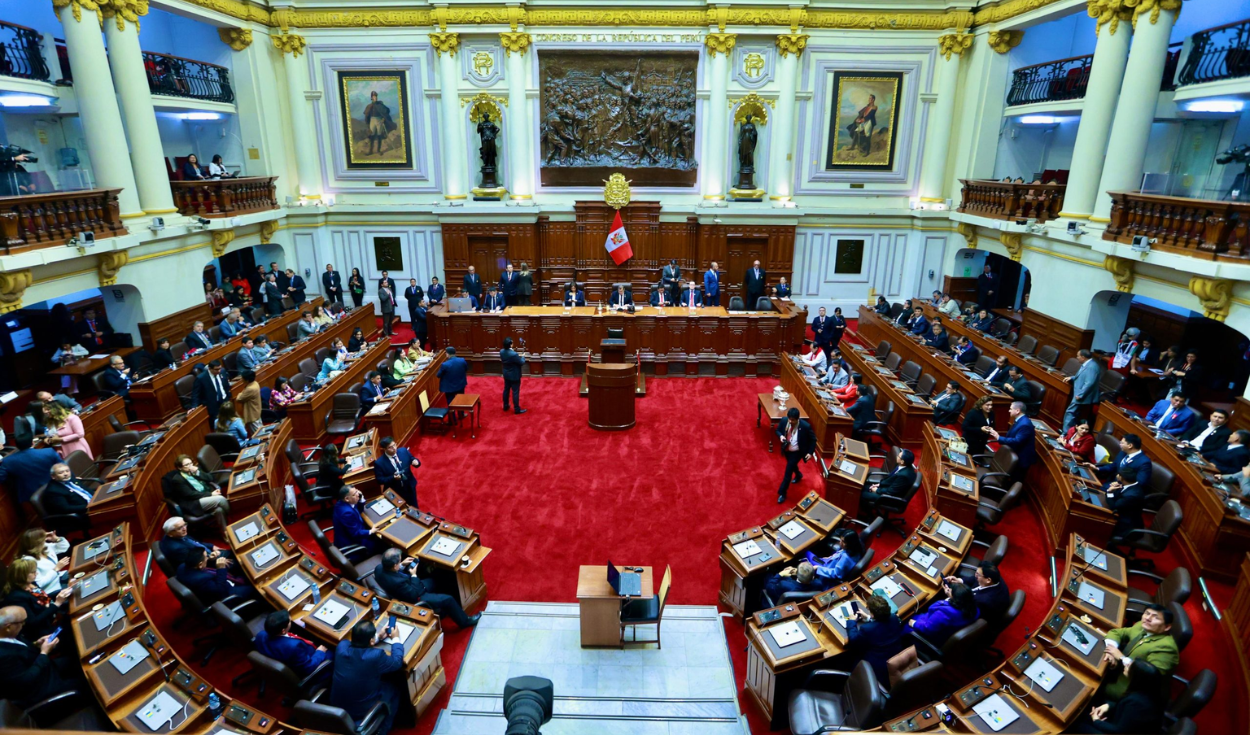
Peru's ruling coalition has secured more than 10 committee presidencies across both chambers of Congress, but dissatisfaction remains after the opposition took control of key constitutional powers.
The ruling coalition aimed to retain control of the Constitution and Justice committees to protect against potential reforms or reviews of their congressional management, according to a congressional source.
They achieved this goal in the Senate. However, in the Chamber of Deputies, the Constitution committee went to the Together for Peru party, and the Justice committee also fell to the opposition.
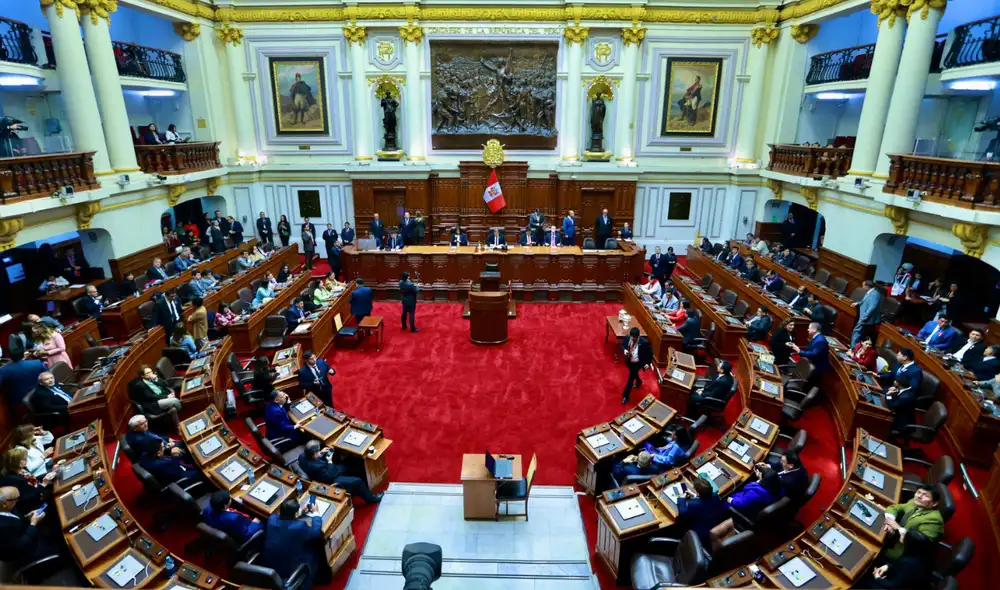
The dissatisfaction was evident during the vote. Deputy César Holguín, spokesperson for the Now Nation party, said Popular Force was the only parliamentary group to vote against the distribution proposal, and they did not present an alternative option.
Holguín noted that the distribution was approved by a majority in the lower chamber, with support from Popular Renewal, Now Nation, Together for Peru, Works, and Good Government.
Popular Renewal seeks influence
Popular Renewal, a party aligned with the ruling coalition, had also hoped to control more influential committees. Roxana Rocha, the party's spokesperson, acknowledged that they would have liked to preside over the Constitution, Justice, and Budget committees.
Instead, Popular Renewal will lead the National Defense and Internal Order committee, as well as the State Modernization and Comptroller committee.
Rocha described these as vital spaces for strengthening institutions and fighting corruption. She added that the party's legislative initiatives would be introduced once the committees are installed.
Other parliamentary groups that did not secure the committees they sought chose not to insist. The reasoning among spokespersons was that there was no need to keep fighting once they had been assigned a committee, a mood reflected by representatives who spoke to the press.
Works party focuses on regions
Daniel Barragán, Senate spokesperson for the Works party, described the distribution as the result of an institutional agreement between the groups.
The Works party secured the presidencies for Productive Development, Energy and Mines, Infrastructure, and Labor in the Senate.
Barragán said the party would work to ensure that energy and mining resources result in development and improved services for citizens, particularly in the regions, while maintaining clear rules and environmental responsibility.
In the Chamber of Deputies, Víctor Piñán of the Works party was also satisfied. His group took control of the Agrarian Development, Consumer Defense, and Parliamentary Ethics committees.
Piñán highlighted the significance of the Agrarian Development committee, noting that its president had traditionally been from the Fujimorist political movement for a long time.
He added that his party is already working on a review of the Chlimper Law and is gathering opinions from the relevant bodies.
Political fragmentation and pacts
Alejandro Mejía, a political scientist and professor at the National University of San Marcos, described the outcome for the ruling coalition as a pyrrhic victory.
Mejía said that while the ruling coalition took the highest number of ordinary committees in both chambers, this was not due to political strength. Instead, fragmentation forced them to concede spaces to other parliamentary groups.
He explained that the ruling coalition lost prominence in the Chamber of Deputies, where they were relegated to committees with less political weight.
According to Mejía, this loss of ground was not accidental. It was the result of a pact between Together for Peru, Civic Works, and Now Nation, which reduced the negotiation margin for Popular Force in the lower chamber.
Upcoming legislative battles
Looking ahead to the upcoming request for legislative powers, Mejía warned that the Chamber of Deputies will be the primary political battlefield.
He said the ruling coalition will need to propose a strategy to achieve minimum consensus, particularly with Together for Peru, because the lower chamber will be the most complex space for political negotiation.
The political scientist ruled out the idea that the distribution was an attempt to impose a single agenda. He interpreted it as the result of the correlation of forces in each chamber and the negotiations that defined both directing boards.


