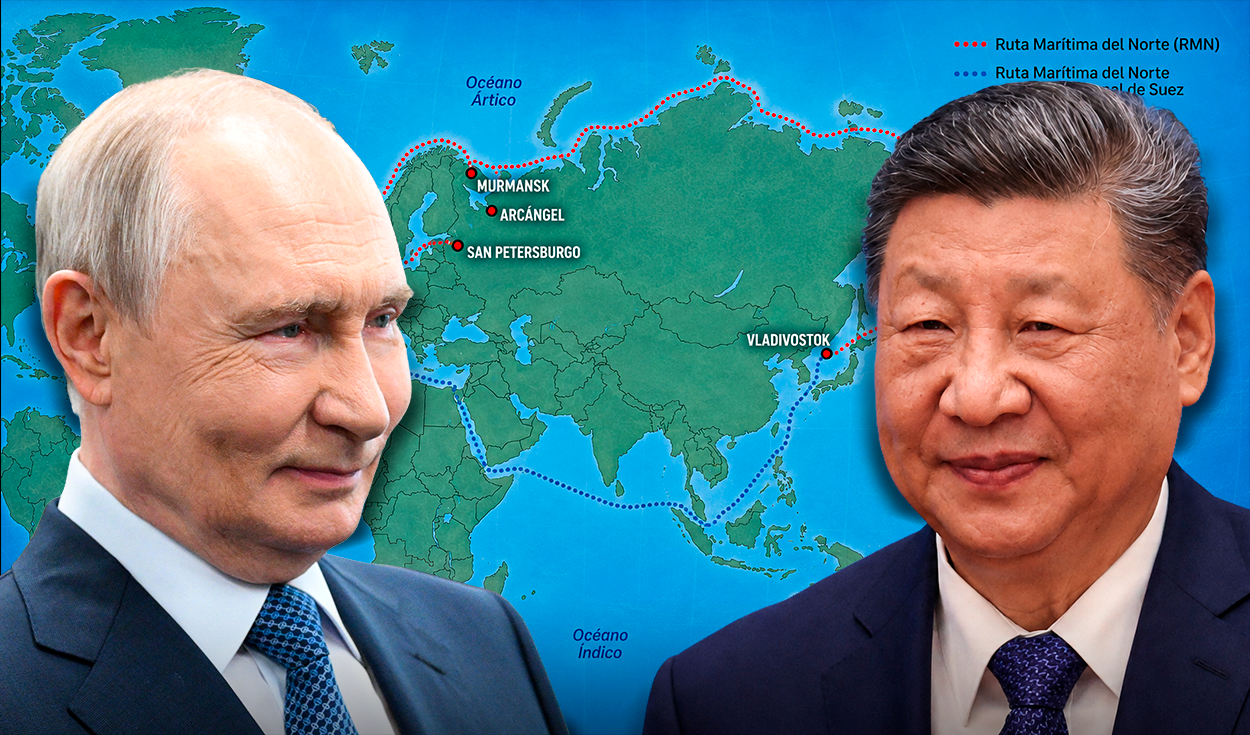
Russia and China are increasing energy shipments along a 5,600-kilometre Arctic maritime corridor to bypass Western economic sanctions and link Asian markets directly to Europe.
The Kremlin has intensified crude oil exports through the northern passage this year, completing seven shipments totaling six million barrels in August alone, an amount equal to half of the total volume delivered during the entire previous year.
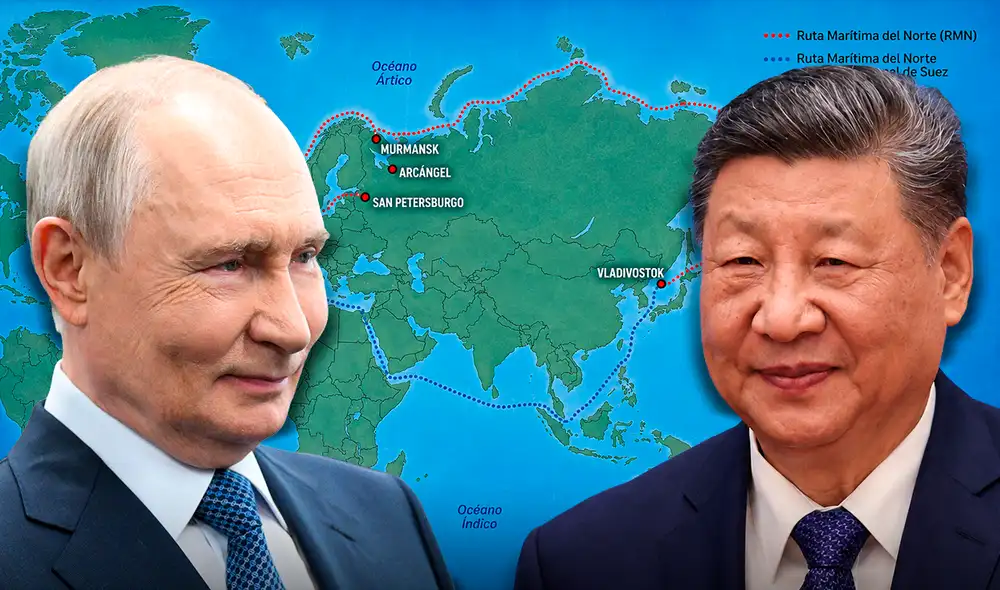
Reuters reported that favorable ice conditions between July and October have aided oil shipments along the Northern Sea Route, which spans Russia's polar coastline from European northern seas to the Pacific Ocean through the Bering Strait.
To overcome trade restrictions imposed over the conflict in Ukraine, Moscow has added specialized vessels, including new Arc7-class liquefied natural gas tankers assigned to the Arctic LNG 2 project.
According to Reuters, these Arc7-class tankers can navigate through ice up to two metres thick without requiring external support from icebreakers.
China's Polar Silk Road strategy
Beijing is using the Arctic corridor to reinforce its energy supply, diversify global transport routes, and shorten travel times to Europe under its official Polar Silk Road policy launched in 2018.
The strategy establishes a blue economic passage designed to integrate northern sea routes into China's international logistics network, reducing reliance on traditional southern shipping lanes such as the Suez Canal.
The Suez Canal has long served as the primary maritime link connecting Asia with European markets. The Northern Sea Route offers a shorter alternative across the Arctic Ocean during the seasonal summer thaw.
Geopolitical tension and Arctic governance
China has declared itself a near-Arctic state, asserting rights regarding navigation, scientific research, resource exploration, and regional governance.
Official Chinese policy states that Beijing seeks to build maritime routes, infrastructure, and international connections while respecting global legal frameworks to maintain a peaceful, secure, and stable environment.
The growing commercial expansion along the polar route has raised strategic alarm in Washington, as the shipping lane enhances Moscow's capability to export hydrocarbons to Asian buyers despite Western economic blockades.
Navigational limits and operational challenges
Despite strategic gains, the long-term expansion of the Northern Sea Route remains constrained by severe weather, a short seasonal navigation window, ecological impacts, and high operational costs.
Routine commercial shipping along the Arctic coastline continues to require reinforced ship hulls or escort icebreakers, limiting year-round transit as both nations seek stronger commercial links toward the Atlantic Ocean.