

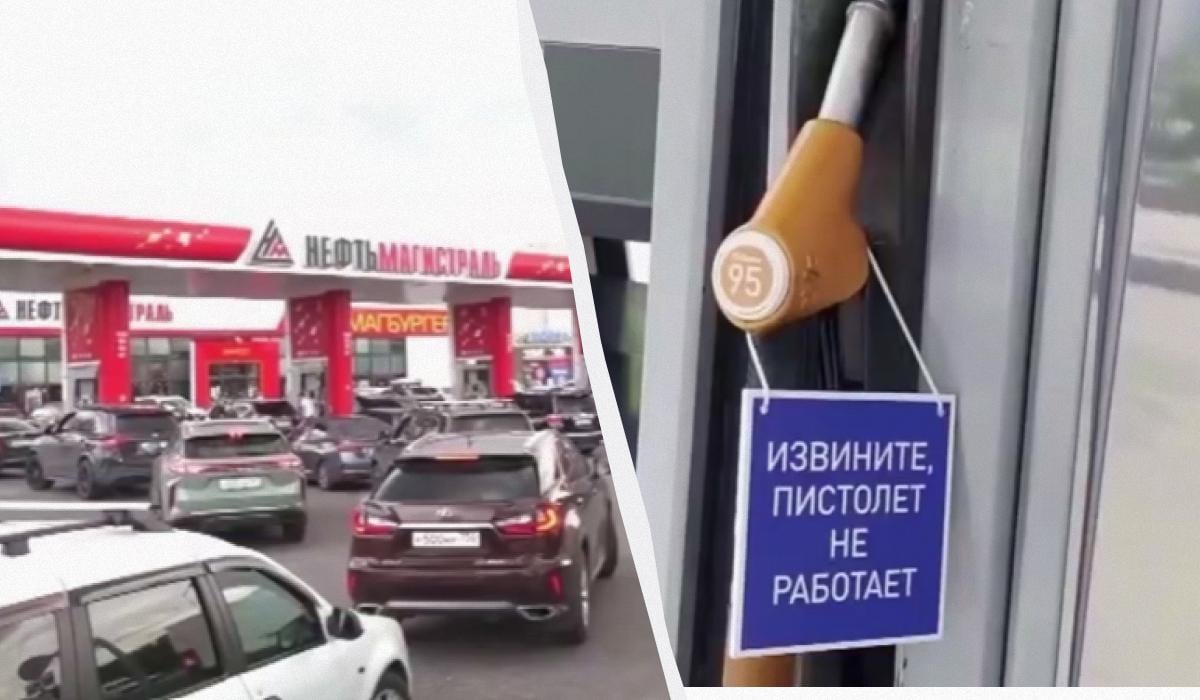
A new wave of fuel shortages has hit Russia, prompting regional authorities from the south to the Pacific coast to impose sales limits and rationing systems following Ukrainian strikes on oil refineries.
At least 12 regions have reported hours-long queues at gas stations, according to the news outlet Meduza. The shortages stretch from the western regions of Smolensk and Kaluga to Primorsky Krai in the Far East, and include Krasnodar Krai, Voronezh, Rostov, Ryazan, Tambov, Tula, Saratov, Penza and Ulyanovsk.
Rationing and sales limits
In the Orenburg region, Governor Yevgeny Solntsev reported a difficult fuel situation and imposed a limit of 30 liters of petrol and 60 liters of diesel per customer from August 12. He said police would coordinate the situation at gas stations as the region introduces a rationing system, allowing cars with even-numbered license plates to refuel on even-numbered days and the rest on odd days.
The Black Sea resort city of Sochi introduced limits on August 11, with the local administration citing logistical supply disruptions. Officials asked residents and tourists to avoid using personal vehicles to reduce the strain on local gas stations.
Similar restrictions returned to the Lipetsk region from August 13, capping sales at 30 liters at stations operated by Gazprom, Lukoil, Teboil and state-owned Rosneft.
Putin visit
Residents in Krasnoyarsk Krai and Bashkortostan have reported petrol shortages, closed gas stations and rising prices.
In Krasnoyarsk, fuel prices at one regional network dropped by 24 rubles a liter the day before a visit by Russian President Vladimir Putin. The network attributed the drop to a temporary improvement in logistics and direct refinery supplies, but prices returned to their previous levels after Putin departed.
When Putin travelled on to Novosibirsk, his motorcade stopped at an empty gas station where children were waiting for him. Footage shared by Kremlin pool reporter Pavel Zarubin showed the station price boards had been turned off.
Refinery strikes
While major cities like Moscow and St. Petersburg have reported fewer problems, some residents noted a lack of AI-95 petrol at Rosneft stations.
The Russian government has not officially acknowledged a new fuel crisis. However, Deputy Prime Minister Alexander Novak, who oversees the fuel industry, held a meeting on the domestic market on August 11. He instructed relevant departments, regional authorities and oil companies to guarantee uninterrupted supplies and monitor prices.
The shortages follow a campaign of Ukrainian drone strikes against Russian oil refineries. Russian refining volumes in July fell to 3.6 million barrels per day, about a third below the seasonal norm, prompting Moscow to begin importing petrol from India. Kyiv has since intensified the strikes.
The crisis has also affected industrial railways, with access routes for mines and factories to the main Russian Railways network facing wholesale supply disruptions and sharp increases in the price of diesel.


