

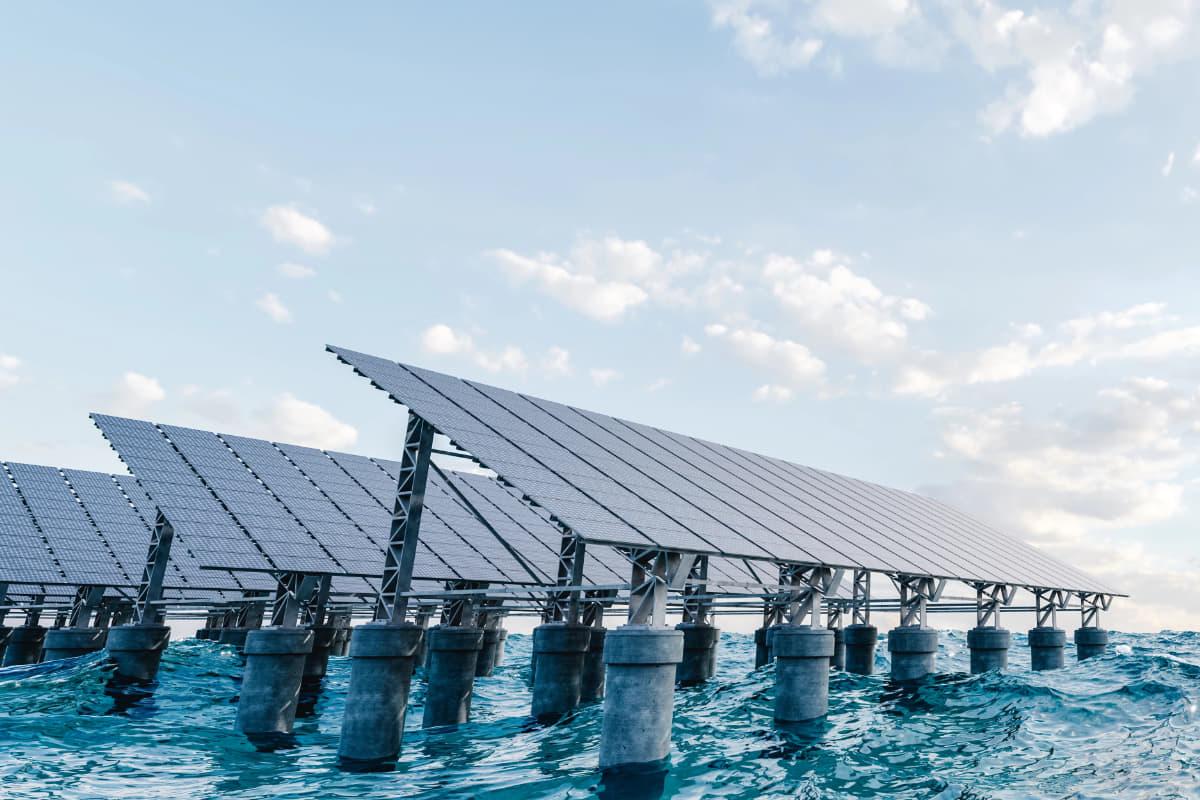
Energy company EDP APAC has installed a five-megawatt floating solar power station featuring more than 13,000 photovoltaic panels in the Johor Strait off the coast of Singapore near the Woodlands district, but the system is struggling against heavy marine biofouling.
Reports from news outlet The Pulse indicate that while engineers designed the offshore plant to endure heavy ocean waves, currents, and storms, unexpected growth from algae, sea squirts, and thousands of barnacles added almost 43 percent extra weight to the structure within a few months.
The added weight caused the station's 30,000 pontoons to sink deeper into the warm tropical waters, dramatically lowering overall buoyancy. Technical services stated that this sagging jammed the platform's steel hinges, which were designed to absorb wave movement. Lower positioning in the water also allowed salt spray to wash over electrical connections, creating severe risks of system-wide corrosion and operational failure.
Singapore is an island nation with an area of roughly 725 square kilometres and a population of nearly six million people. With almost no unoccupied land available for conventional ground-mounted solar farms, rooftop solar installations remain insufficient to meet national green energy targets set for 2030. Floating solar technology offers a spatial solution by expanding renewable infrastructure directly onto coastal waters.
Sea conditions and environmental benefits
Specialists noted that marine environments present far harsher technical challenges than freshwater bodies. In addition to high salinity, offshore systems must continually withstand tidal fluctuations, waves, and squall-line winds. To tackle these forces during the design phase, developers secured the network using corrosion-resistant alloy tension cables anchored directly to the seabed.
Despite the biological complications, researchers noted that the marine setting provides significant operational benefits. Ocean water naturally cools the photovoltaic panels during peak heat hours, allowing them to generate higher electricity yields than land-based solar installations. Furthermore, the solid layer of panels covering roughly 12 acres of water helps slow down the evaporation of fresh moisture in the coastal area.
Technical specifications show the 12-acre complex relies on 40 central inverters and one massive transformer to generate approximately six million kilowatt-hours of electricity every year. According to the Singapore Economic Development Board, this annual energy output helps reduce atmospheric carbon emissions by more than 4,000 metric tonnes annually.
Engineering remedies and real-time monitoring
Initial testing confirmed the floating structure effectively withstood ocean wind and wave forces, but warm marine waters turned the underside of the panels into a fertile natural incubator. To safeguard the five-megawatt plant, maintenance workers have begun manually scraping off organism buildup and applying anti-fouling chemical coatings to structural components.
In parallel, engineering teams are testing redesigned pontoons featuring raised geometry to improve water clearance. They are also installing underwater real-time sensors to track biological accumulation and structural weight gains as they occur.
Solar efficiency compared with coal generation
The challenges in the Johor Strait highlight wider questions regarding solar capacity. Calculations published by tech publication Slash Gear indicate that replacing a 500-megawatt coal-fired power station based solely on nominal capacity would require approximately one million modern solar panels.
However, grid integration involves efficiency differences beyond panel counts. Solar power plants operate at an average capacity utilization factor of around 20 percent, whereas traditional coal-fired power plants operate at a capacity factor of roughly 43 percent.


