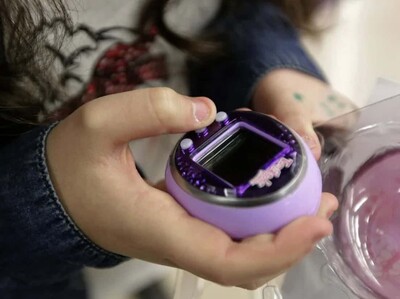
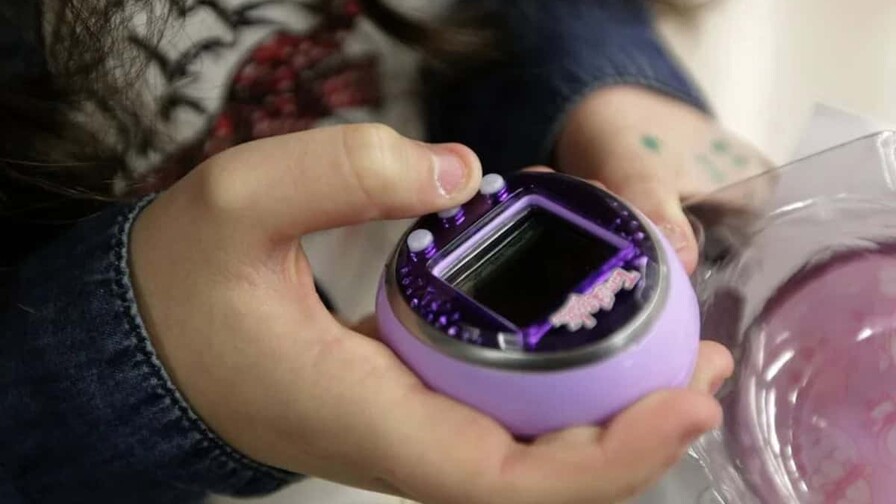
The Tamagotchi, the pocket-sized digital pet that once consumed playgrounds across the world, is marking 30 years since it first went on sale in Japan. Bandai, the Japanese toy company behind the device, says its revival has been driven by nostalgia among people who were children when it launched and by a renewed wave of 2000s fashion that has turned the three-button toy into an accessory.
Taro Tsuji, chief executive of Bandai and the company's top executive for Tamagotchi, told the EFE news agency that the toy's audience now splits into three distinct groups. The first are people in their 30s who got the device when it originally launched. The second are people in their 20s, shaped by the 2008 animated Tamagotchi series and by the broader return of 2000s aesthetics. The third is made up of young children discovering the toy for the first time.
Tsuji acknowledged that the boom in vintage fashion and the 2000s aesthetic has been a key piece of the brand's resurgence. He said that without this rise in retro nostalgia, the company would not have been able to create a wave as large as the current one, but that because Bandai had been preparing for that moment, it managed to connect with the trend.
Nostalgia Among Adults in Their 30s
The anniversary coincides with a generation of adults who have begun buying toys for themselves to relive their childhoods. Valerie, an Austrian woman in her 30s, told EFE that her mother never bought her a Tamagotchi as a child, so when she saw the 30th anniversary edition in a shop, she decided to buy one now. She ended up getting one along with her boyfriend in Tokyo's busy Harajuku district.
She said the toy shares the same spirit as the Furby, Polly Pocket and Playmobil toys of her 1990s childhood. As working adults, she said, people like to look back, feel like children again and return to a time that was not about stress or working too much, but simply about having fun.
Sayran, a woman from Brisbane, Australia, who describes herself as probably the biggest Tamagotchi fan there is, treats the toys as if they were real pets. She carries a bag full of the devices everywhere she goes and tends to them constantly throughout the day so that they live forever.
Sayran, who received her first Tamagotchi when she began studying from home and felt it as her first friend, said her passion has a generational explanation: young adults buy a lot of childish things because those are the things they grew up with, and they feel comforting.
The Return of 2000s Fashion
For younger fans in their 20s who discovered the franchise in the late 2000s, the device has become established as a style accessory rather than a toy from childhood. Tsuji explained that, in contrast to the technological coldness of a mobile phone, the small egg-shaped device has become a common accessory to hang from a bag.
Bandai is extending that fashion push with the Tamagotchi Ring, a playable ring designed to establish the device as a fashion icon. Its launch, starting next February, is part of the celebrations marking the toy's 30th anniversary.
A Toy Born From Financial Difficulty
The Tamagotchi was created at a time of financial difficulty for Bandai, Tsuji recalled, with the company feeling it needed to launch something that had never been done before.
The popular Japanese custom of collecting insects in containers, to keep and care for them, moved into the virtual world through an egg-shaped accessory whose popularity exploded in the late 1990s.
To keep the toy's memory alive for new generations, the brand is relying on collaborations such as one carried out a couple of years ago with the popular video game Roblox. Tsuji said Roblox is a massive community for children, and that Bandai thought it would be fun for children around the world to be able to bring their avatars into Tamagotchi's world and games.
Tsuji also said the secret to staying relevant for three decades has been constant evolution, moving from the original liquid crystal model to versions with infrared capability, a color screen and Wi-Fi connectivity, a process in which he actively listens to the toy's followers online.
Bandai will close out the 30th anniversary celebrations by taking over the screens of Times Square in New York for the first time, on November 22 (November 23 in Japan time), a move the company hopes will project the 1990s icon into the coming decades.
What happens next
Bandai will launch the Tamagotchi Ring starting next February and will close the 30th anniversary celebrations by taking over Times Square screens in New York on November 22 (November 23 in Japan time).
Test yourself
According to Bandai's Taro Tsuji, what are the three groups that make up Tamagotchi's fan base?
What new product is Bandai launching starting next February as part of the anniversary?
Which video game did Bandai collaborate with to bring Tamagotchi avatars into its world?
Have your say
Would you buy a Tamagotchi now, 30 years after its original launch?
Where it happened
Tokyo, Japan