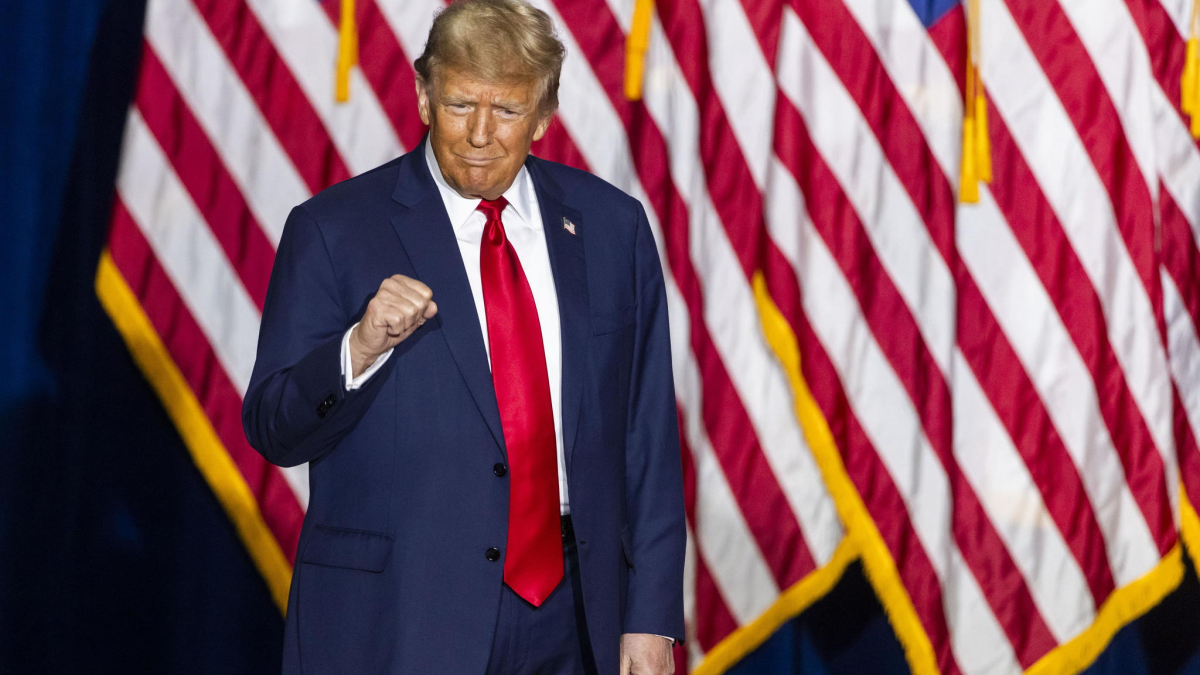
The administration of US President Donald Trump has proposed a new round of tariffs of up to 20% on imports from China, the European Union and 12 other countries, accusing them of subsidizing industrial production in ways that hurt American companies.
US Trade Representative Jamieson Greer announced the measure on Wednesday under Section 301 of the Trade Act of 1974, a US law that allows Washington to investigate and penalize foreign trade practices it considers unfair, discriminatory or harmful to American interests.
Greer said that for decades many US trading partners had adopted industrial strategies aimed at manufacturing, suppressing wages and labor costs, and providing financial and other support, along with non-market inputs and other distorting practices that tilted trade in their favor while eroding the US manufacturing base, according to an official statement.
China Faces the Steepest Rate
The package will hit China hardest, since Washington identifies it as the country where these practices are most common. China would face a 20% tariff that could rise to 40% if Beijing violates the terms of the trade truce currently in place with Washington.
A broader 15% tariff would also apply to India, Japan, Singapore, Switzerland, Indonesia, Malaysia, Cambodia, Thailand, South Korea, Vietnam, Taiwan, Bangladesh and the 27 member states of the European Union.
Greer clarified that the new tariffs would be complementary rather than cumulative on top of existing ones, which would allow the EU to avoid the bulk of the impact under its bilateral trade agreement with the US. He told CNBC that many of the new tariffs align with the rates agreed in trade treaties signed last summer and earlier this year with various countries, with some set at 15% and others higher or lower.
Part of a Third Tariff Wall
The announcement follows a bumpy legal path for Trump's tariff agenda. The US Supreme Court struck down his first tariff push, and a lack of congressional ratification caused a second effort to expire. Trump then erected a third tariff wall in July, citing a separate investigation into alleged violations of forced-labor laws and imposing tariffs of 10% to 12.5% on 60 countries.
Greer said the new tariffs announced Wednesday, ranging from 15% to 20%, will not stack on top of those already in force. Instead, the final rates will result from combining the two measures rather than adding to existing ones. He said the final balance would amount to an increase of only a few percentage points, with the most significant rise applying to China, which would see its tariff rise from 12.5% to 20%, though the final figure would be offset by bilateral agreements reached during summits between Trump and Chinese President Xi Jinping.
Products worth $30 billion will be excluded from the package, including toys from China. Greer also noted that the US had just tightened export controls on advanced artificial intelligence chips to China and on the country's access to that technology through data centers hosted in third countries in Southeast Asia, closing what he called a legal loophole amid a scandal over alleged Chinese espionage targeting Nvidia Chief Executive Jensen Huang through a romantic partner.
The new tariffs announced Wednesday will not take effect for two months, giving extra time for bilateral negotiations with some of the United States' main trading partners.
Mexico Spared, Brazil Threatened
Mexico was removed from the initial list of penalized countries and exonerated for now, following talks between Trump and Mexican President Claudia Sheinbaum at the APEC summit in China last week.
Greer said Washington still considers Mexico guilty of industrial overproduction as well, but decided to pause its case for the sake of the trade agreement both sides are still negotiating.
By contrast, the US Trade Representative's office threatened to push forward a new batch of specific tariffs on Brazilian sugar and aviation, following the election victory of Luiz Inacio Lula da Silva over Flavio Bolsonaro, a Trump ally who fled to the United States after the vote.
Asked about the state of negotiations with Canada, with which the US has opened a tough trade dispute, Greer said both countries still differ over the sale conditions for automotive, steel and aluminum products. He added that Trump and Canadian Prime Minister Mark Carney would meet again at the G20 summit in Miami in December, following their meeting at the APEC summit in China last week.
EU Pushes Back on Overcapacity Claim
The European Union said it was already analyzing the new US tariff package and trusts Washington will respect the 15% limit agreed in the bilateral trade pact the two sides reached in August 2025, while denying any unfair trade practice on its part.
Olof Gill, trade spokesperson for the European Commission, said from Brussels that the EU categorically rejects the premise that Europe is a source of structural overcapacity, arguing that Europe is instead one of the regions most exposed to that phenomenon.
Gill said the EU and the US share a real concern about global overcapacity, much of it state-driven and concentrated in third countries, and said the bloc regretted the lack of joint action on the issue.
He said the EU would keep working with the US administration on implementing their new trade treaty, especially by exploring new products that could qualify for exemptions or tariff reductions, as well as other areas for closer cooperation.
The EU noted that the two sides had agreed on an overall cap of 15%, and said it expects any measure arising from the new US investigation to fully respect that limit, even when combined with existing tariffs.
What happens next
The new tariffs will not take effect for two months, leaving room for bilateral negotiations, and Trump and Canadian Prime Minister Mark Carney are due to meet again at the G20 summit in Miami in December.
Test yourself
Which US law did the Trump administration use to impose the new tariffs?
What tariff could China face if it violates its trade truce with the US?
Which country was removed from the tariff list after talks at the APEC summit?
Have your say
Do you think new tariffs on industrial imports are the right way to address overproduction?
Where it happened
Washington, D.C., United States