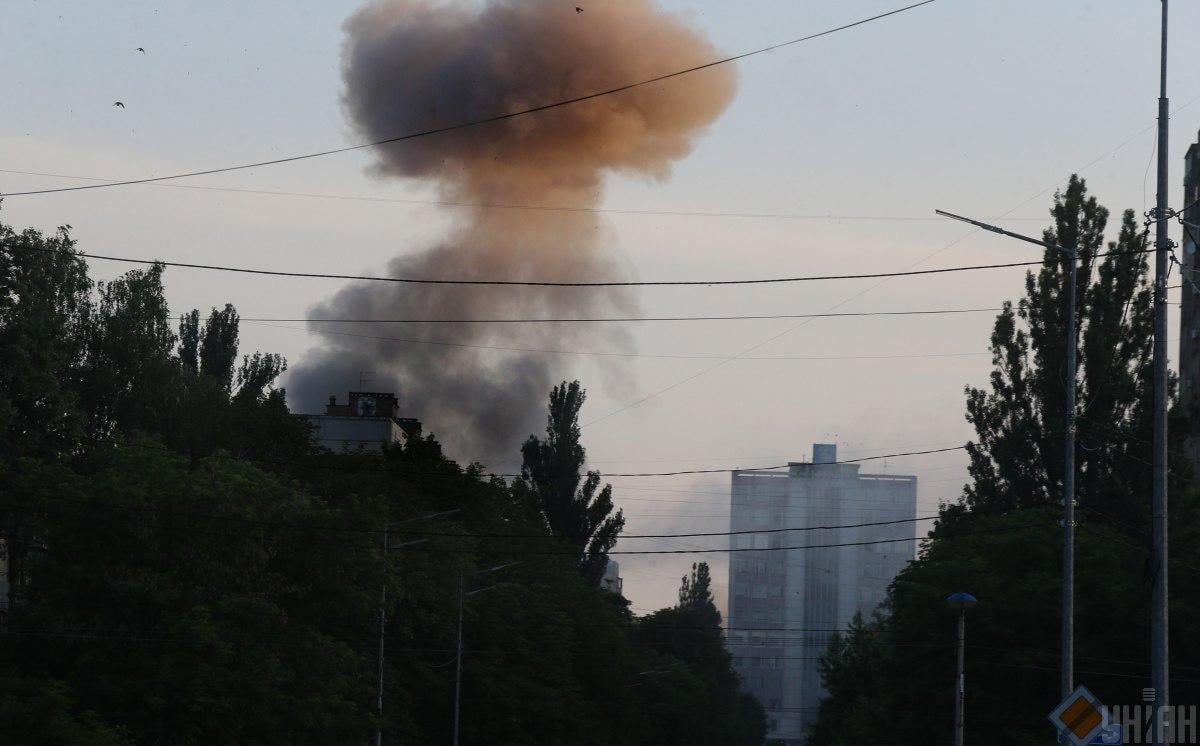
Ukraine is preparing for its heaviest winter bombardments of the war as Russia enters a new phase of attacks on its energy grid.
An unprecedented program to fortify the national power grid is running ahead of schedule with half of the work completed, according to a report by The Economist.
The country is expected to enter winter with surplus generating capacity, 14 billion cubic metres of gas reserves, enhanced physical protection at critical grid nodes, and new private air defense firms assisting the weakened air force.
Ukraine relies on extensive underground gas storage facilities in its western regions to maintain heating during winter, while high-voltage transmission lines connect regional distribution networks to nuclear power stations and thermal generating plants.
Escalating Russian missile and drone threats
However, Ukrainian officials warn that the Russian threat is evolving faster than defensive measures can adapt. Shortages of ballistic missile interceptors and the arrival of new Russian jet-powered drones have exposed critical gaps in national air defenses.
Russia has increased its production of ballistic missiles to roughly 100 per month at a time when deliveries of foreign air defense interceptors to Ukraine have declined sharply.
Moscow has launched hundreds of jet-powered drones in recent attacks. An air defense source stated that a combination of fighter jets, portable anti-aircraft missile systems, and anti-aircraft guns managed to intercept only 30 percent of the jet-powered drones.
Man-portable air-defense systems, known as MANPADS, are shoulder-launched missiles designed to target low-flying aircraft, whereas heavy surface-to-air missile systems are required to intercept high-speed ballistic missiles.
The air defense source said jet drones successfully hit high-value targets that ballistic missiles had missed over four years of war. The Kremlin reportedly evaded Western sanctions to acquire 3D printing equipment for turbines similar to tools used at Rolls-Royce plants, allowing Russia to mass-produce jet engines and reduce drone costs to between 50,000 and 70,000 dollars.
Rolls-Royce is a major British engineering corporation that produces gas turbines and propulsion systems. Following the 2022 invasion, Western governments restricted the export of advanced manufacturing tools to prevent Russia from producing high-precision military components.
The Ukrainian air defense source added that while Ukraine failed to prepare adequately for the jet drone threat, responsibility also rests with foreign partner nations.
Vulnerabilities in Kyiv and key infrastructure
Prior to this year, none of the 110-kilovolt transformers in the capital city of Kyiv were protected. The State Agency for Restoration has worked continuously to fortify two dozen of these transformers with mesh shielding and concrete reinforcement, alongside protective structures at power stations.
A 110-kilovolt transformer is an electrical substation component that steps down high voltage from regional transmission lines to lower voltage levels required for city infrastructure and domestic electrical distribution.
Despite these physical protections, the massive combined heat and power plants in Kyiv remain too large to enclose fully. Russian targeting is currently focused on approximately 140 electrical substations operated by Ukrenergo.
Ukrenergo is Ukraine's state-owned electricity transmission system operator, responsible for managing high-voltage power lines across the country. Combined heat and power plants generate electricity while capturing byproduct heat for municipal district heating networks.
Destruction of local generating capacity would create severe power supply challenges for vulnerable cities, including Kyiv, the Black Sea port of Odesa, and the industrial center of Kryvyi Rih.
Kyiv is particularly vulnerable because several surrounding substations and connection lines to nuclear power stations lack backup power. Disruption to the municipal water grid would stop sewage systems and central heating, leaving 2,500 of the capital's 15,000 buildings without backup heat sources.
Russian orders for energy strikes
The escalating threat to energy infrastructure follows orders from Russian President Vladimir Putin instructing military forces to prepare massive strikes against Ukrainian power facilities.
Putin claimed the directive was issued in response to Ukrainian strikes on Russian civilian infrastructure and oil refineries, stating that Russia had instructed its armed forces to prepare the strikes and that Ukraine would receive a response.