Ukraine's parliament, the Verkhovna Rada, voted on September 15 to approve the dismissal of Prosecutor General Ruslan Kravchenko, clearing the way for President Volodymyr Zelensky to formally remove him from office that same evening.
Kravchenko had been appointed prosecutor general with support from across Ukraine's political spectrum, drawing hopes from both the parliamentary majority and the opposition. The prosecutor general is Ukraine's top law-enforcement official, responsible for overseeing criminal prosecutions nationwide, and under Ukrainian procedure the president needs the Verkhovna Rada's consent before dismissing whoever holds the post, which is why the vote was required before Zelensky could act.
Zelensky, president since 2019, has made the fight against corruption a central plank of his administration, a priority closely tied to Ukraine's bid for European Union membership and to its access to Western financial and military support during the war with Russia.
Before lawmakers voted, Kravchenko, who is currently abroad, addressed the Verkhovna Rada in a post on Telegram. He said it was up to parliament alone to decide, that day, whether law and justice would finally prevail in Ukraine.
He said he was grateful to parliament for its trust and would respect whatever decision it reached on his dismissal. But he insisted the decision had to be parliament's own, not an instruction from the president, not a request from the "boss" of parliament, and not what he called a hysterical demand from the heads of anti-corruption bodies, who he said were themselves, along with people close to them, involved in corrupt acts. He said the dismissal must not be the outcome of the coordinated political and media pressure he said was being applied against him.
The day before the vote, Zelensky had suspended Kravchenko from the post of prosecutor general by decree and submitted a formal request to the Verkhovna Rada seeking his dismissal. Zelensky said Ukraine had seen the reasons for the move and that there should be enough votes in parliament to support it.
On the evening of September 15, Zelensky signed the decree officially dismissing Kravchenko as prosecutor general. The decree was published on the presidential website.
Resignation Followed Call Centre Allegations
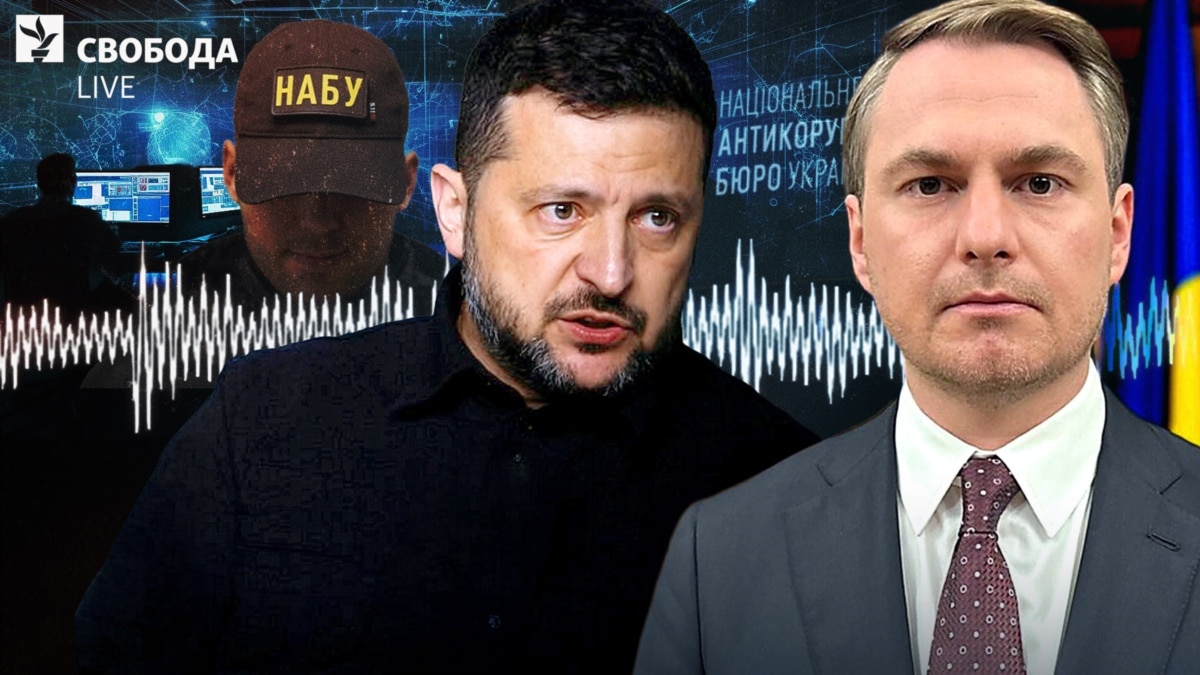
Kravchenko had already submitted his resignation as prosecutor general on September 7. That came as anti-corruption agencies announced they had uncovered a criminal organisation linked to the running of fraudulent call centres.
Commenting on the investigation by the National Anti-Corruption Bureau of Ukraine, known as NABU, and the Specialised Anti-Corruption Prosecutor's Office, known as SAP, Kravchenko said he had no relation to covering up illegal call centres, had not given instructions to facilitate such activity, and had not used his powers as prosecutor general to do so. Both NABU and SAP were created following Ukraine's 2014 pro-democracy uprising, as part of a wave of anti-corruption reforms demanded by reform-minded lawmakers and international partners, and both operate independently of the general prosecutor's office.
A court has remanded two people in the case, known as "Carthage," in custody with the option of bail: Serhiy Kropyva, deputy head of the Department of International Cooperation at the Office of the Prosecutor General, and his partner, Yelyzaveta Ivakhnenko.
Kravchenko's Suspicion Claim Denied
Kravchenko left Ukraine "on a business trip" together with his wife shortly before Zelensky suspended him. From abroad, he published tracking details for a letter he said carried a notice of suspicion against NABU Director Semen Kryvonos, which he claimed he had managed to sign before resigning.
The Office of the Prosecutor General denied that any such notice of suspicion existed and said there were no legal grounds for one. In a statement, the office said that within the criminal proceeding in question, no person, including the head of an anti-corruption body, had been notified of suspicion under the procedure set out in Ukraine's Criminal Procedure Code. It said there were no legal grounds for this and that statements about an alleged notice of suspicion were devoid of legal meaning.
NABU Director Semen Kryvonos and SAP head Oleksandr Klymenko both said separately that they had not received any notice of suspicion from Kravchenko.
Former Prosecutor General's Theory
Ruslan Riaboshapka, who served as Ukraine's prosecutor general from 2019 to 2020, suggested Kravchenko may have anticipated that he was about to be notified of suspicion by anti-corruption investigators, and moved quickly to arrange his trip abroad as a result.
Riaboshapka told Radio Svoboda that Kravchenko most likely knew he would be informed of a notice of suspicion by the anti-corruption bodies, since he understood what was on NABU's recordings and was aware of his possible role in the alleged cover-up of the call centres and in what was happening inside the prosecutor's office. Riaboshapka said Kravchenko therefore did not wait, and used the seven days he had to arrange the most convenient conditions for his departure.
Riaboshapka added that at the time Kravchenko left Ukraine, border guards had no grounds to stop him from leaving the country.