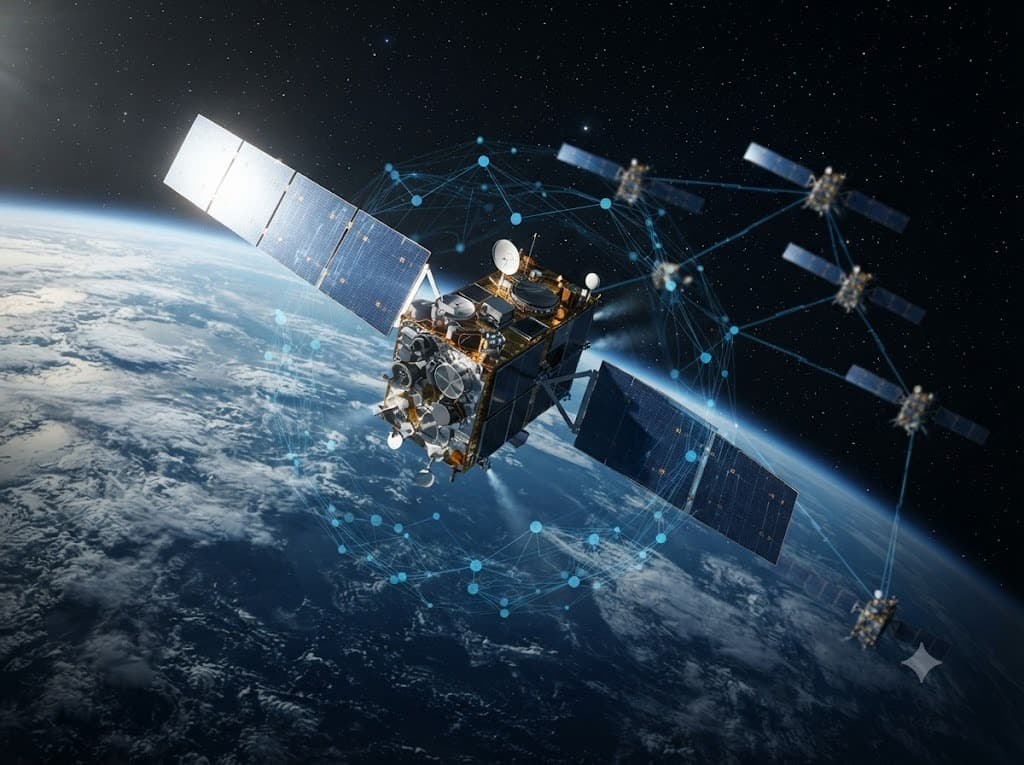
The Air Force Research Laboratory (AFRL) has for the first time successfully demonstrated satellite control using an artificial neural network while the spacecraft was in orbit. During the experiment, a machine learning algorithm took over the satellite's platform, the system responsible for orientation, power supply, communications and thermal regulation, analyzing sensor data and making decisions in real time on its own.
Unlike traditional onboard software that follows preset rules, the neural network adapted its control to the spacecraft's current condition without constant oversight from the ground. AFRL said this approach suits missions where communication delays, limited computing resources and radiation exposure require satellites to react quickly and independently to changing conditions.
Part of a Wider Autonomy Program
According to AFRL, the technology is part of a broader program to build autonomous space systems. As the number of satellites grows and electronic warfare threats increase, AFRL said future orbital constellations need to keep functioning even if they lose contact with ground control centers. The agency envisions large networks of satellites working together, redistributing tasks and adapting to threats with little operator involvement, rather than relying on a small number of complex spacecraft.
Developers said neural network control could extend satellite lifespans, reduce fuel use and keep spacecraft operational even if individual systems fail. Commercial satellite operators and space agencies are reportedly considering the technology for managing orbital constellations and for deep space missions where constant ground control is impossible due to signal delays.