

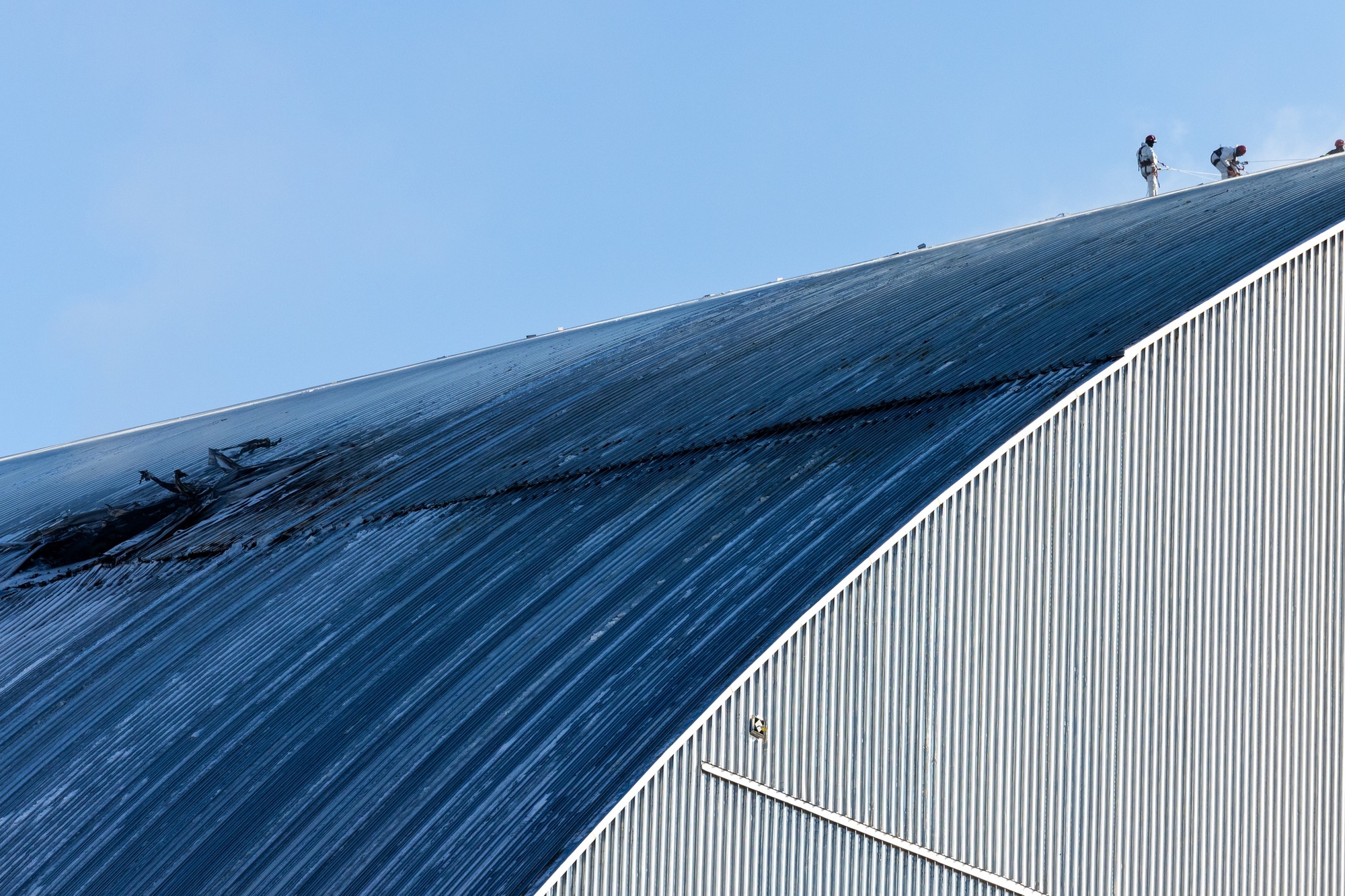
Ukrainian company UTEM Engineering has received a contract for temporary repairs to the New Safe Confinement at the Chornobyl Nuclear Power Plant. The European Bank for Reconstruction and Development announced the deal, which addresses damage caused by a Russian drone strike on Feb. 14, 2025.
The drone attack created a hole of approximately 15 square meters in the outer cladding of the arch. Firefighters also made 340 small technical holes while extinguishing the resulting fire. UTEM Engineering, also known as Pivdentteploenerhomontazh, must seal all of the openings hermetically.
Serhiy Tarakanov, director general of the State Specialized Enterprise Chornobyl NPP, said the contract marks the second stage of work to restore the integrity and functionality of the confinement. During the first stage in October 2025, workers completed emergency repairs to close the largest hole, allowing the structure to safely pass the autumn and winter period and preventing further degradation.
Full restoration challenge
Following the temporary repairs by UTEM Engineering, work will move to the full restoration of the confinement functions. Tarakanov previously noted that the full restoration presents an exceptionally complex technical challenge due to intense radiation fields located directly above the destroyed reactor.
The contract with LLC UTEM-Engineering was finalized under Grant Agreement No. 5 between the EBRD and SSE Chornobyl NPP. It followed agreements reached during an assembly of contributors to the International Cooperation Account for Chornobyl held in London on June 25, 2025.
In December 2025, reports indicated that the sarcophagus at the plant might not hold up even if a Russian strike occurs nearby.
Confinement dimensions and history
The New Safe Confinement is the largest movable land structure ever built, measuring 165 meters long, 257 meters wide, and 108 meters high, with a total weight of 36,000 tonnes. Construction began in April 2012, and the arch covered the fourth power unit in 2016 before being commissioned in 2019 with an expected lifespan of at least 100 years.
The structure protects the environment from radioactive radiation while enabling workers to disassemble reactor unit structures and relocate nuclear waste. Donor countries of the Chornobyl Shelter Fund provided the construction money, which was managed by the EBRD.


