

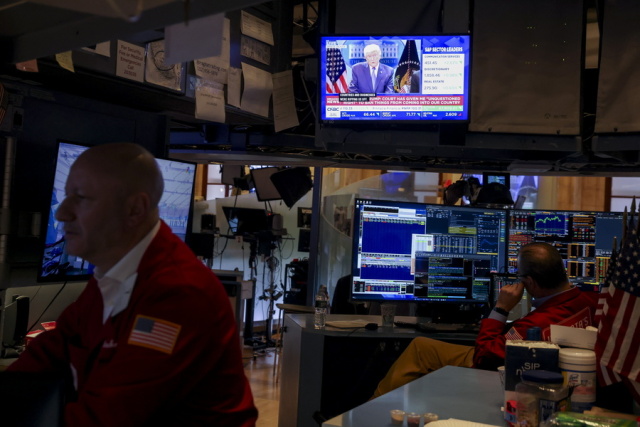
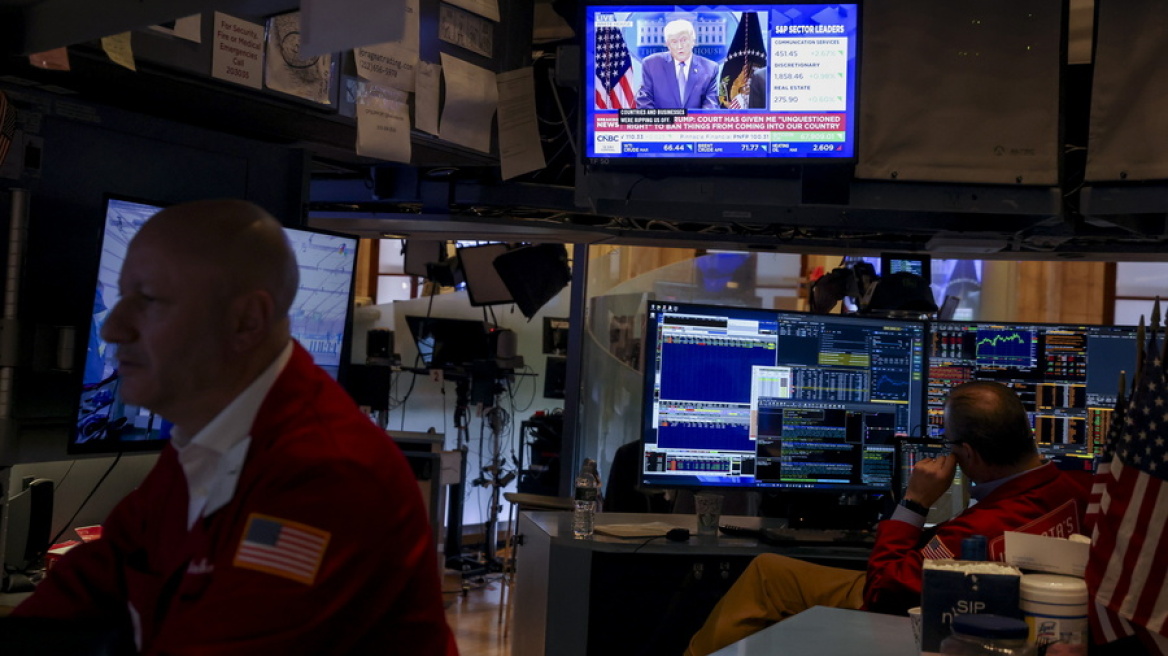
Wall Street stocks declined on Tuesday as a sharp sell-off in semiconductor companies dragged down major US market indexes amid rising oil prices, persistent inflation concerns, and elevated Treasury yields. The tech-heavy Nasdaq Composite dropped 1.33 percent to 26,289 points, while the benchmark S&P 500 index fell 0.69 percent to 7,691 points to hit a two-week low. The Dow Jones Industrial Average dropped 0.22 percent to close at 53,343 points.
Government bond yields remained near historic highs despite minimal daily movement in prices. The 10-year US Treasury yield stood at 4.708 percent, close to its highest level since early 2025, while the 30-year Treasury yield held near a 19-year high at 5.287 percent after touching an intraday peak of 5.335 percent. Meanwhile, crude oil prices continued to advance, with Brent crude closing above 91 dollars a barrel and US West Texas Intermediate crude settling near 85 dollars a barrel.
The energy rally came as the United States and Iran remained locked in a tense standoff over the strategic Strait of Hormuz, with both nations claiming control over the critical maritime trade route. Donald Trump claimed that an ongoing US naval blockade of Iranian ports gives Washington control of the passage, having earlier described the strait as American territory. In Tehran, Iranian officials announced that a framework agreement for a temporary ceasefire expired on Monday and would not be extended unless Washington accepts Iranian terms, raising fears that military strikes could resume at any time on a broader scale.
Bond Yields and Geopolitical Strains
Michael O'Rourke, chief market strategist at Jones Trading, said global financial markets are beginning to price in the potential risk from two simultaneous headwinds: rising energy prices and rising bond yields. O'Rourke noted that the volatile artificial intelligence sector sits at the front line of the market pullback as investors reduce risk, driving capital flight away from tech stocks and into defensive sectors such as healthcare and consumer staples.
Investor anxiety centered primarily on longer-term government bonds, reflecting concerns over inflation trends, expanding public debt, and the heavy reliance on private debt to finance artificial intelligence infrastructure. Veteran market analyst Louis Navellier highlighted that an increased supply of debt to fund both massive corporate AI spending and growing government fiscal deficits is expected to maintain upward pressure on bond yields, potentially limiting the market support typically provided by strong corporate earnings.
Market commentator Ed Yardeni, founder of Yardeni Research, said that while he sees no reason for panic, he is watching closely to see if bond vigilantes take action. Yardeni, who coined the term in the 1980s to describe investors who sell government bonds to force fiscal discipline on governments, wrote that US Treasury yields should ideally remain within a normal range of 4 percent to 5 percent without harming economic activity. However, with yields hovering near the top of that band, his firm is monitoring investor behaviour more intently.
AI Debt Boom and Corporate News
The pressure on technology shares highlights growing questions over whether tech giants can sustain their aggressive AI investment cycles through heavy debt issuance. Major technology companies including Microsoft, Meta Platforms, Alphabet, Amazon, and Oracle issued roughly 121 billion dollars in US corporate bonds in 2025, more than four times their annual average of 28 billion dollars between 2020 and 2024. The pace of borrowing has accelerated further in 2026, while AI startup Anthropic is reportedly close to securing a revolving credit line exceeding its 10 billion dollar target ahead of a planned initial public offering before the end of the year.
Semiconductor and AI-linked stocks experienced the heaviest liquidations during Tuesday's session, led down by sharp declines in Micron Technology, SanDisk, and Nvidia. Meta Platforms also suffered steep losses, compounding market pressures as legal proceedings began against the social media giant concerning the impact of its platforms on minors. Elsewhere in the tech ecosystem, Swedish buy-now-pay-later provider Klarna saw its shares plummet approximately 22 percent after lowering its full-year revenue outlook due to adverse exchange rates and weakening consumer spending in Germany.
Conversely, defensive stocks and companies benefiting from specific corporate developments bucked the downward trend. Amylyx Pharmaceuticals surged roughly 60 percent following positive clinical trial results for an experimental hypoglycemia treatment, while Targa Resources gained after securing a long-term agreement with energy giant ExxonMobil. The broader energy sector advanced on higher oil prices, alongside healthcare giants such as Johnson & Johnson, which rose over 3 percent to reach a new record high, extending its year-to-date gain to 31 percent.
Upcoming Catalysts and Federal Reserve
Investors are turning their focus to key upcoming events that could dictate market direction through late summer. The Federal Reserve is scheduled to release the minutes from its July monetary policy meeting on Wednesday, which traders will scrutinise for hawkish signals after three regional Fed presidents dissented against the decision to leave interest rates unchanged. On the corporate calendar, chipmaker Nvidia is set to report earnings on August 26, followed by semiconductor manufacturer Broadcom on September 2.


