


Two white lights that look identical to the naked eye can make a room feel warmer or cooler, according to a study from Pennsylvania State University. The effect was measured at up to 0.7 degrees Celsius, meaning people tolerated a warmer or cooler room without touching the thermostat.
The room's actual temperature does not change when a lamp is switched on, but researchers found that human perception of that temperature can shift depending on subtle differences in the light itself. Under white light enriched with blue tones that the eye cannot register as "blue," participants tolerated temperatures 0.7 degrees Celsius higher before asking for the thermostat to be lowered. Under light enriched with red tones, the opposite happened, and people tended to feel warmer.
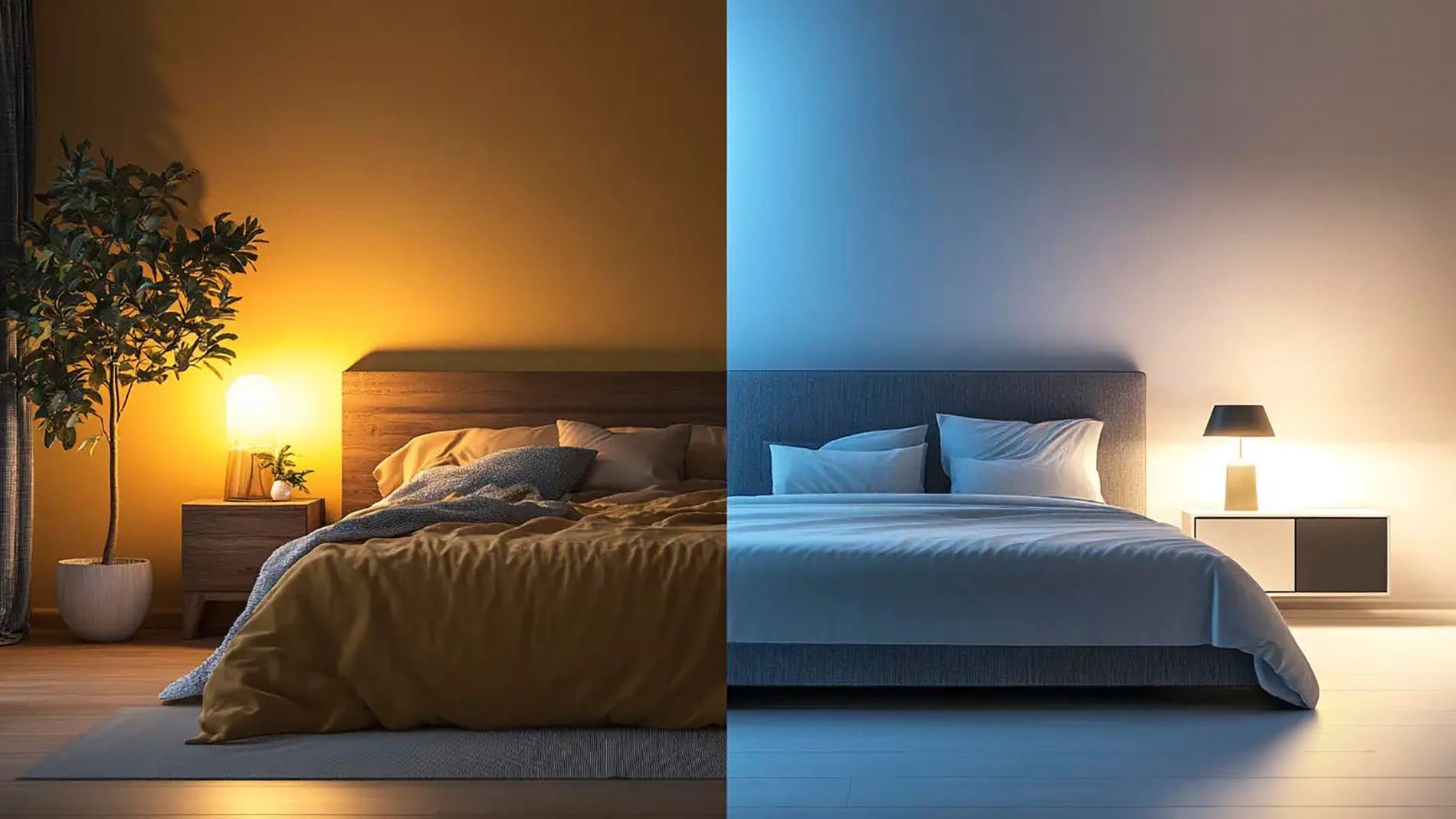
To test this, researchers gathered ten people between the ages of 18 and 35 in a temperature-controlled room designed to simulate an office. Each participant sat through sessions under two types of white light that looked visually identical, though one contained more blue wavelengths and the other more red wavelengths.
During the trials, the air temperature was gradually raised or lowered starting from around 24 degrees Celsius. Participants reported how they felt and indicated when they wanted the temperature adjusted. The difference showed up most clearly as the room grew warmer, with participants under the blue-enriched light taking longer to ask for the room to be cooled.
A trick of perception, not real cooling
Notably, participants did not see a room bathed in blue or red. Both lighting conditions appeared white to the naked eye. That is the key finding of the study, since it suggests the effect could be applied in homes, offices or classrooms without tinting the space visibly red or blue.
Researchers stressed that this is about perception, not actual cooling. The light does not replace air conditioning or measures such as ventilating at the right time. During a heatwave, for instance, opening windows at night does not always cool a home if the temperature outside is still higher than indoors.
Potential energy savings
Any potential savings come from a different angle. If a person feels comfortable with the thermostat set half a degree higher in summer, the air conditioning system would need to work less. Simulations calculated that widening that margin by 0.5 degrees Celsius could cut the energy used for cooling by between 5.2% and 11.4%, depending on the climate.
Small sample, more testing planned
Researchers cautioned that the results should be treated carefully, since the trial included only ten young adults. The team wants to expand the study with more participants, different age groups and more extreme conditions before determining whether this small white-light "trick" could work more broadly.


