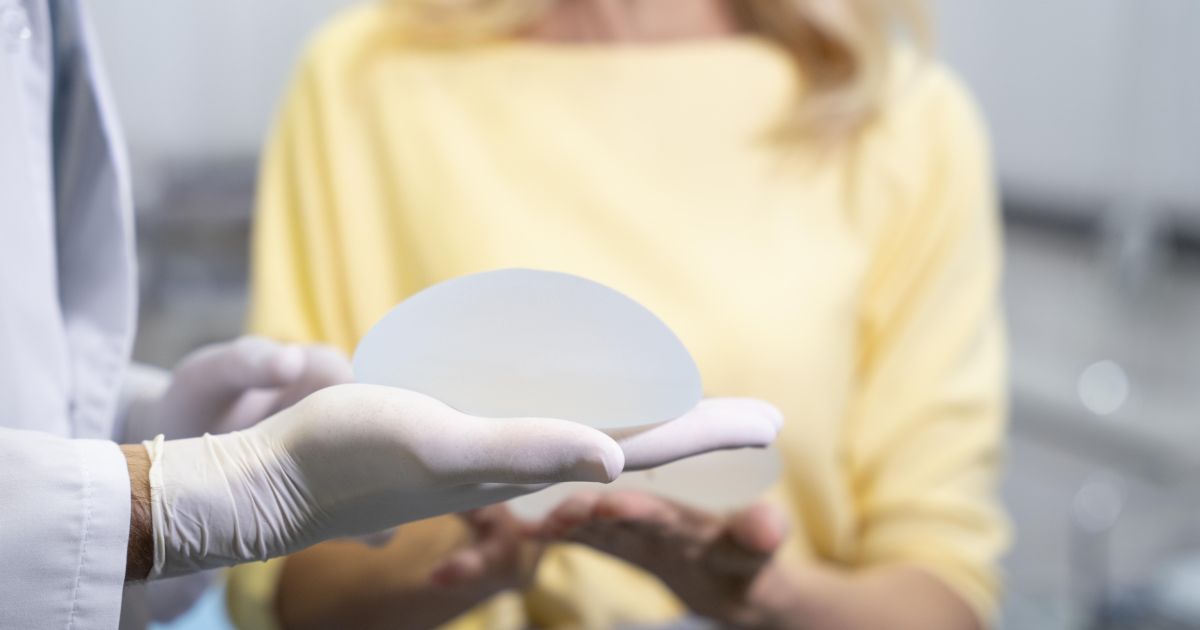
A string of actresses and models going public about removing or downsizing their breast implants is drawing attention to a shift away from the bigger-is-better silicone trend, according to plastic surgeon Dr. Mariana Fernandes Zalli, a member of Brazil Health.
Actress Luciele Camargo revealed in January 2026 that she had her implants removed because she felt uncomfortable with their volume and wanted to age more naturally. Model Isabeli Fontana also chose to have her implants removed, opting for fat grafting afterward. Carolina Dieckmann and Rafa Brites have reported similar decisions, driven by personal reasons and their relationship with their own bodies.
Dr. Zalli said these cases are interesting but do not prove women are abandoning silicone implants on a broad scale. Instead, she said, they show how expectations around breast surgery vary and can change over the course of a woman's life.
The search for a natural, proportional look
The original decision to enlarge the breasts is often shaped by aesthetic trends, body type and personal expectations, Dr. Zalli said. But what felt right at 20 or 30 years old does not always match what a woman wants decades later.
Weight changes, pregnancy, aging and changes in skin elasticity all alter how the breasts look over time, she said. Implants that once seemed proportional can start to feel uncomfortable or no longer match the image a patient wants for herself.
Wanting a more natural result does not necessarily mean removing all the silicone, according to Dr. Zalli. Smaller implants, chosen to match a woman's anatomy and body proportions, can also achieve a more discreet look. She said the priority should be understanding what is bothering the patient and weighing which changes are possible without compromising safety.
Explant or smaller implants?
Breast explant surgery involves removing the silicone implants entirely. It can be done on its own or combined with other procedures, depending on how much breast tissue remains, the elasticity of the skin and the characteristics of the implants, Dr. Zalli explained.
One option is a mastopexy, or breast lift, which repositions the breasts and removes excess skin. It may be needed when removing the implants leaves significant sagging or shifts the position of the areolas.
Another option is fat grafting, in which fat taken from elsewhere on the body is used to add volume and shape to the breasts. Dr. Zalli noted that some of the transferred fat can be reabsorbed, and the procedure does not necessarily reproduce the volume or projection an implant provided.
For women who simply want smaller breasts, switching to smaller implants may be enough, though this can also require adjustments to the skin and breast tissue, she said. Each approach has limits: removing large implants does not guarantee the breasts return to how they looked before the first surgery, because the skin and tissue may have changed permanently.
Does the scar capsule have to come out too?
After an implant is placed, the body naturally forms a capsule of scar tissue around it, a normal reaction that is usually not a complication, Dr. Zalli said.
In some cases, however, the capsule can thicken and contract, causing hardening, pain or deformity of the breast, a condition known as capsular contracture, which is one of the possible reasons for revision surgery.
Removing the capsule is sometimes necessary but is not required in every explant, Dr. Zalli said, adding that the decision depends on the condition of the implant, any complications and the risks involved. She distinguished this from en bloc capsulectomy, a procedure that removes the implant and capsule together without opening it, which has specific indications, such as certain suspected tumours linked to the capsule, and should not be presented as necessary for every patient.
When the decision is about more than looks
The desire to remove silicone is not always about appearance alone, Dr. Zalli said. Some women experience physical discomfort, capsular contracture, implant displacement or rupture.
Others report systemic symptoms they attribute to their implants, often described as breast implant illness. Dr. Zalli said these reports deserve investigation and support, but there is still no universally accepted diagnostic definition, nor evidence that all such symptoms are caused by silicone. She said removal can be considered after individual evaluation, though symptom improvement is not guaranteed.
A separate concern is breast implant-associated anaplastic large cell lymphoma, a rare disease linked mainly to textured-surface implants, which requires specialised diagnosis and treatment, according to Dr. Zalli.
She added that women with intact implants who have no symptoms or complications do not necessarily need to remove them simply because years have passed. Implants are not lifetime devices, she said, but any decision to replace or remove them should be made individually, with proper follow-up.
Realistic expectations and planning
Like any surgery, explant and implant replacement carry risks, including hematomas, infection, changes in sensitivity, asymmetry and unfavourable scarring, Dr. Zalli said.
The extent of scarring depends on which procedures are combined. A simple removal can often use existing incisions, while a mastopexy frequently requires new scars to reposition the tissue.
Planning should take into account existing breast volume, skin quality, areola position and the patient's expectations, she said, adding that photographs of other women's results cannot replace an individual assessment, since each body responds differently.
Dr. Zalli said the broader lesson is that aesthetic preferences are not fixed. A woman may want larger breasts at one point in her life and a smaller size years later. She said the role of plastic surgery is to offer safe, individualised options, without treating silicone as an aesthetic requirement or its removal as an obligation.
Test yourself
What did actress Luciele Camargo say about her decision to remove her implants?
According to Dr. Mariana Fernandes Zalli, what do the celebrity explant cases actually show?
What is capsular contracture, as described in the article?
Have your say
What matters most to you when considering breast implant surgery?