

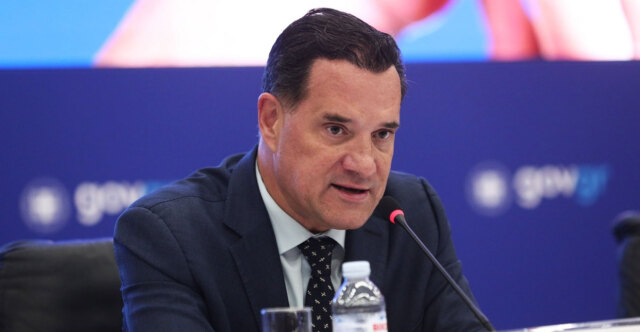
Greek Health Minister Adonis Georgiadis has defended the government's healthcare investments after plaster collapsed inside a closed office at Venizelio Hospital in Crete.
Writing on social media on Tuesday morning, Georgiadis rejected complaints from political opponents over the incident, which involved a 1.5-metre section of plaster falling in a 70-year-old building at the Heraklion medical centre on Monday.
Georgiadis described the ceiling collapse as minor and completely insignificant, while acknowledging that it demonstrated the need for structural repairs at the site. He confirmed that he has already ordered a formal study for the renovation of the affected facility.
The minister urged critics from left-wing opposition parties to decide whether physical infrastructure matters, arguing that opponents cannot demand building repairs at Venizelio Hospital while simultaneously dismissing broader renovation works across Greece as unimportant.
Opposition criticism and government response
Georgiadis stated that political opponents and journalists routinely dismiss major building investments by shifting attention to staffing shortages. He added that left-wing demonstrators had previously devalued hospital upgrade projects by chanting slogans claiming that walls do not constitute healthcare.
He argued that critics were being contradictory by suddenly raising concerns about Venizelio Hospital, which has gone without renovation for 72 years, after spending months claiming that facility upgrades were unnecessary.
The response followed an earlier statement released by the health minister on Monday evening, in which he urged the public to remain calm and insisted that the National Health System was not collapsing.

Nationwide healthcare infrastructure program
Georgiadis highlighted an ongoing three-year initiative aimed at upgrading public health facilities across Greece, describing it as the largest structural modernization of the country's National Health System since its founding.
Funding for the nationwide project is being drawn from the state regular budget, the European Union Recovery and Resilience Facility, the National Strategic Reference Framework, and unprecedented levels of private donations.
According to the minister, the government launched the upgrade drive after recognizing that hospital buildings across the country had grown deteriorated and worn down over several decades. He noted that the program is now near completion, with updated health centres, clinics, and emergency departments being opened nationwide.

Scale of the National Health System
Addressing the physical scope of the country's public healthcare infrastructure, Georgiadis noted that the National Health System owns and operates 127 hospitals, 358 health centres, and 1,500 regional clinics across millions of square metres.
He stated that isolated incidents such as falling plaster were bound to occur occasionally across a network of that scale.
Political outlook and future elections
Looking ahead, Georgiadis called on voters to support Prime Minister Kyriakos Mitsotakis in the upcoming 2027 national elections, stating that re-electing the government would allow authorities to complete repairs at Venizelio Hospital and continue updating public medical facilities.
He criticized trade union representatives for maintaining a negative stance toward the reforms, adding that he remained proud of the ongoing work and intended to hand over a significantly improved healthcare system to his successor.

Background on Greek healthcare infrastructure
Venizelio Hospital, located in Heraklion on the island of Crete, is one of the region's main public healthcare facilities. Greece's National Health System, known locally as ESY, was established in 1983 to provide comprehensive public medical care across the country's mainland and islands.


