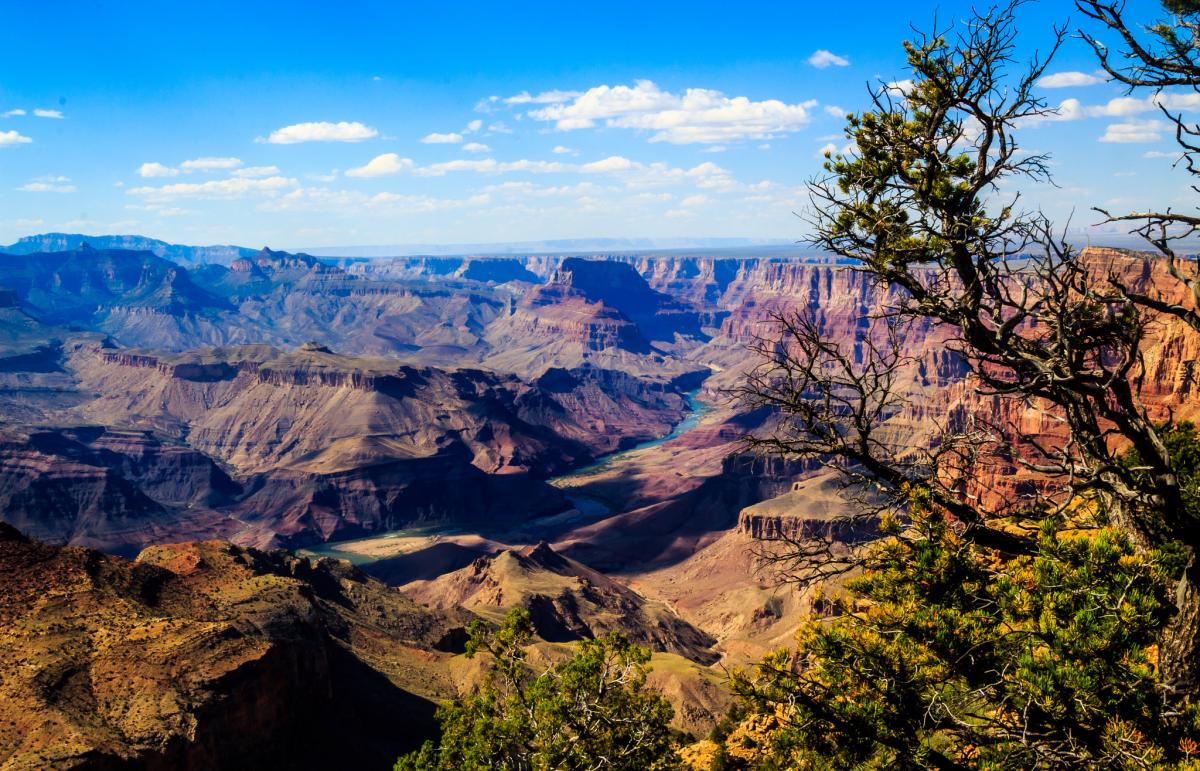
Scientists have discovered evidence of a giant ancient cliff system that exposed the rock formations of the Grand Canyon hundreds of millions of years ago, according to a report by Interesting Engineering.
Based on a study published in the journal Geology, the hypothetical structure known as the Great Laurentian Escarpment stood approximately 1 kilometer high and stretched for thousands of kilometers across the territory of the modern United States. The massive cliff formed roughly 800 to 750 million years ago as the ancient supercontinent Rodinia began to break apart.
Scientists state that the massive cliff system triggered prolonged erosion across North America, stripping away vast amounts of surface rock and revealing some of the continent's oldest geological layers. Reconstruction of plate tectonics suggests the Grand Canyon region was once situated near an ancient continental margin, similar to modern coastal escarpments found in South Africa and Brazil.
Erosion and tectonic uplift
Researchers' models indicate that regions close to the escarpment lost up to 8 kilometers of rock layer, with the intensity of erosion diminishing further away from the ancient cliff. The study noted that this process exposed deep basement rocks of the Earth's crust, including the ancient crystalline formations that are visible today at the bottom of the canyon.
The Grand Canyon, located in northern Arizona, is world-famous for its deep rock layers that document Earth's geological history. Laurentia refers to the ancient continental core of North America, while Rodinia was a vast supercontinent that contained most of the planet's landmass before tectonic forces tore it apart during the Neoproterozoic era.
According to the new study, tectonic uplift linked to the escarpment generated steep slopes and highlands that underwent intense erosion over extended periods. Scientists suggested that this erosion was not a single uniform event, but was driven by the specific location and gradual evolution of the vast prehistoric landscape.
Impacts on rivers and ancient ecosystems
The publication highlighted that the geological impact extended far beyond the Grand Canyon itself. Researchers argued that the ancient cliff system likely reshaped river networks, altered sediment transport, and caused the flooding of continental interiors long before the rapid diversification of complex life forms during the Cambrian explosion.
Recent developments in materials and laser tech
In other scientific developments reported by UNIAN, researchers created a specialized nanomaterial capable of cooling buildings without using electricity. Scientists said the material radiates thermal energy efficiently while reflecting solar radiation, allowing it to become cooler than the surrounding air without needing power plugs or compressors.
Additionally, developers in China designed a device that hunts mosquitoes using a laser. The automated targeting system was first showcased in the summer of 2025 during a public crowdfunding campaign.