

Dominican Republic Administrative Minister of the Presidency Andrés Bautista called on political parties on Sunday to avoid politicising issues related to education, warning that the practice acts as an obstacle to the nation's development.
Bautista said education must be treated as a fundamental pillar of the country and kept entirely separate from partisan interests.
He added that when education is politicised, it generates a backwardness that all of Dominican society must overcome.
The minister's comments followed recent claims by National District Senator Omar Fernández, who stated that the enrolment of Haitian students in the country had increased.
Fernández represents the core of the capital city, Santo Domingo, in the legislature, and his assertion regarding Haitian students in Dominican schools was subsequently rejected by Education Minister Luis Miguel De Camps.
The Dominican Republic shares the island of Hispaniola with Haiti, and migration across the border is a prominent and frequently sensitive topic in Dominican politics. The presence of Haitian migrants and their children in the public school system is a regular subject of national debate.
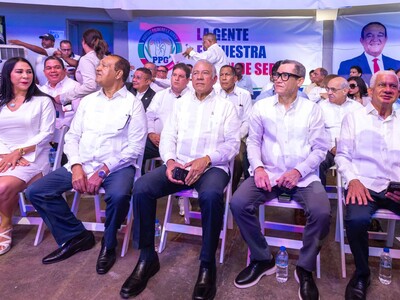
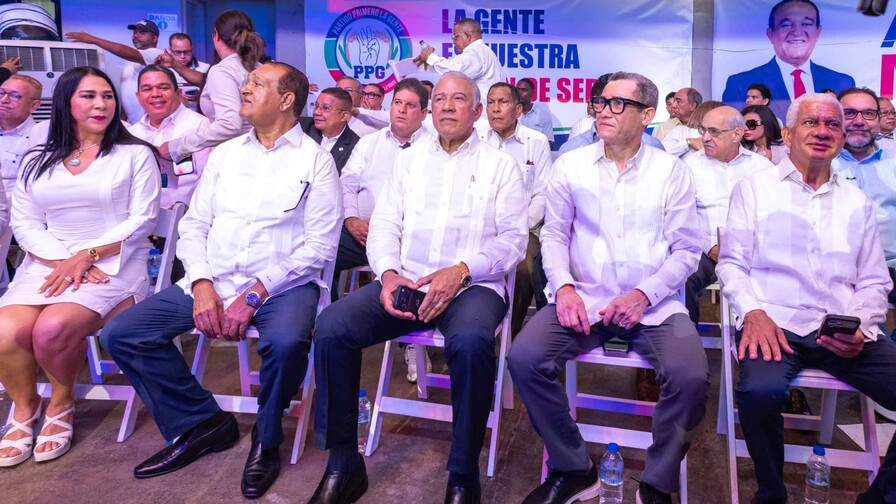
Bautista, who coordinates government policies closely with the presidency, was speaking during his participation in the First José Francisco Peña Gómez Congress of the Partido Primero la Gente.
The political party is led by Senator Antonio Marte, a prominent figure in the country's transport sector as well as a national legislator.
Constructive criticism
During the congress, Bautista exhorted the political class to ensure that any observations they make regarding the educational system are made responsibly. He said such critiques should be based on truth and delivered with a constructive purpose.
Addressing the physical state of the country's schools, the minister pointed out that given the sheer number of educational centres across the Dominican Republic, it is normal for some facilities to require repair or intervention work.
The Dominican public education system provides free schooling across the country, but has historically faced challenges with infrastructure and resources, making the physical condition of classrooms a regular topic of public concern.
Bautista explained that the government has ordered the demolition of school buildings that have reached the end of their useful life. Meanwhile, other structures will undergo repairs to guarantee adequate conditions for both students and teachers.
Shared responsibility
The minister emphasised that strengthening the educational system does not depend solely on the government. Instead, he said, it requires the active participation and commitment of all sectors of society.
In this context, he highlighted parents, teachers and other actors involved in the educational process as fundamental parts of the broader effort to improve education in the Dominican Republic.
Bautista concluded by insisting that political differences must not be placed above an issue that should unite all sectors of the country, which he identified as the training and the future of new generations.


