Fossilized penguin bones discovered on Seymour Island near the Antarctic Peninsula contain 55-million-year-old chemical signals that record Antarctica's climate transition from a warm, humid region to a frozen continent, according to researchers at the China University of Geosciences in Beijing.
The research team analyzed the chemical composition of fossil specimens from different geologic eras using a non-destructive X-ray system, revealing environmental changes preserved within the bones during fossilization.
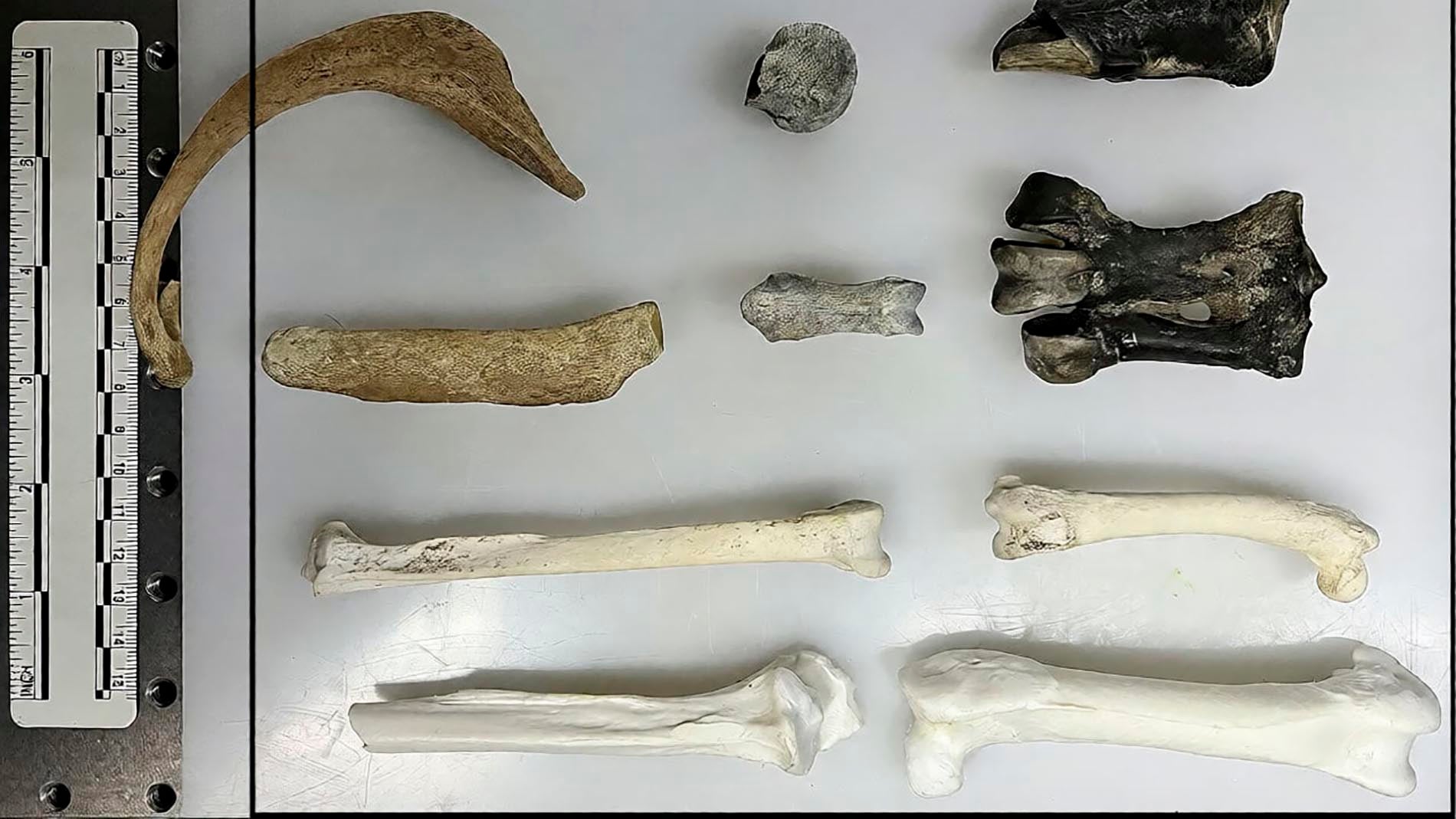
The oldest specimens analyzed, dating back roughly 55 million years to the Eocene epoch, showed significantly higher concentrations of titanium, silicon, and potassium than fossilized bones from later periods. Scientists linked these chemical signals to intense rock erosion on land caused by a warm and humid climate, which washed terrestrial minerals into the sea.
Younger fossilized bones formed as the continent cooled over subsequent millions of years contained considerably smaller amounts of titanium, silicon, and potassium. Researchers noted that chemical markers within the bones function as proxy signals when compared against geological layers, allowing scientists to track long-term environmental shifts rather than measuring daily temperatures.
Chemical Signals in Marine Sediments
The study also identified distinct variations in iron, manganese, and sulfur across the penguin fossils. Researchers explained that these specific elements provide evidence regarding the chemical conditions of the marine sediments where the animal remains were originally buried.
Seymour Island, located off the northern tip of the Antarctic Peninsula, is recognized as one of the world's most significant paleontological sites for Eocene penguin fossils. The island contains rich, continuous rock strata that allow scientists to trace millions of years of evolutionary and environmental history without relying on isolated specimens.
During the Early Eocene epoch, Antarctica experienced a temperate climate without its current polar ice sheets, supporting lush vegetation and coastal marine ecosystems before global cooling transformed the region.
Non-Destructive X-Ray Mapping
Because rare vertebrate fossils are extremely valuable to scientific collections, researchers avoided traditional analytical methods that require cutting, grinding, or destroying portions of the samples. Instead, the team applied an advanced X-ray mapping technique to inspect elemental concentrations directly on the surface of the bone without causing physical damage.
Reconstructing ancient polar climates has historically relied on analyzing marine sediment cores, microscopic fossilized organisms, and geological formations. The authors proposed that vertebrate fossils stored in museum collections can offer an additional line of evidence for ancient climate research.
The team emphasized that the non-destructive approach enables paleontologists to re-evaluate rare museum holdings with new scientific questions while keeping specimens intact. Researchers concluded that elemental analysis of vertebrate bones will complement existing geological methods to better understand Antarctica's transition long before it became an ice-covered continent.