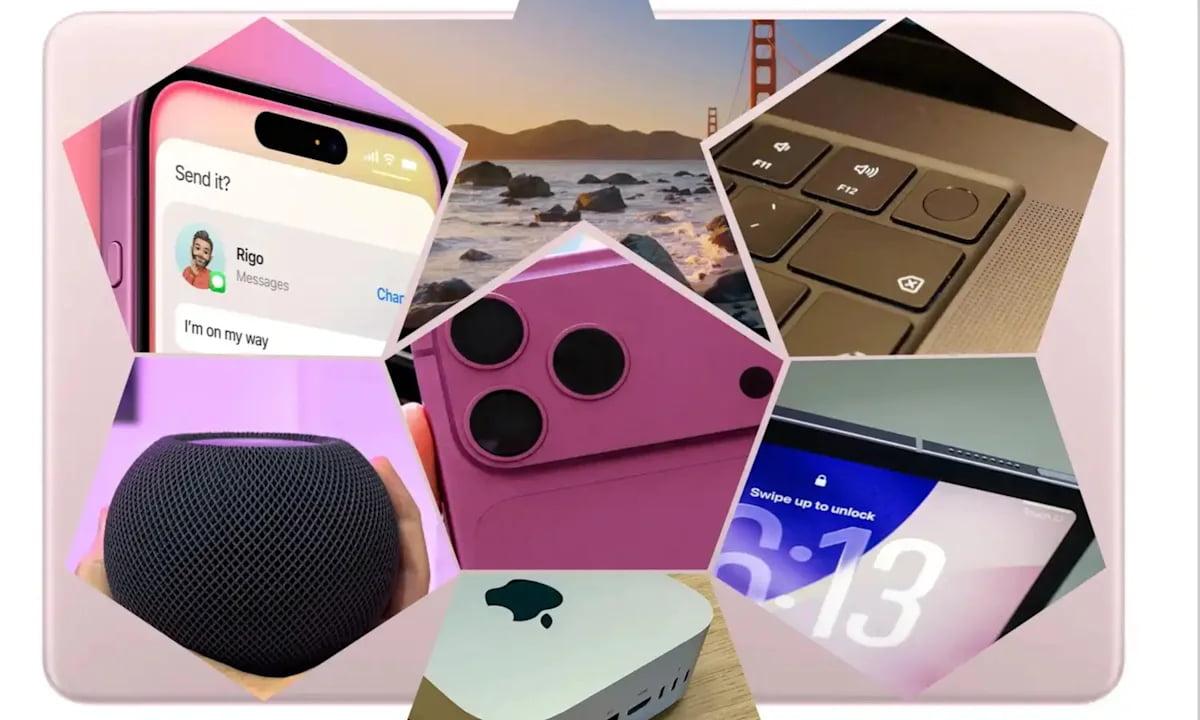
Apple is developing a new generation of artificial intelligence agents able to browse the web, use apps, run commands, write code and coordinate tasks on a user's behalf, according to job postings the company published and later withdrew.
The listings describe a project still in development rather than an announced product, but they point toward a major shift: AI moving from acting as a kind of search engine on steroids to software that reserves, organises, buys, writes or manages tasks for people.
Apple has already unveiled a new generation of AI models built in collaboration with Google and based in part on Google's Gemini technology. It has also overhauled Siri, integrating its capabilities across the company's wider ecosystem.
Built Around Trust
For more ambitious agents, trust will matter as much as capability. Apple has built an architecture that combines processing on the device itself with Private Cloud Compute, a system designed so more complex operations can run on servers without personal data being stored or made accessible to the company, according to Apple's own assurances.
The company publishes documentation and tools that let outside specialists examine and verify some of those protections. The goal is for the AI to know enough about a person to help them without knowing so much that it endangers their privacy.
The Human Factor
Even an architecture with thousands of safeguards has to contend with a variable it cannot fully control: human behaviour. A system can encrypt information, limit permissions and verify operations, but a person can still click a fraudulent link, download an infected file, forward a malicious document or approve an action without understanding its consequences. Social-engineering attacks do not always need to defeat the technology; often it is enough to persuade a person to open the door.
The more intelligent and autonomous an agent becomes, the more information and permissions it needs to be useful, and the greater its access, the bigger the consequences of a mistake, a manipulation or a wrong decision. Security will not depend only on a machine stopping itself when it senses danger; it will also depend on people recognising that danger, and that does not always happen. People are curious, impatient, trusting and, at times, too comfortable to check what they are authorising.

One possible answer is to design systems that pause when in doubt, ask for confirmation or limit their own capabilities. But that raises an uncomfortable question: what machine can decide what counts as reasonable doubt, or where the line sits between a useful action and a risky one? Trying to translate every such decision into an algorithm overlooks the fact that humans themselves do not always know when to stop.
Giving Up Control
Apple could end up becoming a kind of gatekeeper for the digital world, not just giving access to information and services but deciding, through its agents, how people interact with them. Whether that works will depend on the agents being useful without amounting to a surrender of control.
There is a possibility that goes beyond security: people could end up handing technology a kind of power similar to the one humans have exercised over other species, not through a machine imposing its will but through a form of voluntary domestication. At first, people will delegate small tasks to save time. Later, they may let an agent organise their schedule, filter their messages, select information or make everyday decisions. Gradually, the habit of checking those choices, or doing things themselves as they once did, could fade.
As in any relationship of dependence, comfort can turn into habit, and habit into a gradual surrender of autonomy, not because the machine forces obedience but because people get used to it being easier. Perhaps domestication will not mean that an AI learns to dominate humans, but that humans learn to live without exercising certain decisions, which raises an uncomfortable question: how much control are people willing to give up to live with less stress?
An Apple With a History
Apple's bitten-apple logo has long carried its own legend. Alan Turing, one of the pioneers of modern computing, was found dead on 7 June 1954 at his home in Wilmslow, England, having died of cyanide poisoning, with a half-eaten apple beside his bed. The official inquiry concluded he had taken his own life, though the circumstances of his death have fuelled debate for decades.
It has often been said that Apple's logo pays homage to Turing, who was prosecuted and convicted for homosexuality at a time when British law criminalised it. But Rob Janoff, the designer of the logo, has denied that account, saying the bite was added so the fruit would not be mistaken for a cherry and to give it a recognisable scale. Its resemblance to "byte," the computing unit pronounced the same as "bite," he said, was simply a happy coincidence.
There is a certain irony in a company built around an apple logo finding that its biggest challenge is not offering people the fruit of knowledge, but stopping them from eating it without knowing the consequences.
Test yourself
What did Apple's withdrawn job postings describe, according to the article?
What system does Apple use to process complex AI operations on servers while protecting personal data?
Why did Rob Janoff add a bite to the Apple logo, according to his own explanation?