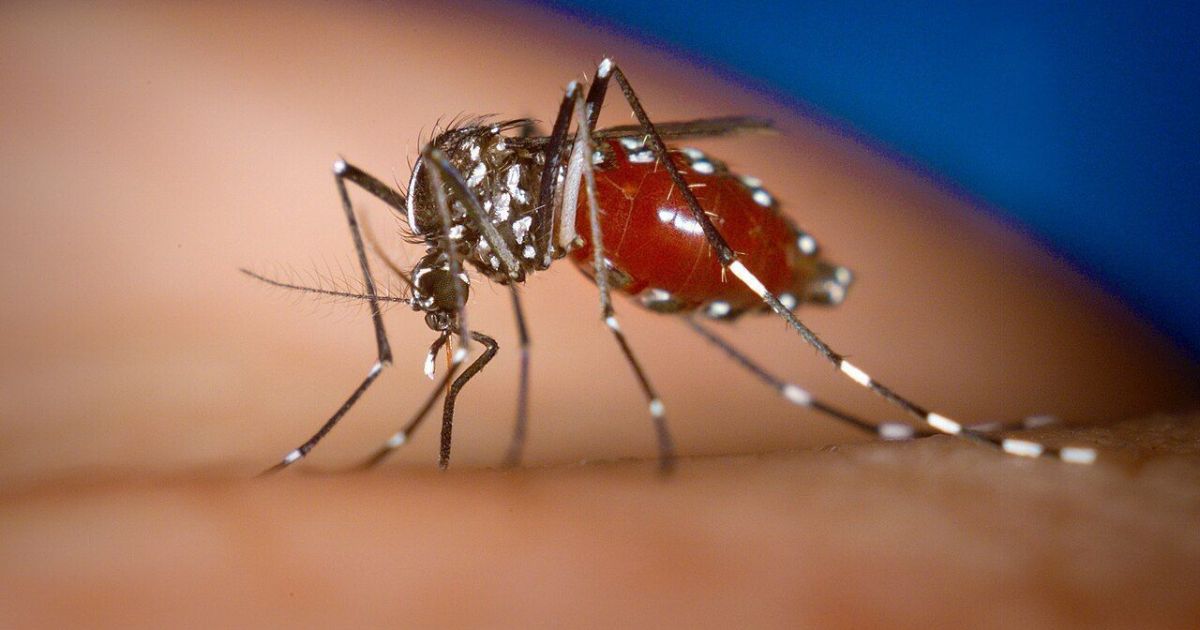
Mosquitoes carrying the bacterium Wolbachia reduced infections from dengue, zika and chikungunya by 68.6% among children in Belo Horizonte, Brazil, according to a clinical trial presented Saturday at the annual meeting of the American Society of Tropical Medicine and Hygiene in National Harbor, Maryland.
The study, called "Evita Dengue," was carried out between 2020 and 2024 by an independent, multidisciplinary team of researchers from Brazil and the United States. It found that releasing Aedes aegypti mosquitoes carrying Wolbachia across parts of the city cut arbovirus infections among children, compared with areas that relied only on standard mosquito-control measures.
Broken down by disease, the researchers reported a reduction of 68.5% for dengue and 73.3% for chikungunya.
The American Society of Tropical Medicine and Hygiene is a United States-based professional organization for specialists in tropical diseases, and its annual meeting is one of the largest gatherings in the world on the subject.
The project brought together Brazil's Federal University of Minas Gerais (UFMG), the Sao Jose do Rio Preto Medical School (Famerp), the Oswaldo Cruz Foundation (Fiocruz) and the World Mosquito Program, along with Emory University, Yale University, Johns Hopkins University and the University of Florida in the United States. The World Mosquito Program is a global non-profit initiative that promotes the release of Wolbachia-carrying mosquitoes as a tool against mosquito-borne disease.
How the trial worked
Wolbachia is a bacterium commonly found in nature. When introduced in a laboratory into Aedes aegypti, the mosquito species that spreads dengue, zika and chikungunya, it sharply reduces the insect's ability to transmit those viruses. Female mosquitoes pass the bacterium on to their offspring, which allows it to spread and take hold in the local mosquito population over time.
For "Evita Dengue," researchers used a Wolbachia strain developed from mosquitoes collected in Belo Horizonte itself. That strain was released across the city, the capital of the southeastern state of Minas Gerais, between January 2021 and May 2022.
The clinical trial was cluster-randomized, meaning the city was divided into 58 areas surrounding schools, which were then randomly assigned to one of two groups of 29 areas each. One group received the Wolbachia-carrying mosquitoes alongside the usual Aedes aegypti control measures, such as insecticide spraying and the removal of breeding sites. The other group received only the conventional control measures, without the mosquito release.
Testing more than 5,700 children
In total, 5,757 children between the ages of 6 and 11 took part in the study. They gave blood samples in 2020 and then once a year through 2024. Researchers analyzed the samples for antibodies against the dengue, zika and chikungunya viruses, which indicate a previous infection.
Mauro Teixeira, a professor at UFMG, said running the study during the Covid-19 pandemic had been an extraordinary challenge, particularly because schools closed just as the team was beginning to enroll participants.
A record epidemic year
The follow-up period included 2024, the year Brazil faced the largest dengue epidemic in its history, which contributed to a global record in case numbers. Dengue is a viral infection spread by mosquito bites that can cause high fever and severe joint pain, and in rare cases can be fatal.
Derek Cummings, a professor at Johns Hopkins University, said the intervention had substantially reduced dengue infections during the largest epidemic ever recorded in Brazil, demonstrating its potential to protect communities even in conditions of intense transmission.
The researchers said the results suggest the strategy could become an additional tool in preventing dengue and other mosquito-borne diseases.
Test yourself
By how much did Wolbachia-carrying mosquitoes reduce arbovirus infections overall among children in the trial?
How many children participated in the 'Evita Dengue' study?
Where were the study results presented?
Have your say
Should wider release of Wolbachia-carrying mosquitoes be adopted as a public health strategy against dengue?
Where it happened
Belo Horizonte, Brazil