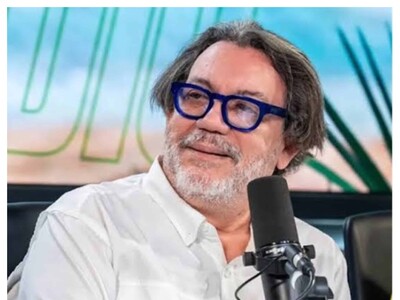
Dominican plastic artist and arts educator Luiggy Morales says art therapy could offer meaningful support to children with autism spectrum disorder (TEA) and their families, even though the practice remains limited and little used in the Dominican Republic, according to a column he published on September 4, 2026.
Morales defines art therapy as a profession based on using the artistic process for therapeutic purposes and on the relationship that forms between a person and the artistic experience. He notes that despite this definition, the country still has only a small group of professionals specialized in the field.
He points out that postgraduate training programs in art therapy do exist, such as the master's degree offered by the Universidad Complutense de Madrid, and that Spain is a frequent destination for Dominican study-abroad scholarships. That, he writes, makes it worth asking why so few specialized art therapy professionals are practicing in the country.
Rethinking assumptions about autism
Morales challenges what he calls a mistaken perception that a person diagnosed with TEA is destined to fail in life or will not be functional. He cites the United Nations definition of TEA as a group of diverse conditions marked by some degree of impairment in social behavior, communication and language, along with a restricted, stereotyped and repetitive range of interests and activities.
He cites Greta Thunberg and Anthony Hopkins as examples of well-known figures recognized for their activism and their art, respectively, showing that people with TEA, depending on the type, can succeed in different areas of life, work and society. Morales argues it is time to abandon the old mindset and instead confront a diagnosis directly, seeking out the treatments needed, with art serving as an effective supporting tool.
Affordable options like CAID
Morales highlights the Centro de Atención Integral para la Discapacidad (CAID) as a much more affordable alternative for families. He describes it as a body attached to the Ministry of Education that operates independently in both function and territory, aiming to provide comprehensive evaluation, diagnosis and therapeutic services.
The center serves children from birth to age 12 with autism spectrum disorder, Down syndrome and cerebral palsy, with the goal of helping them reach their fullest potential and achieve effective inclusion in education and society. Among the therapies available at CAID is art therapy itself, giving families another route to support their children's development, Morales writes.
At-home activities for anxious moments
For families who cannot access a therapist, Morales offers home activities that, while not a substitute for professional supervision, can help during moments of anxiety or when a child loses focus. He lists drawing outdoors to relax in nature, taking a notebook and pencil to a park or the countryside to sketch a landscape while listening to birdsong and wind.
Another suggestion is painting to music, letting sounds guide creativity and help express emotion; Morales cites the ancient saying attributed to Plato that music is to the soul what gymnastics is to the body. He also suggests recreating a safe place through reflection and any preferred artistic material, creating art from natural elements such as stones, leaves and branches, and painting on one's own skin paired with relaxing music to build concentration and personal connection.
No single outcome for every child
Morales writes that having a child diagnosed with TEA can be a challenge for any family, but that with the right tools and guidance it is possible to move forward. He says his recommendation of art therapy comes from favorable results he has seen throughout his career and in experiences close to him, where the arts have helped people express feelings and relax the mind.
He cautions, however, that not everyone with TEA will see the same results from incorporating art therapy into their routine. Each person has an individual process, he writes, so families should avoid building expectations or making comparisons based on cases with favorable outcomes. Success, he says, lies in recognizing and valuing every step forward, however small, and supporting each person's development according to their own needs and possibilities.
Morales is a plastic artist, arts educator and cultural manager who graduated from Altos de Chavón and holds a postgraduate degree in Culture and Communication from FLACSO. His career spans visual arts, photography, film, muralism and sculpture, and he currently focuses part of his work on teaching and passing knowledge to younger generations.