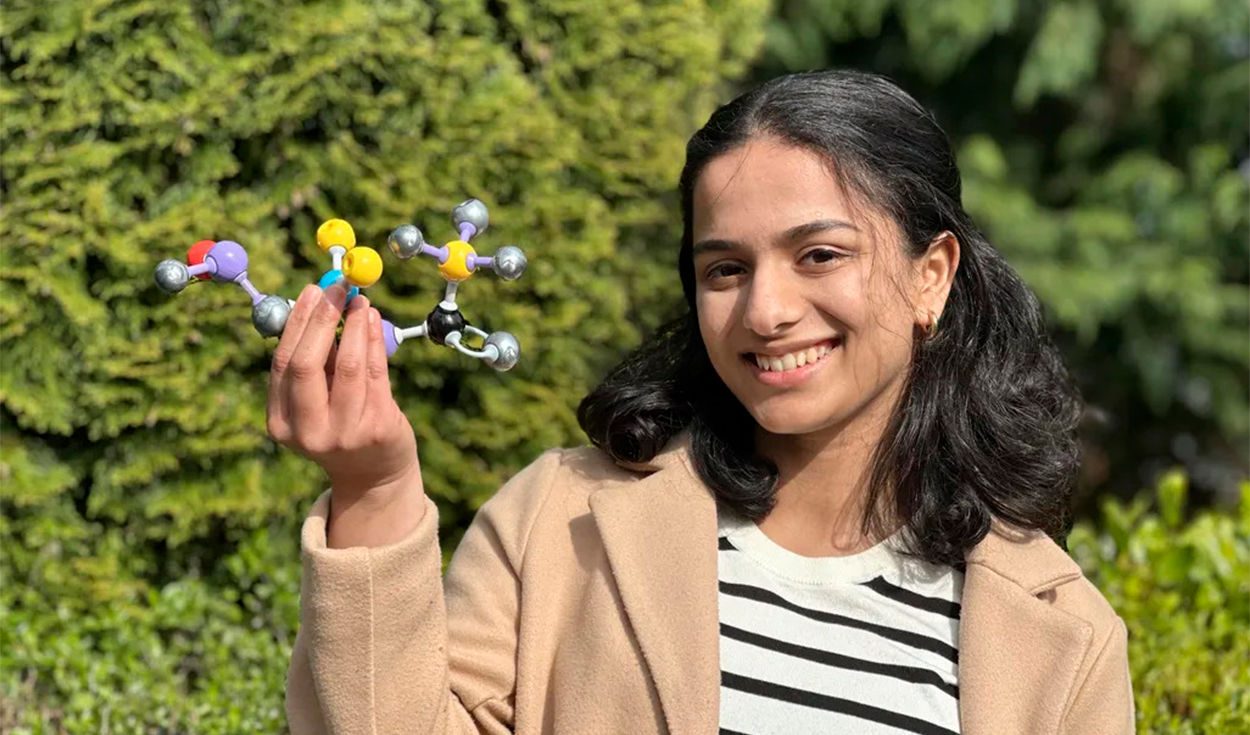
Arya Satheesh, an 18-year-old high school student from Letterkenny, Ireland, won the European category of The Earth Prize 2026 in May for developing Eco Purge, a plant-based bioplastic designed to combat microplastic pollution. The global environmental competition awarded her $12,500 to continue developing her prototype.
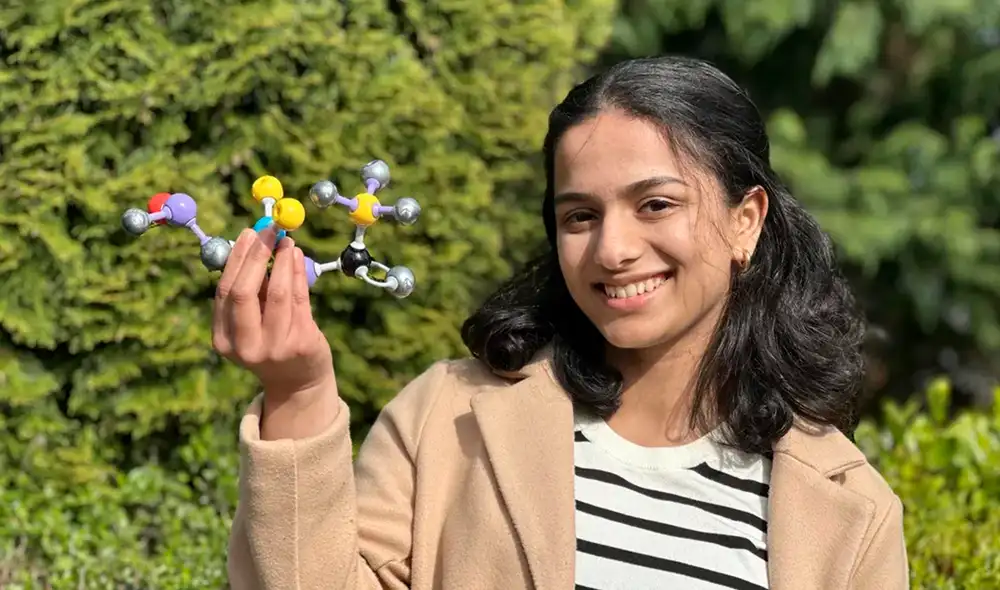
Eco Purge degrades naturally within two weeks under suitable conditions. As the plant-based material breaks down, it releases specialized enzymes into the surrounding soil or water to decompose PET-derived microplastics.
Traditional bioplastics focus on reducing new waste, but Eco Purge also targets plastic particles already in the environment. In laboratory tests conducted by Satheesh, both the bioplastic and the microplastic test particles degraded completely after six weeks.
How Eco Purge Breaks Down Microplastics
Microplastics are plastic fragments smaller than five millimeters that have been detected in oceans, rivers, farm soil, food, drinking water, and human bodies. Scientists consider these particles a growing environmental concern, and Eco Purge could offer a complementary tool if proven effective outside the lab.
Satheesh began working on the project after conducting earlier research into microplastic pollution. She had previously created a smart monitor to detect contaminants in drinking water, but decided identifying pollutants was not enough without a solution. Low global recycling rates for conventional plastics also motivated her research.
Finding the necessary enzymes presented a major obstacle because they were difficult to source and too expensive for a student budget. Satheesh used ChatGPT to search for companies in Europe and the United States working with enzyme technology, then contacted those suppliers directly.
Enzyme Sourcing and Project Challenges
After several unsuccessful attempts, Kevin O'Connor, director of BiOrbic, Ireland's National Bioeconomy Research Centre, helped import two enzymes from Denmark and Germany. That assistance allowed Satheesh to advance her experiment.

The Earth Prize program provides winners with mentorship and support to turn innovative ideas into practical applications. Experts view Eco Purge as a promising proof of concept, though significant technical hurdles remain before commercial use.
The enzymes currently focus on PET-derived plastics used in bottles and food containers, and rapid dilution in open water could reduce their effectiveness. Researchers also note that large-scale manufacturing, enzyme stability during production, and overall costs must be resolved, as most enzyme-based plastic degradation technologies remain experimental.