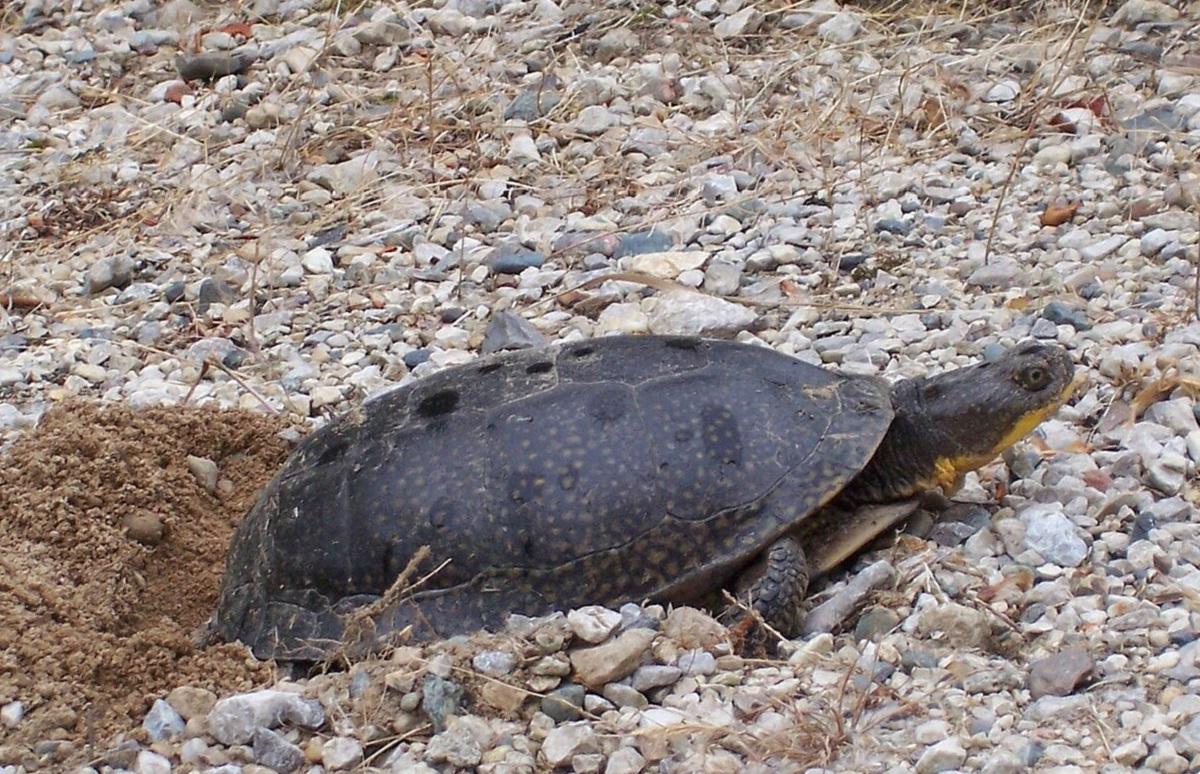
A female Blanding's turtle raised in captivity has successfully nested in Massachusetts, marking the first documented generation of offspring from a population recovery program at the Great Meadows Wildlife Refuge after the reptile vanished for 12 years.
The turtle, named Ivy, laid eight eggs in 2025, seven of which hatched. This summer, exactly one year after the nesting event, conservationists released two of those young turtles into the same marshy habitat where their mother was released as a hatchling.
Researchers confirmed the reproduction after tracking Ivy's radio transmitter signal to a protected area near the sanctuary. Senior field specialist Jimmy Welch monitored the turtle overnight and observed her beginning to lay her eggs at around 2:30 a.m.
Discovery after a decade in the wild
Ivy's history dates back to the spring of 2010, when her mother emerged from the wetlands of Great Meadows Wildlife Refuge in Massachusetts and traveled more than 1.5 kilometers to deposit a nest, Science Blog reported. Out of 11 hatchlings that emerged from the clutch, staff from Stone Zoo brought Ivy, who weighed approximately seven grams, into a conservation program designed to nurture young reptiles.
She spent her first winter in protected conditions with warm water and plenty of food. Ten months after her rescue, in 2011, wildlife officials released her back into the refuge.
Following her release, researchers lost all tracking contact with the turtle. For more than 10 years, specialists conducted regular surveys across the sanctuary, but Ivy was nowhere to be found. Experts noted she could have died, been run over by an automobile, or fallen prey to illegal poachers during her long absence.
The mystery ended in 2023 when specialists unexpectedly rediscovered Ivy during a routine field survey. The turtle had grown into a healthy adult and had almost reached reproductive age. Researchers attached a radio transmitter to her shell to maintain continuous observation.
Species survival and conservation research
According to Massachusetts conservation organizations, Ivy's nest represents the first documented case of offspring produced by a turtle raised under the Great Meadows population restoration program. The milestone highlights the effectiveness of head-starting programs, which nurture young animals through their most vulnerable early months before returning them to natural habitats.
Blanding's turtles are a freshwater species native to North America, easily recognized by their distinctive yellow throats and high-domed shells. The reptiles grow and reproduce very slowly, typically reaching sexual maturity between 14 and 21 years of age, while their total lifespan can exceed 75 years.
Captive raising dramatically improves survival odds after release. A study conducted at another reintroduction site in Massachusetts revealed that the first-year survival rate for hatchlings raised by humans was nearly six times higher than that of wild hatchlings released immediately after emerging from their eggs.
With two of Ivy's offspring now returned to the marshy sanctuary this summer, conservation teams plan to continue tracking the turtle population as restored reptiles settle into the refuge ecosystem.