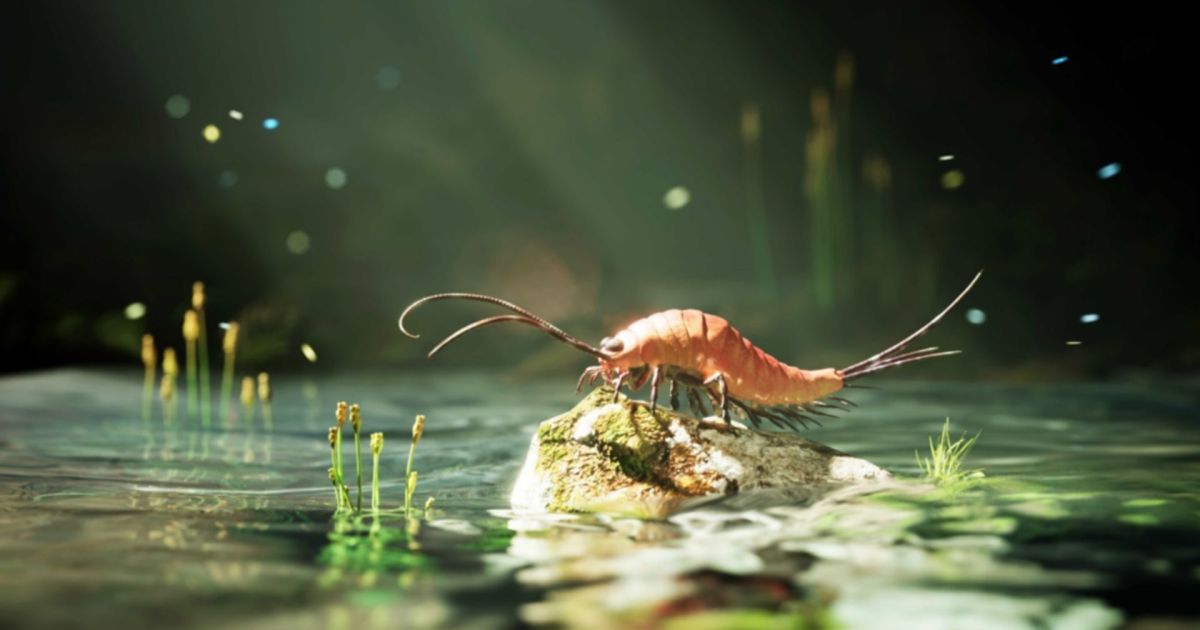
A 324-million-year-old fossil of a 24-limbed creature discovered in Texas could help scientists understand how the body structures of early insects evolved into modern forms.
The small primitive insect, named Chosha praecursor, measures just 49.66 millimetres including its tail extension, with its body extending 32.09 millimetres from the head to the apex of the abdomen.
Researchers found that out of the animal's 24 legs, only six were used for walking on land. These six limbs were attached to the thorax, matching the body structure seen in modern six-legged insects.
The remaining 18 limbs served as support and respiratory appendages located across segments one to nine of the abdomen. Scientists noted that the insect's rear legs were flattened and lacked claws, closely resembling gills and suggesting that Chosha praecursor was a subaquatic, amphibious creature.
Evolutionary lineage of insects
Insects form the largest group of animals on Earth, belonging to the arthropod phylum alongside crustaceans and arachnids. The discovery shows that unlike modern insects, which have highly specialized body plans with six legs, their ancient ancestors retained complex multi-limbed structures inherited from aquatic relatives.
The research paper was published in the journal Nature on Wednesday, August 26. The international study involved institutions across four countries: the United Kingdom, China, the United States, and Spain.
The project was led by researcher Erik Tihelka, who is affiliated with both the University of Cambridge and the Nanjing Institute of Geology and Paleontology. During their research, the scientific team examined two additional fossil specimens.
Analysis revealed that all three specimens belonged to the same ancestral group of primitive insects. Researchers explained that the fossil anatomy proves the six-legged layout was not always present throughout the evolutionary lineage of the species.
Transition from water to land
The study indicates that the ancestors of modern insects were pancrustaceans equipped with extra body appendages. As evolutionary processes took place, these anatomical structures modified over time, allowing insects to live progressively freer from aquatic environments until those extra limbs and aquatic traits were completely lost.
The University of Cambridge, established in England in 1209, is a world-renowned centre for biological research, while the Nanjing Institute of Geology and Paleontology in China is a leading research facility for paleontology and ancient fossils. The journal Nature, established in 1869, publishes major scientific discoveries across the physical and life sciences.
The research offers scientists a clearer view of the evolutionary trajectory that shaped modern insect anatomy over hundreds of millions of years. The initial report was produced under the supervision of Thiago Felix.