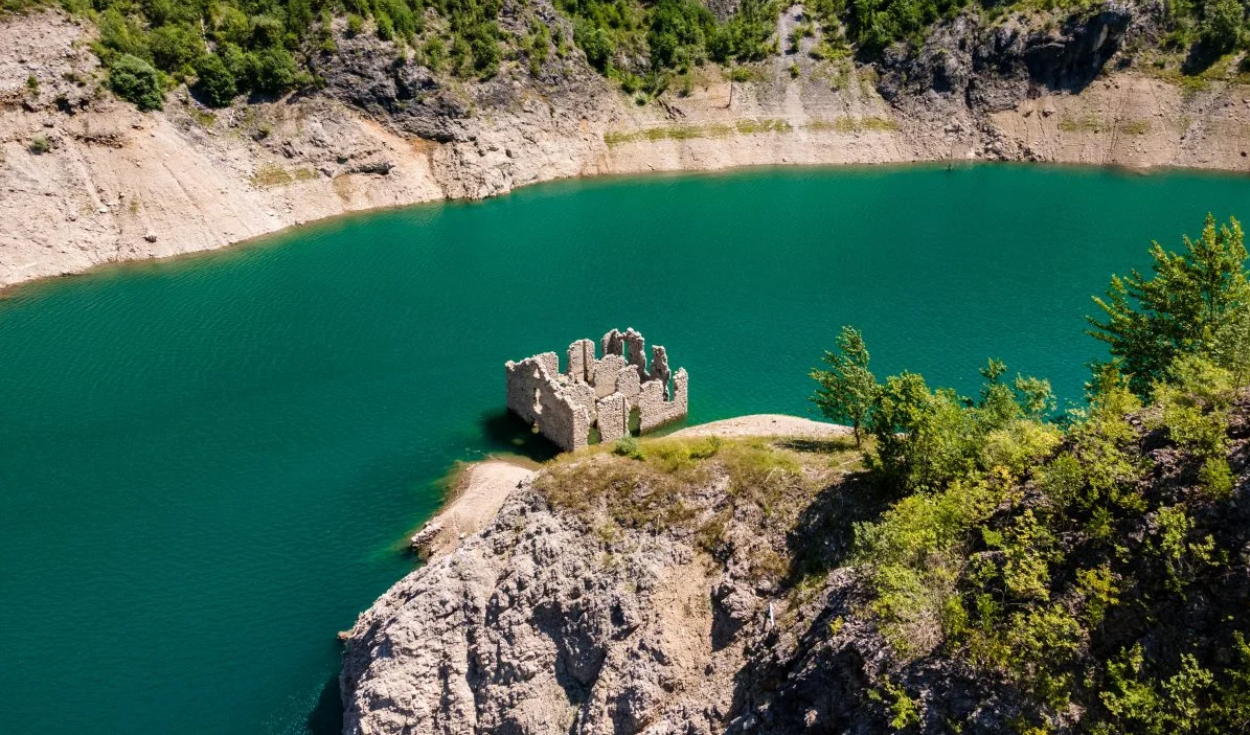
Drought-driven low water levels in Italy's Valvestino reservoir have exposed a stone customs house that has been submerged for more than six decades.
The structure, known as the Royal Customs House of Lignago, stands in the municipality of Gargnano on the western shore of Lake Garda. Built in the late 19th century, it marked the strategic border between the Kingdom of Italy and the Austro-Hungarian Empire.
During its years of operation, the Lignago station served as a mandatory checkpoint for people and goods moving between the mountains and the valley. After World War One pushed the Italian border northward, the building lost its operational purpose entirely.
Its fate was sealed in the early 1960s when the Ponte Cola dam was built on the Toscolano stream, creating the Valvestino reservoir, which flooded the valley and left the structure fully submerged. Since then, its stone walls have resurfaced only during sharp drops in water levels caused by prolonged drought or maintenance work on the dam.
The site holds a lasting place in local culture. A proverb still used in the Western Lombard dialect conveys that passing through Lignago was once unavoidable, a legacy of the era when the customs house controlled movement between Lake Garda and the Vestino valley.