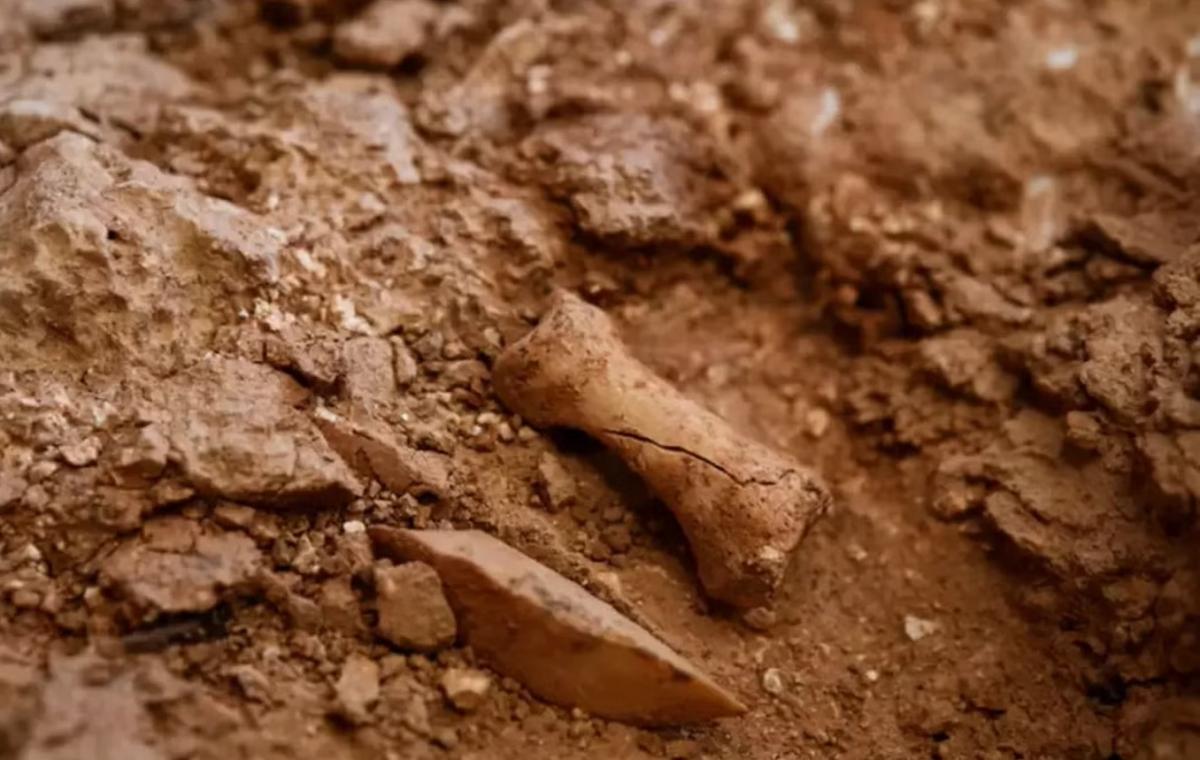
More than two dozen human ancestor fossils discovered in the Gran Dolina cave in Spain indicate that early Europeans likely practiced cannibalism 850,000 years ago. The ancient remains belong to adult and juvenile specimens of Homo antecessor, an extinct early human species that inhabited Western Europe during the Lower Paleolithic period.
Excavators found distinct cut marks on the fossilized bones of adult individuals buried at the site. According to report details published by The Independent, the cut marks were produced during the intentional butchering and processing of human bodies, confirming that adult group members fell victim to cannibalism.
The Gran Dolina cave is located within the Atapuerca archaeological complex in northern Spain, a UNESCO World Heritage region renowned for preserving some of the oldest hominin remains in Europe. First identified in the 1990s from discoveries made at Atapuerca, Homo antecessor is recognized by paleoanthropologists as one of the earliest known human species on the European continent.
The newly identified fossil collection includes a fragment of a temporal bone, several vertebrae, finger and toe phalanges, three teeth, and leg bone fragments encompassing the tibia, femur, and humerus. Researchers also recovered the first internal forearm bone ever documented at the Gran Dolina cave.
Andreu Ollé, a co-director of the excavation project, said each digging season helped assemble a scientific puzzle in which many pieces were still missing. He explained that increasing the number of documented individuals, particularly adults, enabled researchers to analyze the ancient population from a far more comprehensive perspective than ever before, offering unprecedented demographic insights.
Evidence of prehistoric butchery and demography
Researchers noted that the number of documented adult individuals at the site had increased significantly compared to earlier fossil finds. This expansion allowed scientists to reconstruct the population structure of the species in a manner that was far more balanced and demographically representative.
Cut marks from body butchering were identified across remains from both young and adult individuals, demonstrating widespread cannibalistic practices within the population. Palmira Saladié, a researcher at the Catalan Institute of Human Paleoecology and Social Evolution (IPHES), said finding butchered adults showed that cannibalism was not restricted solely to younger individuals. She noted that the larger sample provides a more representative foundation for understanding the biology, demography, and social behavior of Homo antecessor. IPHES is a specialized research center based in Tarragona, Spain, dedicated to prehistoric human evolution.
In addition to the hominin remains, archaeologists in the cave uncovered primitive stone tools manufactured from flint, quartzite, sandstone, and quartz. The cave deposits also yielded fossilized bones of various prehistoric animals, including hyenas, beavers, deer, bovids, horses, and rhinoceroses, providing a clearer picture of the local ice age ecosystem.
Other recent archaeological discoveries
The Spanish cave discoveries follow several other significant archaeological developments reported recently. In England, excavators uncovered a unique Roman villa where the most valuable find was a vibrant, multicolored Roman mosaic. The floor artwork was assembled from thousands of tiny stone cubes arranged in a detailed floral design, reflecting the rich decorative arts of Roman Britain.
Separately, paleontologists identified a 245-million-year-old fossil specimen featuring an almost complete skeleton. Crucially, the specimen preserved a substantial portion of its digestive system, making it the oldest known reptile fossil ever discovered with a virtually intact digestive tract.