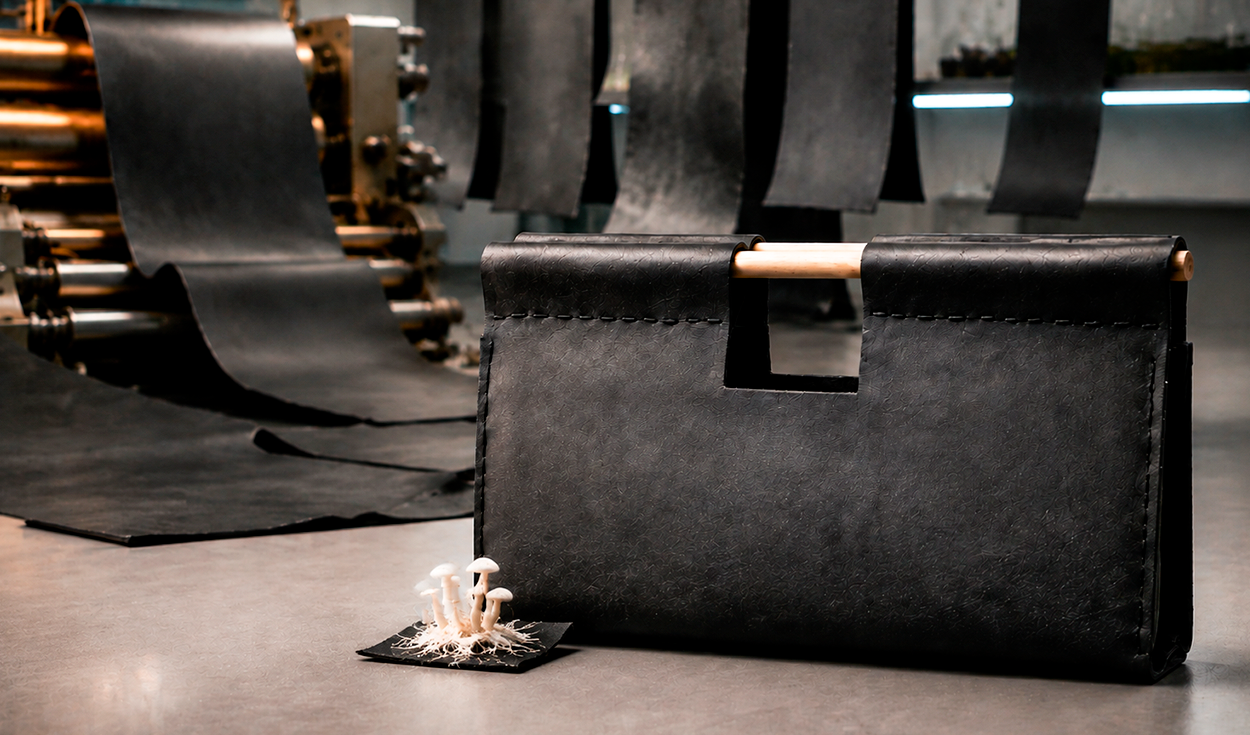
Researchers at the VTT Technical Research Centre of Finland have developed a flexible, biodegradable leather alternative made from mushroom mycelium for continuous industrial production. The material provides a sustainable option to animal skins and petroleum-based plastics such as PVC and polyurethane.
The research was presented by the American Chemical Society and published in the journal ACS Applied Bio Materials. To demonstrate the textile, scientists produced a multi-meter sheet of the material and crafted a functional handbag.
Industrial fermentation and roller production
The process uses the vegetative network of the fungus Trichoderma reesei. Instead of traditional tray growth, scientists place the microorganism in a nutritional fluid inside industrial fermentation tanks to yield a fibrous, pulp-like biomass.
After harvesting and washing the biomass, researchers add sorbitol and cellulose to increase flexibility and strength. The mixture is spread into thin layers and dried to form a non-woven sheet with properties comparable to conventional leather.
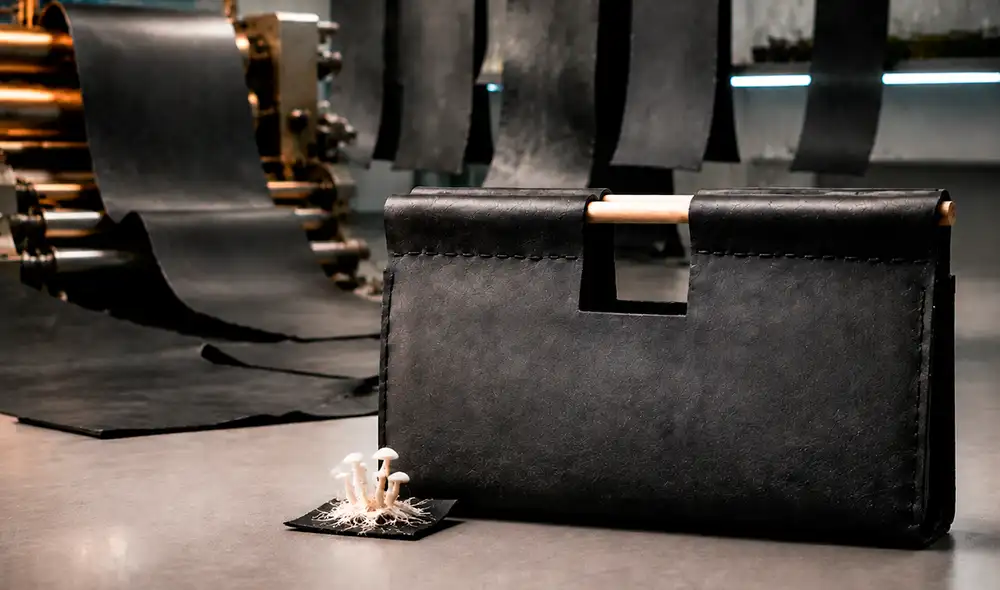
The technique allows easy color adjustment, surface embossing, and bonding onto cotton fabrics. Using a roller system similar to paper mills, the team produced continuous strips measuring 20 centimeters wide by 8 meters long.
Co-author Manuel Arias-Barrantes told the American Chemical Society that the work resolved a major hurdle by enabling large-scale production of affordable mycelium fabrics. VTT noted that continuous roll manufacturing could also reduce material waste from cutting.
Biodegradation rates and durability testing
Testing showed the fungal textile achieves tensile strength close to animal leather, though its tear resistance requires further improvement. Samples fully decompose in six weeks under industrial composting conditions with controlled temperature, humidity, and microbes, or in 28 days in water.
Researchers emphasized that rapid breakdown only occurs at the end of the product lifecycle, meaning items will not disintegrate during daily use or in standard landfills. The material reduces synthetic waste while utilizing renewable resources compatible with paper industry equipment.
Before reaching the market for high-use footwear and accessories, the material must undergo additional trials for abrasion, creasing, aging, and tearing to ensure long-term durability.