

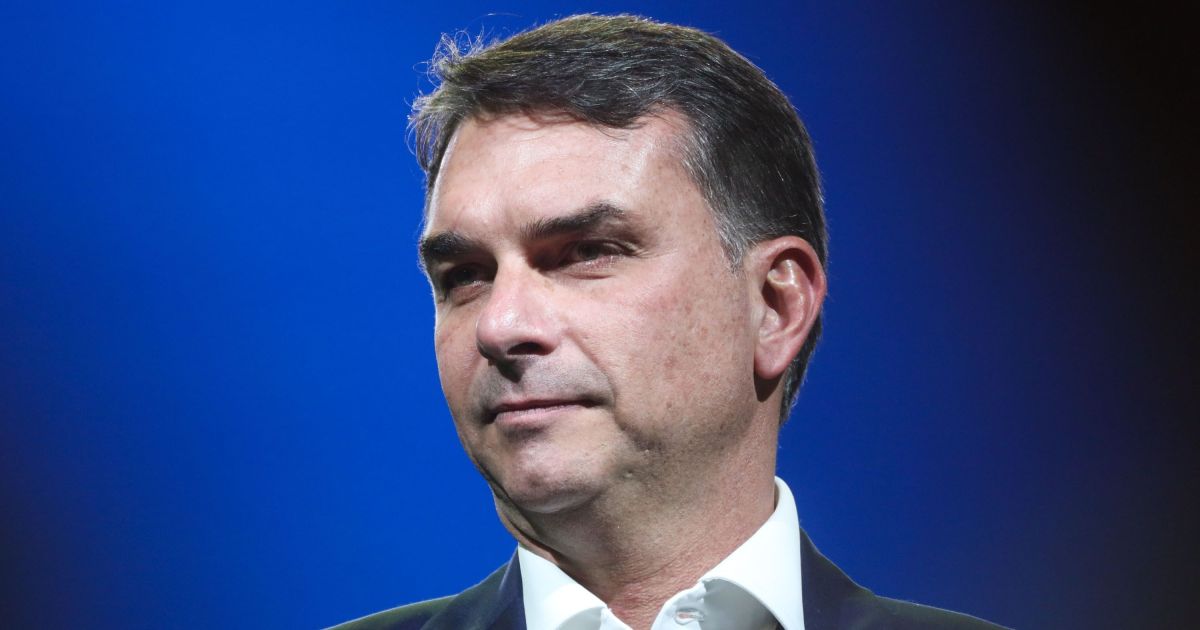
Senator Flávio Bolsonaro, a presidential candidate for the Liberal Party (PL), stayed away from Sunday night's presidential debate hosted by TV Bandeirantes, saying he wants to face President Luiz Inácio Lula da Silva of the Workers' Party (PT) instead, who also skipped the event.
Romeu Zema, of the New Party (Novo), also chose not to take part. That left only three candidates on stage: Renan Santos of Missão, Ronaldo Caiado of the Social Democratic Party (PSD) and Augusto Cury of Avante.
While the debate was still on air, Flávio posted a video on social media explaining his absence. Without naming Lula directly, he said he did want to debate, but with whoever was destroying Brazil and making people's lives worse.
He said those taking part in the debate that night were not his rivals. He said he respected all of them but that they were definitely not his opponents, adding that his real opponent was whoever held power and was destroying Brazil, working hard to wreck the economy and the safety of Brazilian families, and that viewers knew exactly who he meant.
Criticism of the economy
In the video, Flávio criticized Lula using everyday situations facing Brazilian families and the wider economy. He also seized on the case of Fábio Luiz Lula da Silva, known as Lulinha, the president's son, who is the target of three inquiries over suspected influence trafficking.
He said that while families were doing the math at the supermarket, Lulinha was the target of several inquiries investigating influence trafficking, corruption and payments from the lobbyist known as Careca do INSS.
He said the current government spends too much and raises taxes to bring in even more money to cover its expenses, adding that spending keeps climbing, so taxes must keep rising, and the numbers will never add up. He said the government piles up debt and drags ordinary people into debt too, since their own debts are corrected using interest rates the government has pushed sky high.
Tax cuts and crime policy
Flávio said he backs what he called a tesouraço, a sweeping cut in taxes and bureaucracy. He also repeated his plan to treat criminal factions as terrorist organizations.
He said this was not a matter for social policy but for policing and tough law, aimed at jailing violent criminals and keeping them off the streets. He said inmates would have to work to pay for their time in prison, and that police officers would get legal backing to do their jobs instead of facing prosecution simply for having worked.


