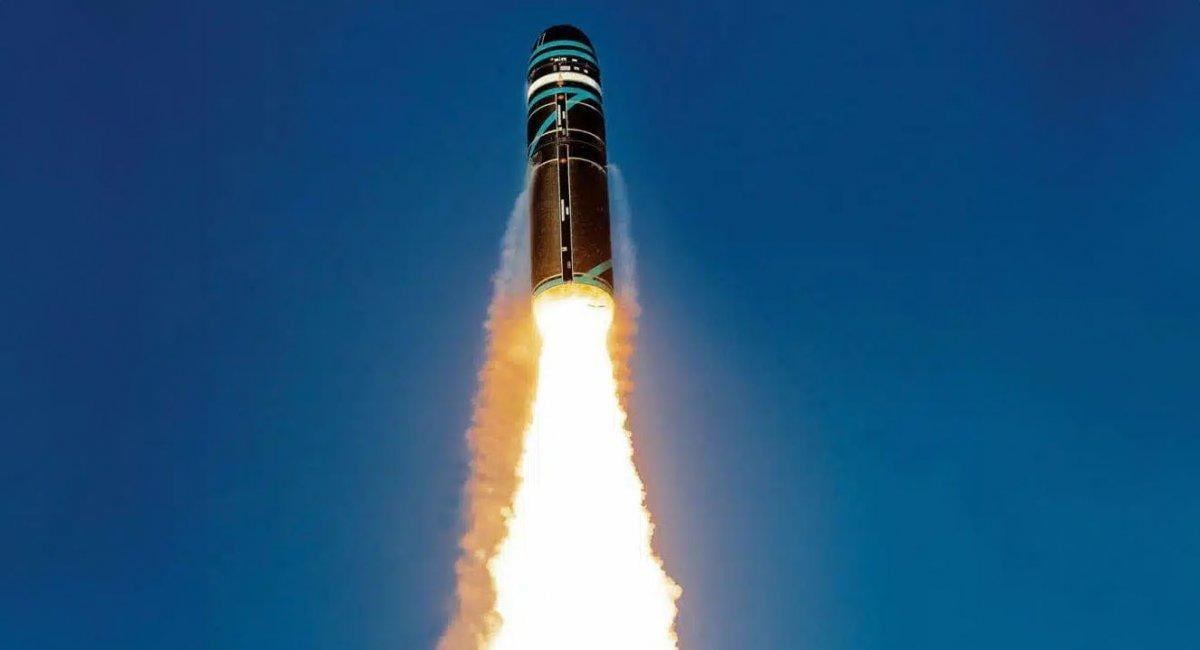
France has carried out its first submarine launch of an M51.3 intercontinental ballistic missile in three years, test firing the unarmed weapon from the nuclear submarine Le Vigilant off the coast of Finistère.
French President Emmanuel Macron observed the launch of the strategic missile, which carried no nuclear payload and landed in the North Atlantic. French newspaper Le Parisien reported that the weapon was fired from the nuclear-powered vessel on Tuesday.
Preparations for the test were reported by French regional publication Ouest-France, with maritime navigation restrictions established off Finistère through October 21. Etienne Marcuz, a strategic arms analyst, said the missile was expected to cover approximately 4,700 kilometres during the trajectory test, though he noted this figure does not represent the maximum range of the M51.3.
Finistère is a coastal department located in Brittany in western France. It hosts the Île Longue naval base, the primary home port and maintenance facility for France's strategic submarine fleet.
Submarine trials and readiness
The test flight followed extensive maintenance work on Le Vigilant that began in the autumn of 2023 at the Île Longue base. The multi-year overhaul included thorough servicing of the submarine's onboard nuclear reactor, weapons delivery systems, and other critical machinery.
Strategic nuclear submarines in the French Navy undergo mandatory sea trials following major overhauls, with missile launches serving to confirm the operational capability of the vessel's strategic weapons suite. A similar test launch was conducted in April 2023 by the submarine Le Terrible after it completed its own technical maintenance period.
The M51.3 modification officially achieved operational readiness status in October 2025. The updated missile features extended range, improved target accuracy, and enhanced capabilities to penetrate enemy anti-missile defense networks, while also having the capability to carry the new TNO-2 nuclear warhead.
France conducted the initial qualification test of the M51.3 variant in November 2023. That test was launched from a land-based military facility in Biscarrosse, located in southwestern France, sending an unarmed missile over the Atlantic Ocean.
Missile specifications and strategic defense
The M51.3 is a three-stage solid-fuel sea-launched intercontinental ballistic missile developed as an advanced derivative of the M51 missile family. Although exact technical specifications for the M51.3 remain classified, earlier variants such as the M51.1 and M51.2 were estimated to possess an operational flight range of 8,000 to 10,000 kilometres and top speeds reaching Mach 25, or twenty-five times the speed of sound.
The earlier M51.1 and M51.2 missiles were capable of carrying thermonuclear warheads with explosive yields ranging between 110 and 300 kilotons. The M51.3 is believed to retain the structural dimensions of its predecessors, measuring approximately 12 metres in length and 2.3 metres in diameter, with a total launch mass of around 52 tonnes. The guidance system incorporates the European Union's Galileo satellite navigation network alongside other navigation systems.
Development and manufacturing of the M51 series are handled by French aerospace company ArianeGroup, a joint venture specializing in space launchers and defense systems. The M51.3 is designated as the primary armament for France's future strategic nuclear submarines, known as the SNLE 3G class, which are scheduled to replace the current Le Triomphant-class fleet after 2035.
The strategic test comes after President Emmanuel Macron stated that Europe and France must develop strike systems comparable to Russia's Oreshnik missile. Macron emphasized that France and European territory fall within the operational striking range of Oreshnik missiles.