

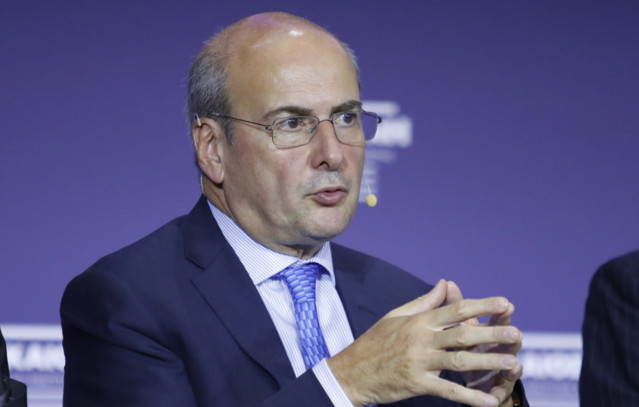
Greece's deputy prime minister, Kostis Hatzidakis, said the country aims to be counted among Europe's advanced economies by the end of the decade, setting out the government's national vision for growth at an economic conference in Thessaloniki.
Hatzidakis was speaking at the 3rd Economic Conference organised by the newspaper Imerisia, titled "Greece of Tomorrow, Redefining Growth in Southeast Europe." He said Greece needed to accelerate reforms to strengthen its position on the European stage and make use of opportunities in Southeast Europe, describing his remarks as part of the government's strategic planning for sustainable growth.
He said the goal was for Greece, by the end of the decade, not merely to try to close the gap with advanced European countries but to be among them, leaving the previous decade behind and moving into the EU's fast lane. He called this an ambitious goal, but not a utopian one, pointing to how much had already changed in recent years.
Progress since 2019
Hatzidakis said that in 2019 the main task had been returning the economy to normality, with debate centred on cutting debt and unemployment, which stood at 18% at the time, attracting investment after it had fallen to its lowest point, and restoring the country's international credibility.
He said many of those goals had since become reality. According to Hatzidakis, the economy is growing faster than the European Union average, more than 560,000 new jobs have been created, investment is rising steadily and exports are at historic highs. He said Greece had gone from being Europe's "black sheep" to being recognised as a pole of economic and political stability in a turbulent region, adding that these successes brought satisfaction but also an obligation not to let them slip and to build on them for the next major step.
Three pillars for 2030
Hatzidakis said New Democracy's economic programme for Greece in 2030 rests on three pillars.
- Fiscal credibility: he said the government would not hand out money it does not have, would keep public finances in order and would keep reducing public debt, to protect the economy from possible international turbulence and avoid repeating past crises.
- Productive transformation of the economy: he said Greece needs investment that raises productivity and creates better jobs, not simply more investment. He said the private sector remains the main driver of growth but needs the right climate and a pro-investment government, and pledged continued efforts to make the business environment friendlier. He said the government would prioritise the productive use of artificial intelligence through a comprehensive set of interventions to spread its use across the economy and public administration, alongside major infrastructure investment funded by the Public Investment Programme, which has committed 23 billion euros for the next five years, European funds including the National Strategic Reference Framework, an additional 9 billion euros from the Social Climate Fund, the Modernisation Fund and the Islands' Decarbonisation Fund, and the new EU Multiannual Financial Framework.
- Growth reaching every Greek citizen, wherever they live: he said this meant better wages, lower taxes, more opportunities and substantial support for those most in need. He said the prime minister would announce a new package of measures the following day aimed at addressing the effects of the cost-of-living crisis, supporting small and medium-sized businesses and self-employed professionals, and helping pensioners and families with children.
A new Competitiveness Fund
Hatzidakis also highlighted a new Competitiveness Fund, under which businesses, working alongside universities and research centres, would need to submit competitive proposals to secure funding. He said proposals would be assessed at a European level based on their merit, and that based on Greece's population the country could expect a share of around 10 billion euros, potentially more if it proves productive or less if it repeats the pattern of previous decades.
Demographic, housing and regional plans
Hatzidakis said the 2030 programme would also include a national strategy for demographic renewal, focused on lowering the cost of raising children and improving the balance between family and working life.
He said it would include a policy framework for affordable housing, using public property to build new social housing, renovating vacant properties, making it easier for young couples to buy a first home, and introducing special measures for frontline workers. He also pointed to a single National Strategy for Regional and Local Development, intended to connect national priorities with the real needs of each region, with Macedonia and northern Greece as a whole placed high among the government's priorities.
Third term and political rivals
Hatzidakis said the government would ask Greek citizens to trust it with a third term in office on the strength of this programme. He said other parties would undoubtedly promise more, describing Alexis Tsipras, Greece's former prime minister and long-time leader of the left-wing Syriza party, as unchanged in style and in the scale of the spending pledges he makes. He said Nikos Androulakis, leader of the PASOK-Movement for Change party, accuses Tsipras of copying him, meaning Androulakis risks coming across as a second version of Tsipras.
Hatzidakis said the government refuses to enter a bidding contest with rival parties and will instead seek voters' support with a serious, specific and costed programme, one he said would not hand out false promises but would offer realistic hope and a concrete outlook. He said the government has proven it can change the country without putting past achievements at risk, and pledged to continue doing so in the coming years through stability, reforms, investment and, above all, tangible results for every Greek citizen, according to the Athens-Macedonian News Agency.


