

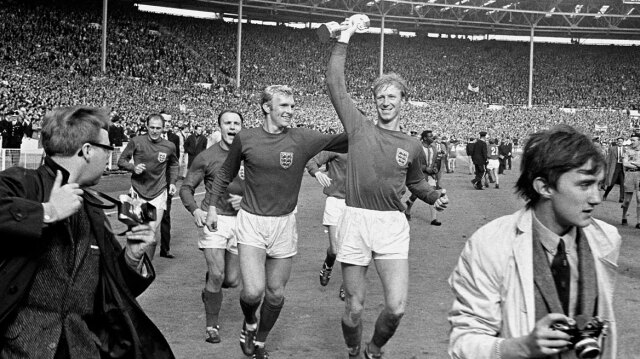
The son of England's 1966 World Cup winner Jack Charlton has been forced to return his late father's winner's medal to his mother after tax authorities told him keeping it would cost £200,000 in inheritance tax.
[[MEDIA1]]
John Charlton chose the 60th anniversary of England's World Cup triumph to reveal a moral dilemma that had been troubling him for some time. Speaking to TalkSport on the day marking six decades since England were crowned world champions, he explained that his father's will had left him the medal, but that holding on to it had proved anything but straightforward.
Jack Charlton, the former Leeds United and England defender, died in 2020, leaving the medal in his will to John. Six years on, when John came to claim what he had been bequeathed, tax authorities told him the bill would be £200,000, around 233,000 euros, in inheritance tax.
John's solution was to hand the medal back to his mother, Pat Charlton. The tax liability applies to John as the beneficiary named in the will; as long as Pat holds the medal, John is not required to pay. He told TalkSport that in practice he did not really have the medal his father had left him, because the tax office was demanding £200,000 in inheritance tax on it. He returned it to his mother because, while she has it, he does not have to pay.
Two brothers, two medals
John told TalkSport that he believed his father and his uncle Bobby were the only members of England's 1966 squad who had kept their medals from the tournament. None of the other players still had theirs, he said. He had his father's, but what he called a small problem came with it.
Both Jack and Bobby Charlton were in the England starting eleven that played the 1966 World Cup final against what was then West Germany, a match England won 4-2. After his playing career with Leeds United and the England national side, Jack went into management. As manager of the Republic of Ireland, he led the team to two World Cup tournaments, with the squad reaching the quarter-finals in 1990.
A systemic complaint
John said a journalist was helping the family try to find a way through the situation. He noted the same tax problem affected Olympic gymnasts and athletes in similar positions: if they sold their gold medals they would owe tax, and if their families inherited those medals, inheritance tax would apply. He described it as a matter that people were working to resolve.
John has previously called on the Labour Party to abolish inheritance tax, describing the levy as scandalous. He pointed to an inconsistency he sees in the current rules: medals awarded through the armed forces are eligible for inheritance tax exemptions, but that exemption does not extend to the footballers who won the World Cup for England in 1966. The heroes of 1966, he argued, were being treated less fairly than military veterans when it came to passing on their honours.
Speaking with evident anger, John asked what would happen if he simply declared that he could not pay the tax on the medal. He wondered aloud whether the government would then take his father's medal away from him.
Beyond the medal, John revealed that his father's estate also left him the England shirt Jack wore in the 1966 final and the cap he had with him throughout the tournament.
What comes next
Since John went public with his account, some commentators noted that tax authorities now know the family holds further memorabilia from England's 1966 triumph. Those commentators suggested the relevant tax authority might, in the coming days, review the sum it is demanding, and that, having learned the family also possesses the match shirt and the cap, it could end up increasing rather than reducing its demands.


