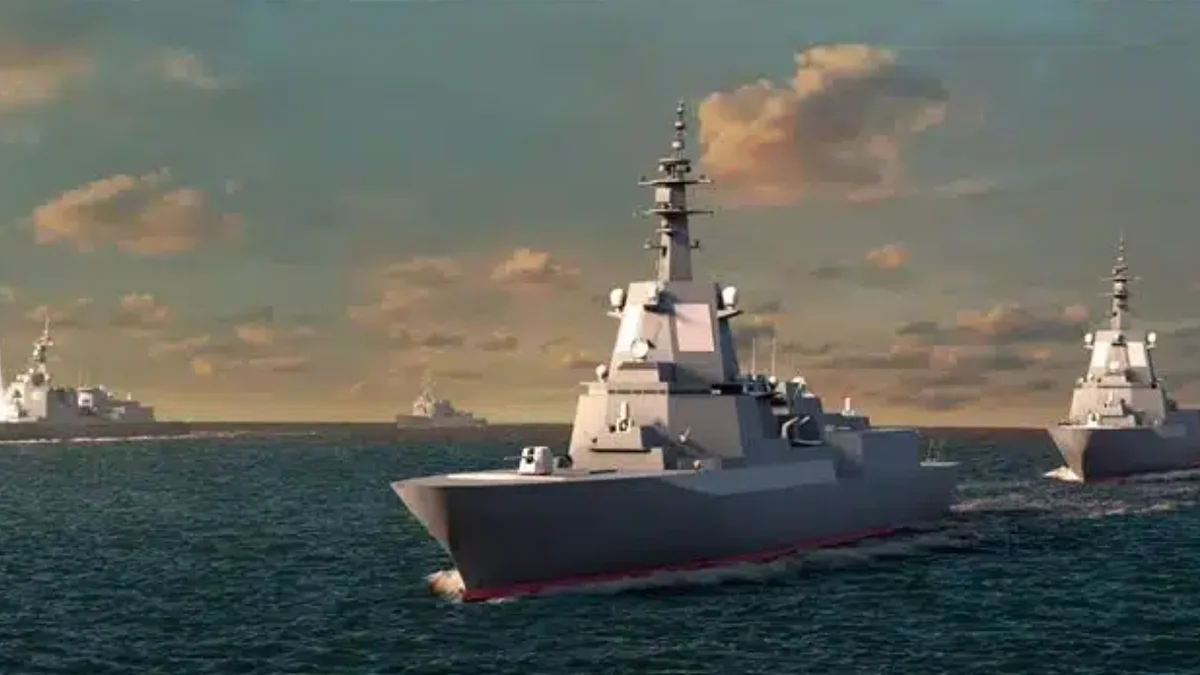
Japan has begun construction of what will be the largest destroyer ever built, a 14,000-tonne vessel designed not for traditional naval combat but to defend against ballistic and hypersonic missiles capable of travelling hundreds or thousands of kilometres in minutes.
The ship displaces roughly twice as much as a modern frigate and is comparable in size to some Second World War cruisers. At nearly 190 metres in length, it is close to the combined length of two football pitches placed end to end.
A floating shield, not a sword
Although it carries the destroyer designation, the vessel is closer in scale to far larger historical categories of warship. Rather than filling that space with gun turrets, Japan is packing it with radars, computers, electronic systems and scores of interceptor missiles. The project is being led by Lockheed Martin.
The ship's most important component will not be a cannon or a missile but its SPY-7 radar system, described as one of the most advanced in the world. Unlike traditional rotating-antenna radars, the SPY-7 uses large fixed electronic panels built into the ship's superstructure. Thousands of small electronic modules steer the radar beam almost instantaneously toward any point in the sky, allowing the system to track hundreds of targets simultaneously, distinguish real threats from false alarms, and feed real-time data to the combat management system.
Built for the hypersonic era
The destroyer's primary mission will be to integrate into Japan's missile defence network, detecting ballistic and hypersonic projectiles in the early stages of their flight and coordinating interceptions with specialised missiles. The radar will be mounted higher than the bridge to extend the detection horizon, which is particularly useful against missiles flying at low altitude.
The rapid development of hypersonic missiles by China and North Korea has pushed Japan to reconsider its defensive strategy. Platforms capable of providing continuous airborne surveillance are seen as far more effective than relying solely on land-based installations against weapons that can manoeuvre at extreme speeds.
Japan's Ministry of Defence published a 60-page document on the vessel. Among the details it reveals: the destroyer will carry 128 vertical launch silos, compared with 48 on the Spanish F-100 frigate. The ship has also been designed with room to incorporate future weapons systems, including next-generation interceptors for hypersonic vehicles.
The growing size of modern destroyers reflects the energy demands of new technology. Next-generation radars, signal-processing systems, encrypted communications networks and future laser weapons all require enormous amounts of electricity, driving the need for more powerful generators, more complex cooling systems and additional space for technologies still in development.