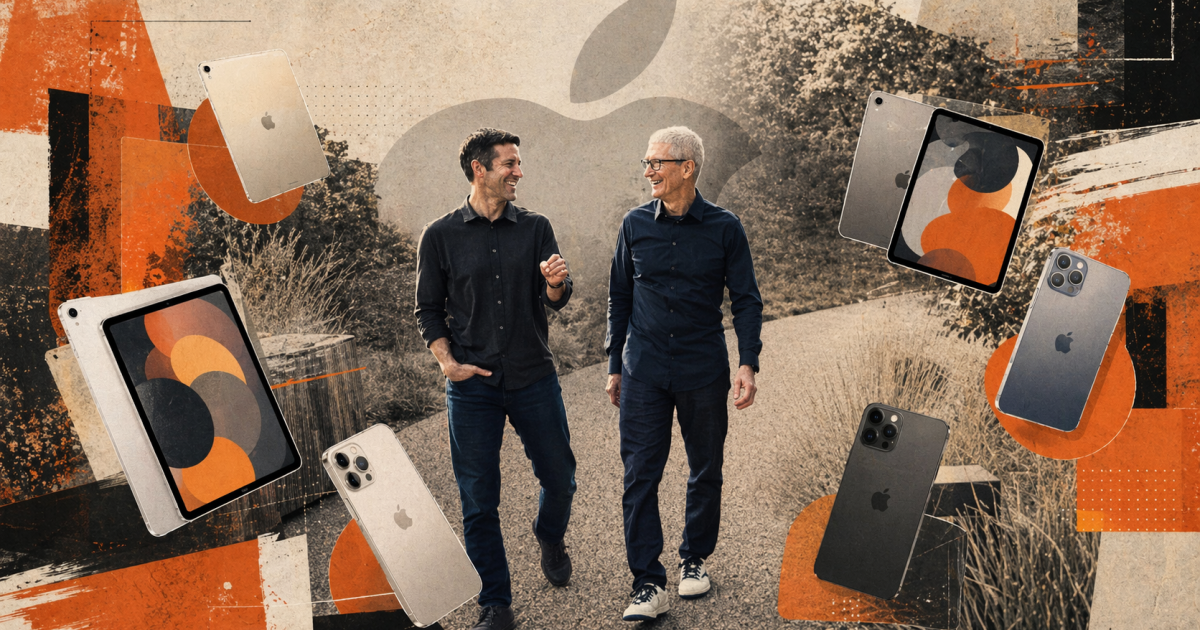
John Ternus has taken over as chief executive of Apple after Tim Cook stepped down to become executive chairman of the board of directors following nearly 15 years in charge.
The leadership transition took effect on September 1, 2026, marking a new phase for the technology company as it navigates strategic questions over artificial intelligence, product innovation, and foreign manufacturing pressures.
Ternus, a mechanical engineer who joined Apple in 2001 and previously headed hardware engineering, faces his first public test on September 9, just eight days after assuming the top role, when Apple hosts its annual product launch event.
The event is widely expected to center on the presentation of the next generation of smartphones, the iPhone 18 line.
Transition from the Cook Era
Cook originally took charge of Apple in August 2011, having been recruited to the company in 1998 by co-founder Steve Jobs due to his operational and supply chain expertise.
When Cook assumed the role, industry analysts questioned whether Apple could sustain the creative momentum established under Jobs, with some suggesting that success might rely on a product roadmap left behind by its co-founder.
Arthur Igreja, a technology and innovation expert, explained that widespread skepticism surrounded the company during the initial transition, as observers doubted whether Apple could retain its innovative reputation without Jobs.
Cook's decade-and-a-half tenure transformed the company's financial standing, expanding Apple's market valuation from approximately 350 billion dollars when he took office to 5 trillion dollars.
Under Cook's management, Apple broadened its device lineup with the introduction of the Apple Watch and AirPods while expanding recurring subscription services including Apple Music, Apple TV+, and Apple Pay.
Igreja noted that while the iPhone remains Apple's primary revenue driver, Cook successfully enhanced the broader application and service ecosystem, significantly restructuring the company's earnings model.
Cook also oversaw a strategic transition toward in-house silicon, replacing third-party processors in Macintosh computers with proprietary Apple Silicon chips starting in 2020 to gain greater control over hardware architecture.
Igreja said that Cook's central legacy was demonstrating that Apple could achieve long-term commercial growth without depending on a single iconic leadership figure.
An Engineer at the Helm
Ternus brings a background focused directly on physical product creation, having started at Apple within the Macintosh design team 25 years ago.
He was promoted to vice president of hardware engineering in 2013, took leadership of the iPhone hardware engineering division in 2020, and became senior vice president of hardware engineering in 2021, supervising development across Mac, iPad, AirPods, and Apple Watch.
Kenneth Corrêa, a professor at Fundação Getulio Vargas and specialist in data and emerging technologies, contrasted the leadership styles of Apple's CEOs, noting that Jobs drove format innovation alongside designer Jony Ive through products like the iMac, iPod, iPhone, iPad, and iCloud.
Corrêa said that Cook subsequently built the most profitable corporate enterprise in history upon that design foundation over his 15 years in charge.
Corrêa added that Ternus is a dedicated product engineer with more than two decades of focus on physical architecture, reflecting a broader shift in which physical hardware has returned as a central competitive factor in the technology industry.
Immediate Challenge of the iPhone 18
Ternus's inaugural public appearance as chief executive takes place at the September 9 hardware event, where the company is anticipated to unveil the iPhone 18.
Corrêa stated that the timing of the presentation is deliberate, as the extensive engineering development for the iPhone 18 was conducted over recent years under Ternus's direct supervision.
Corrêa explained that Ternus will use the launch stage not only to introduce a device he helped engineer, but also to establish his authority as chief executive.
Gabriel Rimi, an analyst at technology news platform Canaltech, indicated that the new smartphone generation is likely to feature refined hardware updates rather than a complete departure from previous designs.
Rimi said Apple is expected to concentrate on camera hardware enhancements to compete against major Chinese smartphone brands that have advanced rapidly in mobile photography, with variable aperture lenses cited as a primary area of interest.
Industry speculation also centers on a potential premium model, referred to as the iPhone Ultra, which could represent Apple's first entry into foldable smartphones to compete against rival manufacturer Samsung.
Addressing commercial strategy, Rimi stated that Apple is expected to avoid extreme price increases across standard models, potentially reserving premium hardware features for higher-tier devices.
Artificial Intelligence Strategy and Hardware Processing
While the iPhone 18 serves as an immediate test, artificial intelligence presents the primary strategic challenge for Ternus's leadership team.
Apple has lagged behind technological competitors such as Google and Microsoft in developing large generative artificial intelligence models and constructing dedicated data center infrastructure.
Rather than building massive server facilities, Apple has pursued external corporate partnerships, including an agreement with Google parent company Alphabet to incorporate Gemini technology into Apple AI features.
Igreja observed that this cooperative approach requires Apple to determine how to deliver distinct user value without possessing the underlying cloud infrastructure of its rivals.
He added that the executive team must choose its product focus carefully to avoid commercial missteps similar to the launch of the Apple Vision Pro headset amid intensifying competition.
Corrêa pointed out that while competitors allocate tens of billions of dollars to build large data centers, Apple can leverage its global network of more than 2.5 billion active devices to process artificial intelligence tasks locally.
By utilizing proprietary silicon built directly into consumer devices, Apple can execute processing on the hardware itself, reducing reliance on any single external AI supplier.
Corrêa anticipated that under Ternus, future product innovation will center on physical hardware integrations, combining sensors, cameras, and processors into tangible user experiences rather than text-based chat interfaces.
Geopolitical Pressures and Global Manufacturing
Beyond technical development, Ternus must navigate geopolitical complexity regarding Apple's international supply chain.
The company maintains significant manufacturing operations in China, despite political pressure from the administration of Donald Trump urging American businesses to increase domestic manufacturing and decrease reliance on Chinese factories.
Apple has taken steps to diversify its production footprint, shifting manufacturing for US-market iPhones to India while assembling products such as AirPods and iPads in Vietnam.
Corrêa observed that distributing production across multiple countries creates operational challenges in maintaining consistent manufacturing quality.
He noted that higher assembly costs resulting from supply chain diversification will force Apple to choose between absorbing expense increases, accepting lower profit margins, or passing costs to consumers through higher retail prices.
Long Term Outlook Under New Leadership
Cook departs the chief executive role as Apple's longest-serving leader, leaving behind a multi-trillion dollar company with a global operational presence.
Ternus assumes control during a period of financial strength, though the broader consumer electronics market faces rapid technological change.
Igreja remarked that key questions remain regarding how Apple will maintain its product distinctions and generate revenue from artificial intelligence without owning cloud infrastructure or foundational models.
Corrêa noted that Apple's core advantage remains its tight integration between hardware engineering and software systems.
Corrêa concluded that future leadership in technology will belong to companies that make complex innovation feel seamless in daily use, stating that Ternus's role is to package raw artificial intelligence power into finished hardware so that consumers interact with advanced technology effortlessly.