

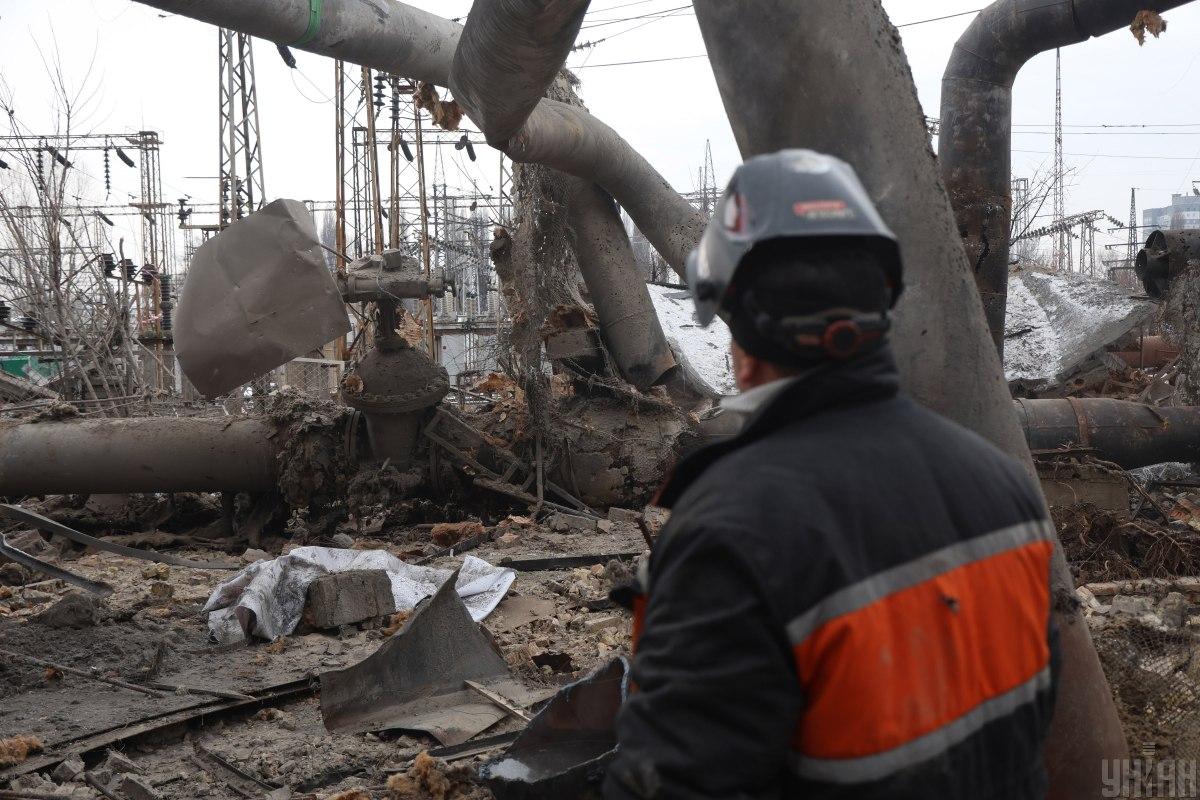
All combined heat and power plants in Kyiv have failed to resume generating electricity following Russian missile strikes, energy expert Hennadii Riabtsev said.
The Ukrainian capital remains entirely dependent on external electricity supplies after 16 ballistic missiles struck the CHP-4, CHP-5, and CHP-6 thermal plants on January 7, 2026, completely halting power production at the facilities.
Speaking on the Ranok.LIVE broadcast, Riabtsev explained that repairing the municipal facilities requires far more time and that constructing replacement generating capacity inside Kyiv over recent months was impossible. He noted that although Kyiv retains small local generation facilities, their capacity is far too limited to cover the capital's electricity requirements.
Riabtsev said the ongoing power shortages in Kyiv are caused not by a total deficit of electricity generation, but by major obstacles in transmitting and distributing electrical power to consumers. Russian attacks damaged open switchgear installations, which means repairing the distribution network could take a substantial amount of time.
Transit disruptions and emergency blackouts
The power situation across Kyiv remains under intense strain because of continuous Russian attacks on critical infrastructure. On November 2, energy operator DTEK announced that emergency power shutdowns had been introduced across Kyiv and the surrounding Kyiv region on instructions from state grid operator Ukrenergo.
The electricity cuts disrupted municipal transport networks across the city. Operators temporarily halted train services on sections of both the red and green lines of the Kyiv metro, while operations on the capital's funicular railway and the express tram network were also suspended.
Riabtsev previously stated that a strike on a municipal thermal plant had left Kyiv residents facing electricity cuts lasting 16 to 18 hours each day. However, he emphasized that the damage to electrical distribution gear would not prevent the capital from beginning its winter heating season.
Combined heat and power plants, known in Ukraine as TETs, produce electricity alongside hot water for district heating networks in large urban centres. DTEK operates as Ukraine's largest commercial energy provider, while state grid operator Ukrenergo manages the national high-voltage transmission system that transfers electricity between regions.


