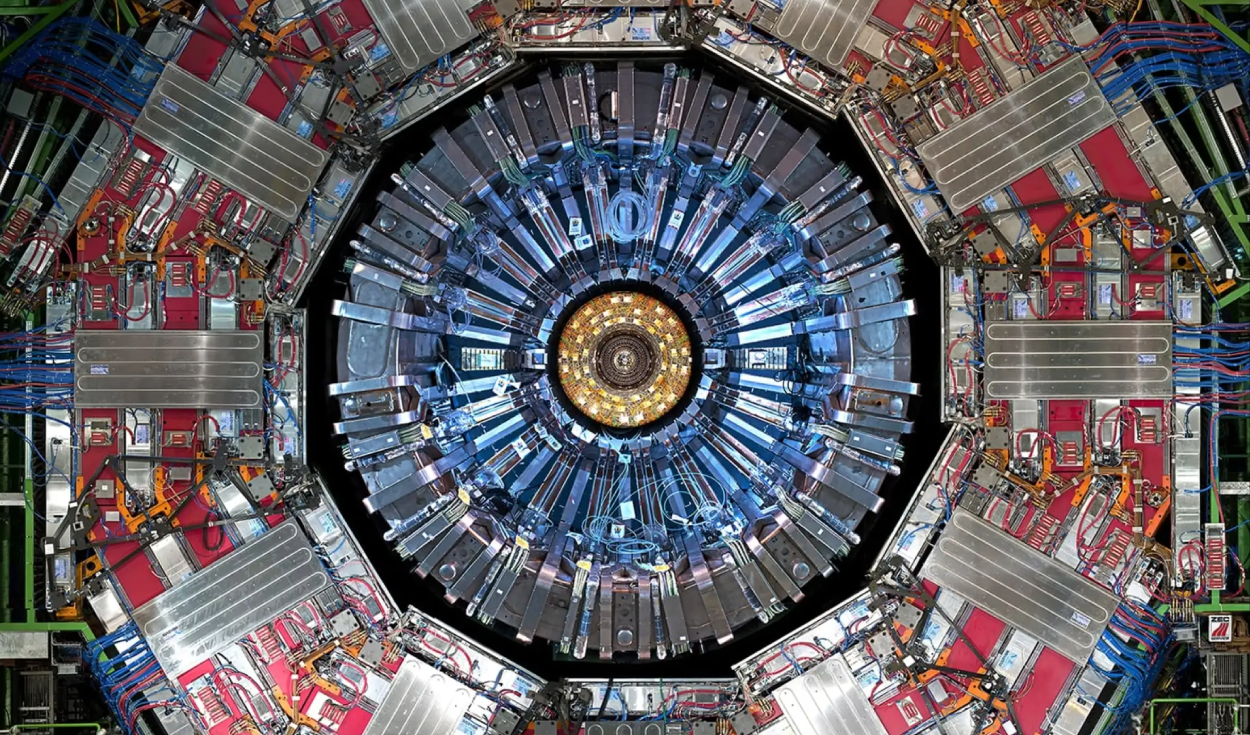
The Large Hadron Collider on the Franco-Swiss border consumes as much electricity as 300,000 homes at peak power to accelerate protons near light speed. Located about 100 meters underground, the 27-kilometer ring allows scientists at the CERN research complex to reproduce conditions that existed during the early universe for a fraction of a second.
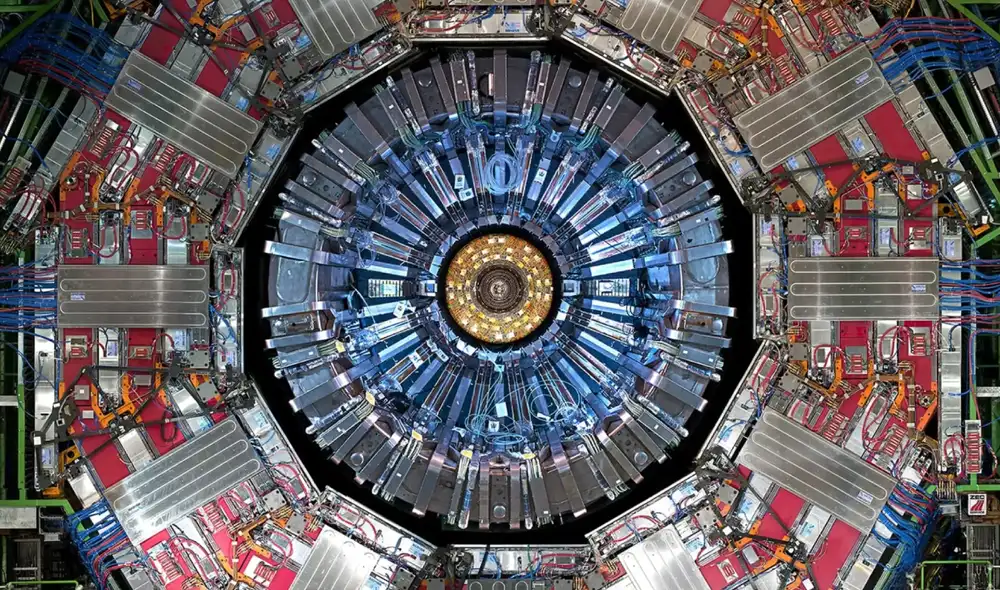
The energy required by CERN reaches approximately 1.3 terawatt-hours per year across all of its facilities, according to a report by Science Post. This total includes the power needed for a complex network of accelerators, cryogenic systems, experimental setups, and computer centers.
Electricity consumption changes throughout the year because the machine alternates operating periods with technical stops for maintenance and preparation. Even when no particle beams are circulating, the complex requires continuous electricity for essential systems, including cooling, ventilation, cryogenics, computer equipment, and other infrastructure.
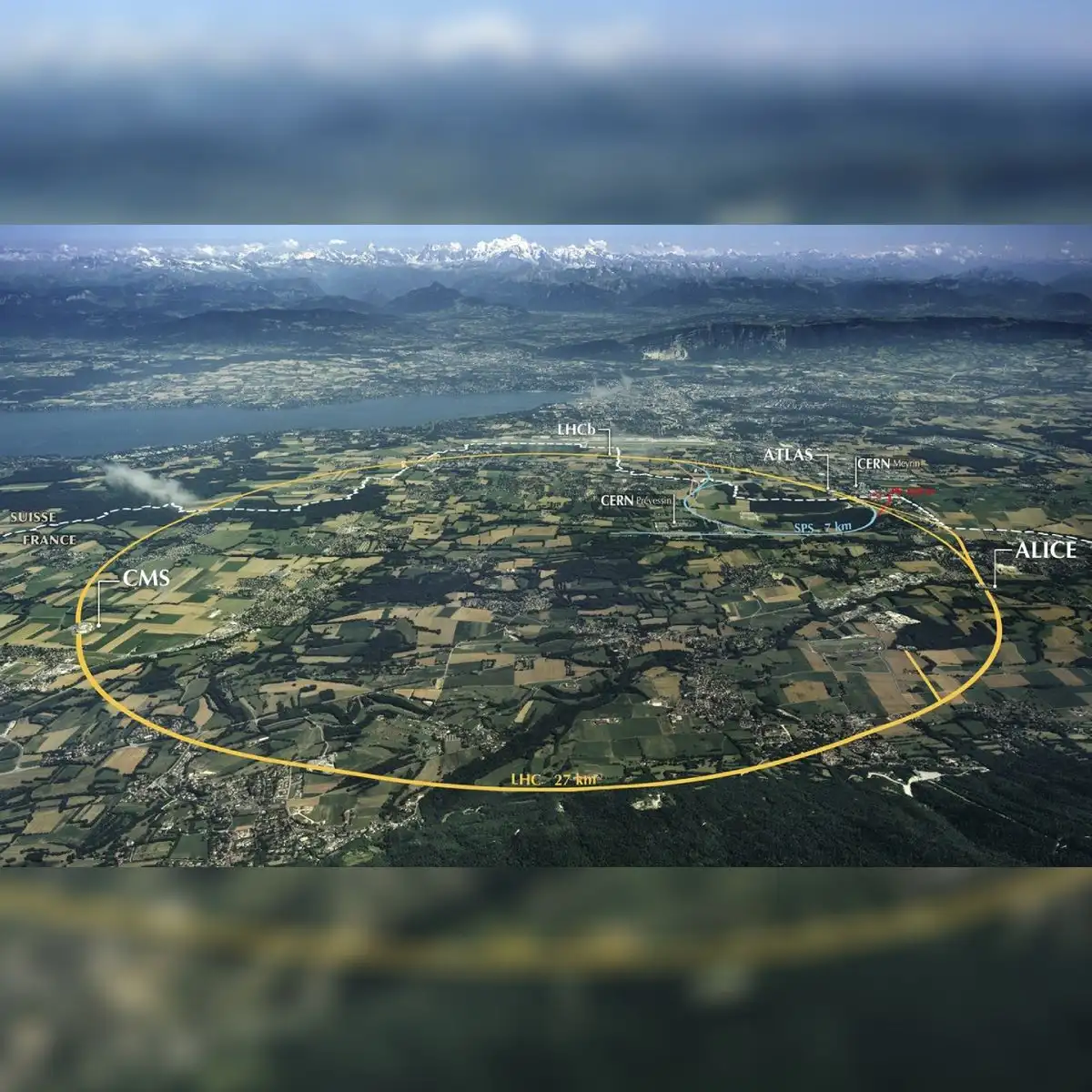
Power demand across CERN facilities
A major share of the energy associated with operating the accelerator is not used directly to speed up protons. Maintaining superconducting magnets at extremely low temperatures, operating cooling systems, and controlling particle beams requires a much broader infrastructure than the acceleration process itself.
When reaching their operational energy, protons in the accelerator travel at approximately 99.9999991 percent of the speed of light. At that velocity, they complete the nearly 27-kilometer circumference of the accelerator about 11,000 times per second.
Relativistic physics dictates that as a particle with mass approaches the speed of light, additional energy increases its energy rather than its speed, which changes less and less. Because of this principle, protons reach immense energy levels without ever reaching the speed of light.
Inside the accelerator, two proton beams travel in opposite directions. Magnetic fields keep each beam on its trajectory while acceleration systems bring them to required energy levels, causing them to cross at designated collision points studied by major experiments.
Superconducting magnets and thermal recovery
Keeping protons in a circular path requires thousands of superconducting magnets maintained at approximately 1.9 Kelvin, or minus 271.3 degrees Celsius. At this temperature, superconducting cables made of a niobium-titanium alloy carry high electrical currents without the electrical losses of conventional conductors.
The cryogenic system responsible for maintaining these temperatures forms an essential component of the infrastructure and represents a major energy consumer. To make use of generated heat, CERN works on energy recovery projects that transfer residual heat to urban heating systems, diverting energy that would normally dissipate.
Higgs boson discovery and future upgrades
The infrastructure supports research into elementary particles and fundamental forces. In 2012, the ATLAS and CMS experiments announced the discovery of a new particle compatible with the Higgs boson, confirming the mechanism associated with the Higgs field through which elementary particles acquire mass.
The discovery led to the 2013 Nobel Prize in Physics for Peter Higgs and François Englert for their theoretical work on the origin of subatomic particle mass. Current research focuses on measuring Higgs boson properties with higher precision and searching for physics beyond the standard model.
CERN is currently developing the High-Luminosity LHC, a major upgrade designed to increase luminosity and the number of particle collisions available for experiments. The project will allow scientists to gather significantly more data and improve their ability to detect extremely rare subatomic phenomena.