A light bulb at Fire Station No. 6 in Livermore, California, has been burning continuously since 1901, producing a steady four watts of light day and night. Known as the Centennial Light, the fixture is recognized as the longest-lasting light bulb in the world, having provided more than 120 years of continuous illumination without replacement.
Its extraordinary lifespan is neither a matter of luck nor a miracle of hand-blown glass. Instead, the bulb functions in a way that operates in reverse of how the commercial lighting industry has manufactured products for the past century.
The lamp was manufactured by the Shelby Electric Company in Ohio during the late 1890s before being delivered to the Livermore fire department in 1901. Its hand-blown glass casing is thicker than that of modern commercial bulbs, and its internal mechanism relies on a carbon filament rather than the tungsten used in standard modern models.
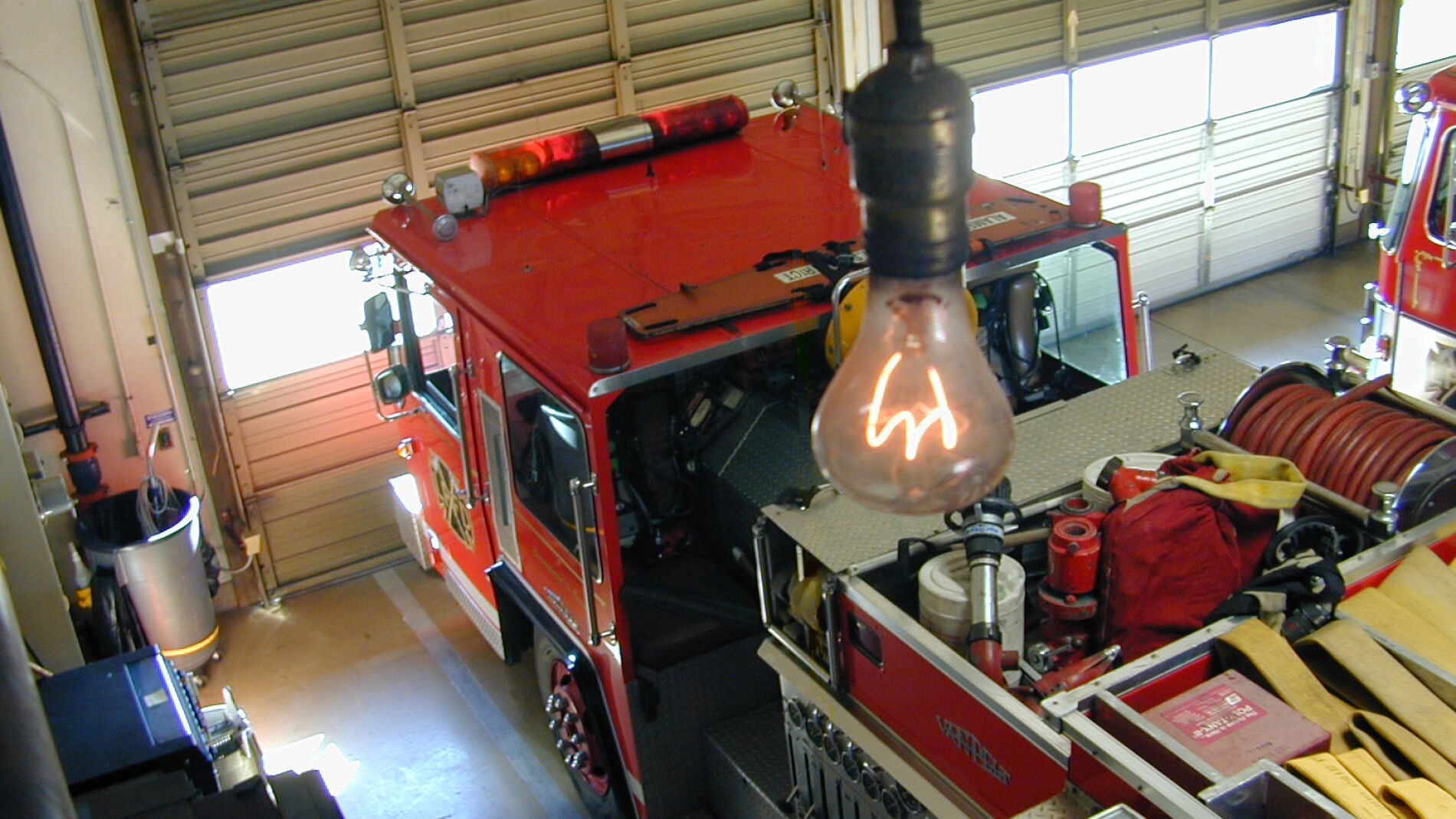
Although engineers originally designed the bulb to operate between 30 and 60 watts, its power output was gradually reduced to four watts over time. This low energy draw prevents the carbon filament from overheating, evaporating, and becoming brittle.
Design and continuous power supply
While carbon filaments naturally experience less wear than tungsten alternatives, key to the lamp's endurance is the total absence of power cycles. Conventional light bulbs typically burn out when switched on, as the sudden surge of electricity causes thermal shock to a cold filament.
By contrast, the Livermore bulb is never turned off. Its low energy consumption, vacuum sealing, and constant power supply allow it to remain illuminated year after year. While an ordinary household bulb lasts roughly one year, the Livermore lamp has remained on almost uninterrupted since 1901.
Livermore, a city located in the East Bay region of California, maintains Fire Station No. 6 as an active emergency response hub where the historic bulb remains on display.
Relocations and live webcam monitoring
Throughout its history, the bulb has been moved several times, with each transfer posing a real risk of turning it off permanently. When municipal authorities constructed a new fire station on East Avenue, a city electrician carefully removed the bulb along with its socket.
The electrician transported the fixture slowly for nearly a kilometer to its new location in what observers described as a reverse funeral procession. The light has shut off on only a few rare occasions, including during those physical relocations and once during a generator failure.
To safeguard the historic relic today, officials connect the bulb to an uninterruptible power supply system. Thousands of web users regularly monitor its status through a dedicated live webcam, and in 2015, the town held a community party to celebrate its millionth hour of continuous operation.
The Phoebus cartel and planned obsolescence
The remarkable survival of the Livermore bulb stands in stark contrast to a pivotal development in modern industrial history. On December 23, 1924, representatives from major international lighting manufacturers, including Osram, Philips, Compagnie des Lampes, and General Electric, met in Geneva to found the Phoebus cartel, the world's first global light bulb cartel.
Cartel members agreed to standardize the operational lifespan of consumer light bulbs at 1,000 hours, marking a drastic reduction from the 2,500 hours that bulbs typically achieved at the time. Rather than using technological advancements to improve product durability, the industry deliberately limited it.
Under cartel rules, manufacturers were fined if their bulbs lasted longer than the permitted limit. Although some regulators publicly claimed that a shorter lifespan provided greater brightness, internal company records and subsequent judicial findings confirmed that the primary goal was to increase corporate profits by forcing consumers to purchase replacement bulbs more frequently.
Production of Shelby bulbs ceased in 1912 after General Electric acquired the Ohio manufacturer, with General Electric later becoming a leading member of the Phoebus cartel. As a result, the Livermore fixture remains an accidental relic of an industrial manufacturing model that its own creators deliberately erased.