

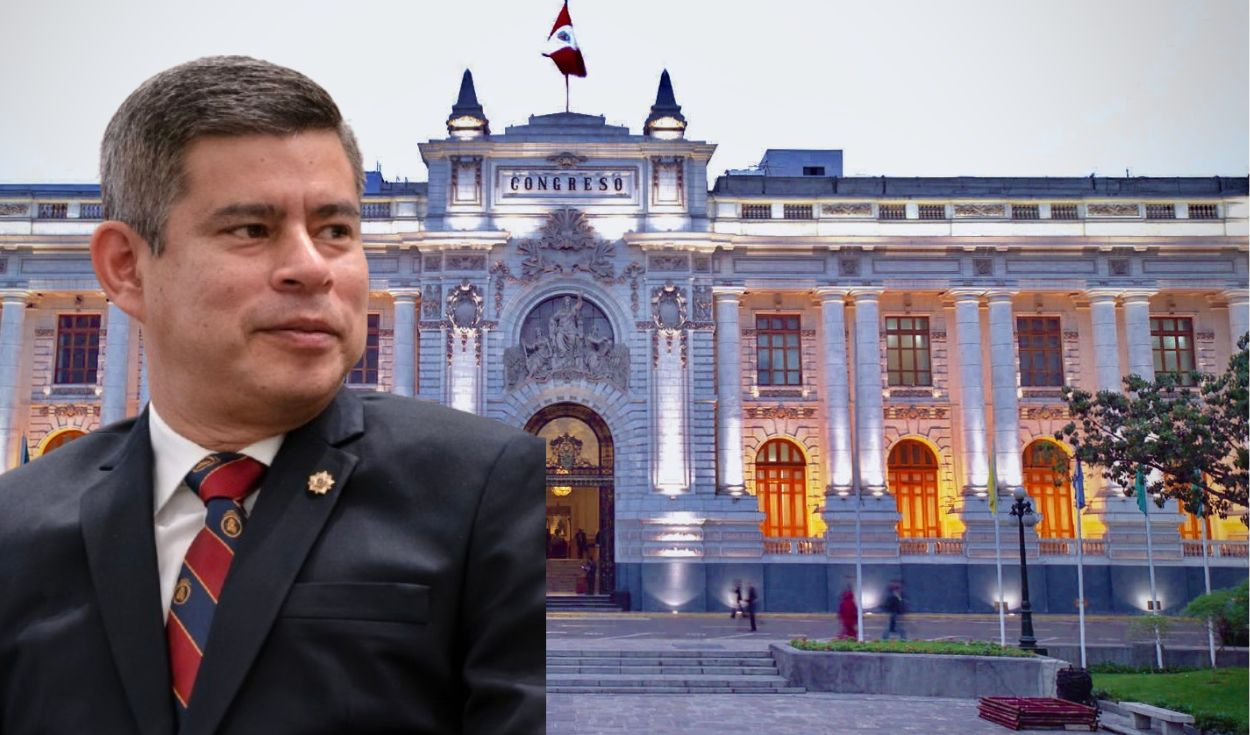
Peruvian Prime Minister Luis Galarreta has asked the Senate to improve a request for legislative powers approved by the Chamber of Deputies.
The Presidencia del Consejo de Ministros stated in an official release that the draft passed by the lower house is insufficient for the executive branch to tackle widespread crime and extreme weather.
Galarreta expressed his expectation that upper house lawmakers will enhance the bill so the government of Keiko Fujimori receives adequate tools to combat criminality, prepare for the El Niño phenomenon, and address social and economic needs that millions of citizens have awaited for decades.
Under the Peruvian constitutional framework, Congress can delegate specific legislative authority to the executive branch for a set period. This mechanism allows the Cabinet to issue legislative decrees directly, streamlining major governance and policy reforms without undergoing full parliamentary debate for every individual measure.
Galarreta serves as Prime Minister under President Keiko Fujimori, leading the Cabinet of Ministers. The executive branch had requested broad delegated powers across multiple governance sectors to implement security, environmental, and administrative reforms.
Peru recently reinstated a bicameral legislative structure, dividing parliamentary responsibilities between a lower Chamber of Deputies and an upper Senate. The Senate serves as a reviewing body responsible for evaluating legislation passed by the lower house.
Trimmed Security and Climate Measures
According to the statement from the Prime Minister's Office, the measure approved by deputies fails to provide the executive branch with the most vital mechanisms required by the country. The government noted that crucial provisions addressing urgent public safety concerns were omitted from the final draft.
Specifically, the executive office highlighted that the approved text excludes intelligence operations and direct support from the Armed Forces in fighting crime. The statement also pointed out that several key proposals regarding prevention and emergency response for the El Niño phenomenon were removed by lawmakers.
El Niño is a recurring ocean-climate phenomenon that causes sea surface temperatures to rise along the Pacific coast of South America. In Peru, the phenomenon periodically triggers torrential rainfall, river flooding, and catastrophic landslides, causing severe infrastructure damage and disrupting regional economies.
Executive officials maintained that omitting key climate preparedness mechanisms weakens the government's ability to execute rapid emergency responses and protect vulnerable populations across affected regions.
Beyond security and weather preparedness, the Prime Minister's Office criticized the exclusion of economic measures designed to formalize micro and small enterprises, known in Peru as MYPEs. Micro and small enterprises represent the vast majority of businesses in Peru, serving as a primary driver of employment while frequently operating outside formal regulatory systems.
The statement added that lawmakers stripped out provisions intended to simplify administrative procedures and accelerate public service delivery for citizens. The official release emphasized that every legislative cut leaves out specific actions that Peruvians have been expecting from their government.
Legislative Process in the Chamber of Deputies
The text that ultimately passed the lower chamber corresponds to a compromise proposal drafted by parliamentary blocs from Renovación Popular, Obras, Partido del Buen Gobierno, and Ahora Nación. Deputies approved the revised text upon reconsideration with 66 votes in favor, 33 against, and 24 abstentions.
Approval came only after hours of debate, multiple votes, and the rejection of two minority committee reports. The final text differs substantially from the initial submission by the executive branch, restricting delegated powers exclusively to citizen security and El Niño response measures.
In an initial vote, the alternative substitute text failed after receiving 73 votes against, 49 in favor, and 2 abstentions. That initial rejection was driven by opposing votes from Fuerza Popular, the conservative party led by Fujimori, and the left-wing party Juntos por el Perú.
Subsequently, a minority report presented by Fujimorista lawmakers aimed at restoring the trimmed powers was defeated with 64 votes against, 3 abstentions, and zero votes in favor.
Next Steps in the Senate
To resolve the legislative deadlock and build a voting majority, the parliamentary session extended over several hours and required up to three recess periods before an agreement was reached.
The approved legislative delegation proposal will now move to the Senate, where upper house lawmakers will conduct the next stage of legislative review.


