
Researchers led by Henrik Birkedal at Aarhus University have discovered how narwhal tusks grow up to three meters long without bending or breaking.
A study published in Nature Communications revealed for the first time the internal architecture of the massive tooth at the nanometer scale, uncovering a far more complex structure than scientists had previously assumed.

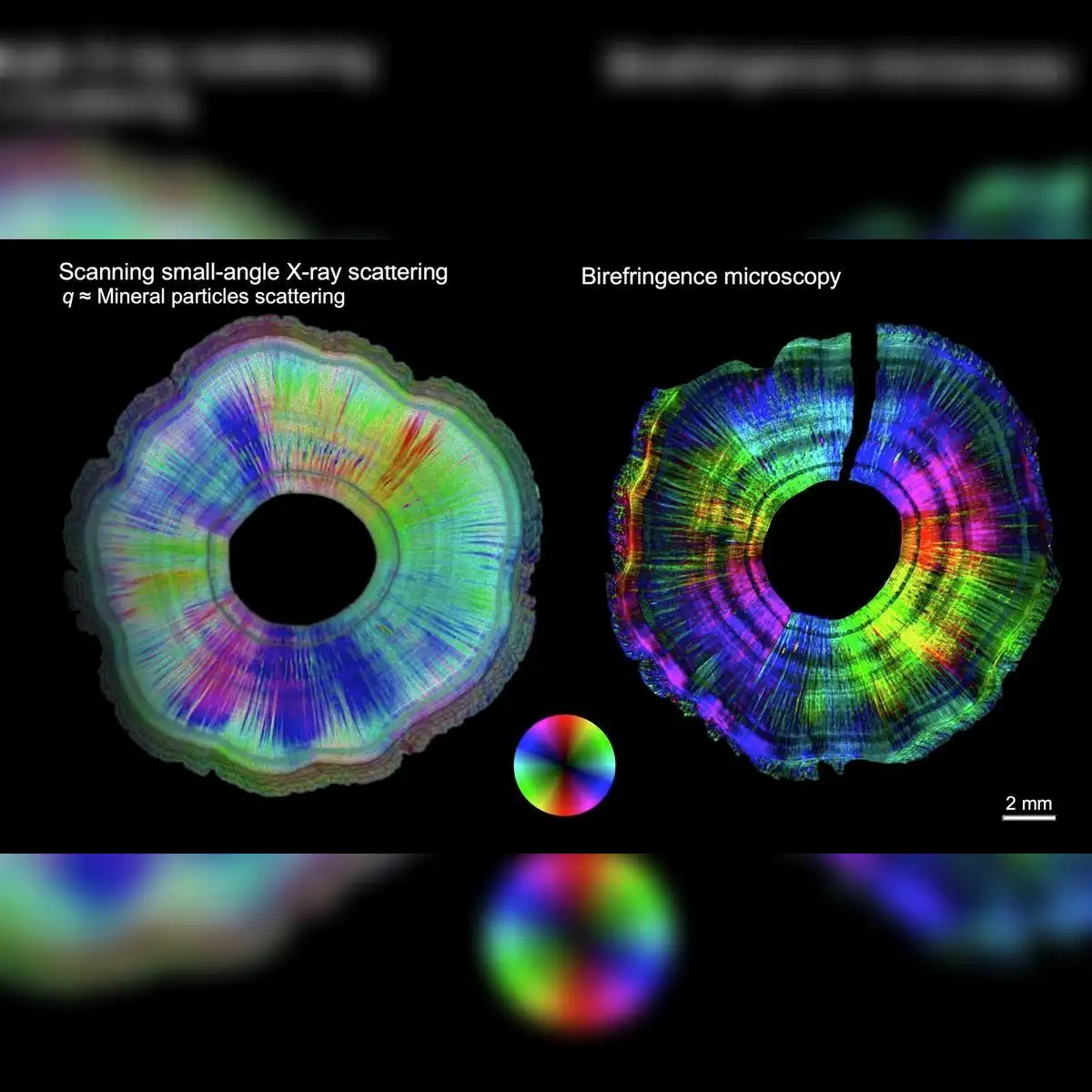
The research team found that the tusk does not consist of a single spiral as its external appearance suggests. Instead, it is built from two counter-rotating structures: fibrils in the outer cementum layer twist in a left-handed helix, while fibrils in the inner dentine layer twist in a right-handed helix.
This opposing spiral arrangement compensates for physical stresses generated as the tusk grows over time. By balancing internal rotational forces, the counter-twisting fibers prevent the growing tooth from bending or twisting excessively, allowing the marine mammal to maintain a remarkably straight tusk up to three meters in length.
Advanced X-ray imaging of narwhal tusks
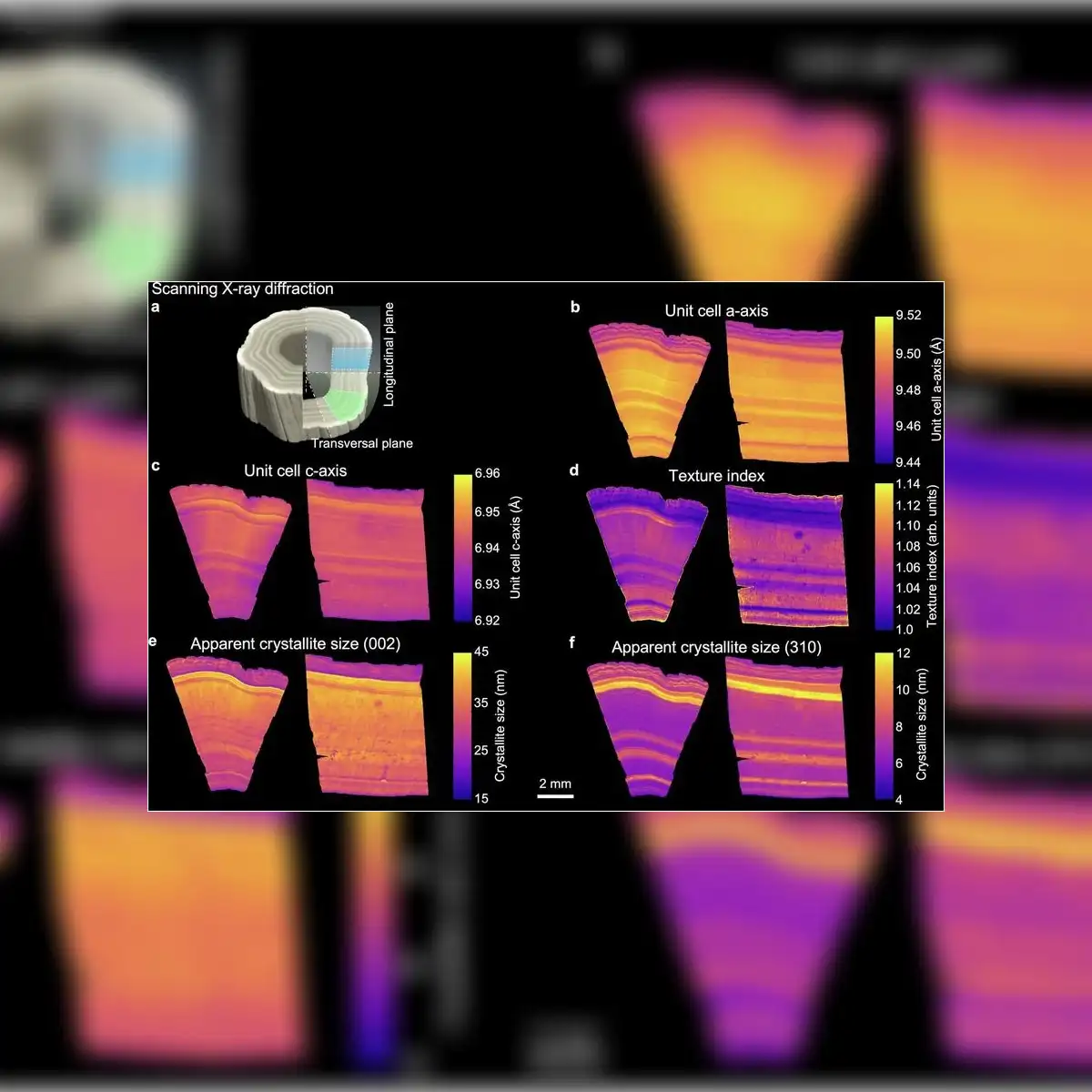
To uncover this hidden architecture, Birkedal and his team examined three narwhal tusks using three-dimensional tensor tomography powered by high-intensity X-rays. The advanced imaging was conducted at synchrotron facilities in Sweden, Switzerland, and France.
The synchrotron technology enabled the researchers to reconstruct the orientation of the tusk's internal components at the nanoscale. By tracking the structural organization from the innermost core to the outer surface, the team mapped how the biological materials assemble into a durable, load-bearing structure.
Potential applications in engineering and medicine
The findings illustrate how biological systems can produce materials that balance high strength, structural stability, and mechanical flexibility simply by adjusting fiber orientation at microscopic scales. The study authors noted that understanding these natural mechanisms could offer fresh insights for engineering new synthetic materials with superior mechanical performance.
Experts cited in the analysis highlighted that the dual-spiral design mirrors principles currently used in structural engineering to reinforce materials subject to simultaneous twisting and bending. Balancing opposing rotational forces is a key technique in designing heavy-duty structural cables and composite beams.
Researchers believe these biological insights could eventually be applied to develop advanced biomaterials and composite materials. Potential applications span multiple high-tech industries, including medical implants, building construction, and aerospace engineering.
Narwhals are Arctic marine mammals best known for the single straight tusk protruding from the upper jaw of males. Unlike true horns, the tusk is an elongated canine tooth that can reach extraordinary lengths while enduring immense mechanical tension in frigid Arctic waters.