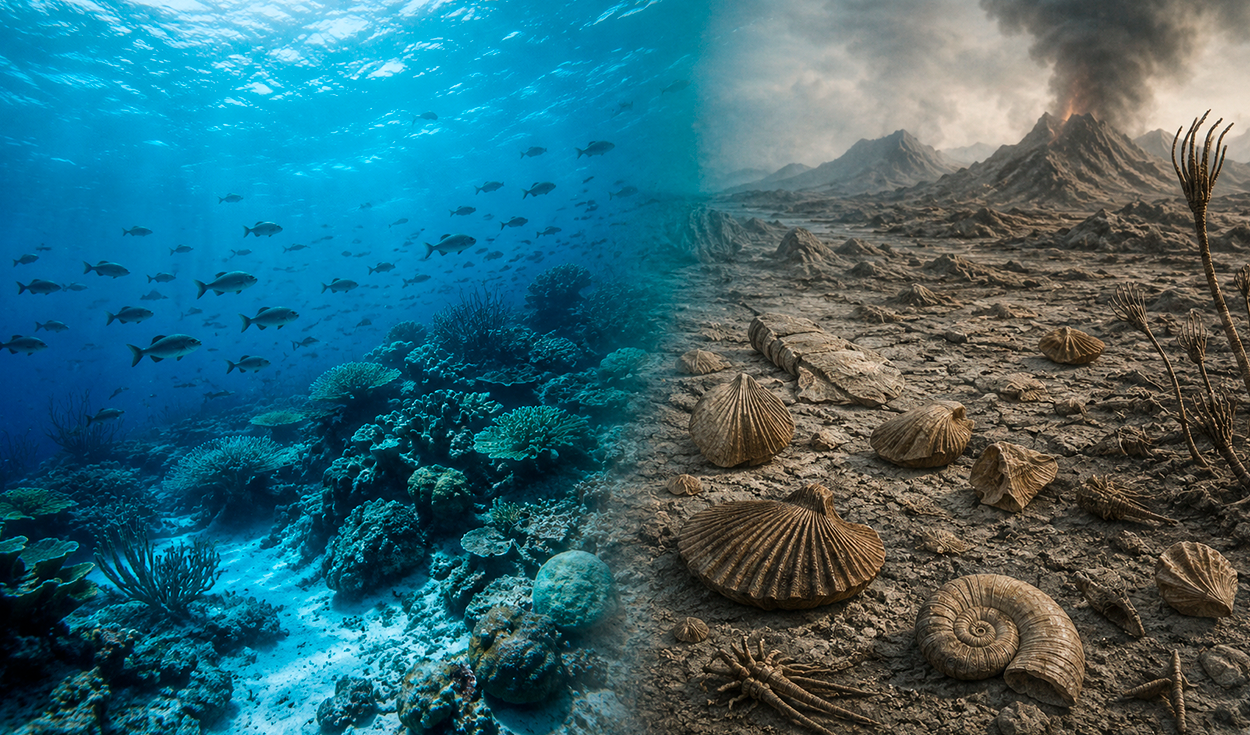
Stanford University researchers have found that modern ocean changes mirror environmental patterns seen during Earth's largest mass extinction 252 million years ago.
The study, published in the Proceedings of the National Academy of Sciences on July 6, 2026, determined that rapid warming and oxygen loss were decisive factors in the mass disappearance of marine life during the Permian-Triassic period.
Erik Sperling, a senior lead author of the study and an associate professor at Stanford, said understanding how the planet responded during that period could inform what lies ahead for aquatic ecosystems.
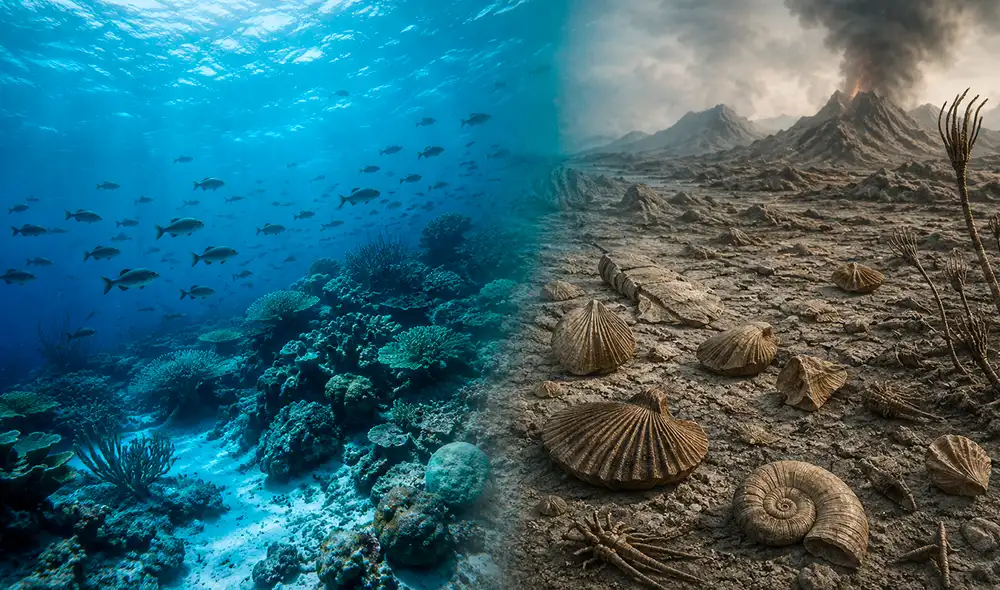
The Permian-Triassic extinction event, often known as the Great Dying, occurred roughly 252 million years ago and stands as the most catastrophic extinction in Earth's history. Stanford University is a major research institution based in California, while the Proceedings of the National Academy of Sciences is a leading peer-reviewed scientific journal.
Ocean warming and oxygen loss
The research clarifies that contemporary oceans have not yet reached the drastic conditions recorded 251.9 million years ago following massive volcanic activity. However, researchers noted that the parallelism lies in the underlying dynamics of the phenomenon.
The massive release of polluting gases elevates water temperatures, depletes dissolved oxygen, and acidifies marine environments. Scientists are using the ancient geological crisis as a pattern to predict how biological species will react to current environmental disruption driven by human activity.
Respirometry and respiratory metabolism
Through respirometry trials and models of respiratory metabolism, the specialists discovered why the ancient collapse affected marine species so unequally. Many Paleozoic creatures could endure low oxygen concentrations in cold water, but their ventilation requirements surged rapidly as temperatures climbed.
Sperling said warming and oxygen loss were the key factors behind the die-off. This marked physiological vulnerability helps explain the widespread disappearance of creatures such as brachiopods and crinoids.
Sperling explained that the Permian crisis began in a relatively cold and well-oxygenated ocean prior to the massive injection of carbon dioxide. He detailed that thermal impacts on deep-sea fauna respiratory capacity do not mean catastrophe is inevitable, but understanding this historical transformation helps identify which living beings face the highest risk if modern warming continues.
Evolutionary shift in marine life
The study highlights how the disaster caused a permanent reorganization of ocean biodiversity. For 280 million years, Paleozoic fauna dominated by brachiopods and crinoids densely populated the ocean floor.
The catastrophic event severely reduced those groups and allowed bivalves, gastropods, fish, and echinoderms to flourish. As a result of that evolutionary shift, modern oceans host only about 400 types of brachiopods compared to 15,000 types of bivalves.
Researchers found a key physiological advantage in modern marine fauna. Organisms with higher biological activity, equipped with muscles, gills, and efficient respiratory systems, coped better with oxygen scarcity caused by rising heat. Scientists said warming-driven hypoxia explains the lasting restructuring of ocean ecosystems by eliminating vulnerable species more aggressively.
Global temperature increases
During the ancient crisis, global temperatures rose between 8 and 12 degrees Celsius, which relegated ocean acidification to a secondary role. In contrast, current projections for this century estimate a temperature increase of 1.5 to 4 degrees Celsius above pre-industrial levels.
Sperling emphasized that society is still at a stage where people can change course and take action to protect marine environments.