OpenAI unveiled Dots on Tuesday in San Francisco, introducing an artificial intelligence agent for ChatGPT that continues working even when users are not actively typing. Announced at the company's DevDay 2026 event, the assistant is designed to perform almost any task in the background across connected applications.
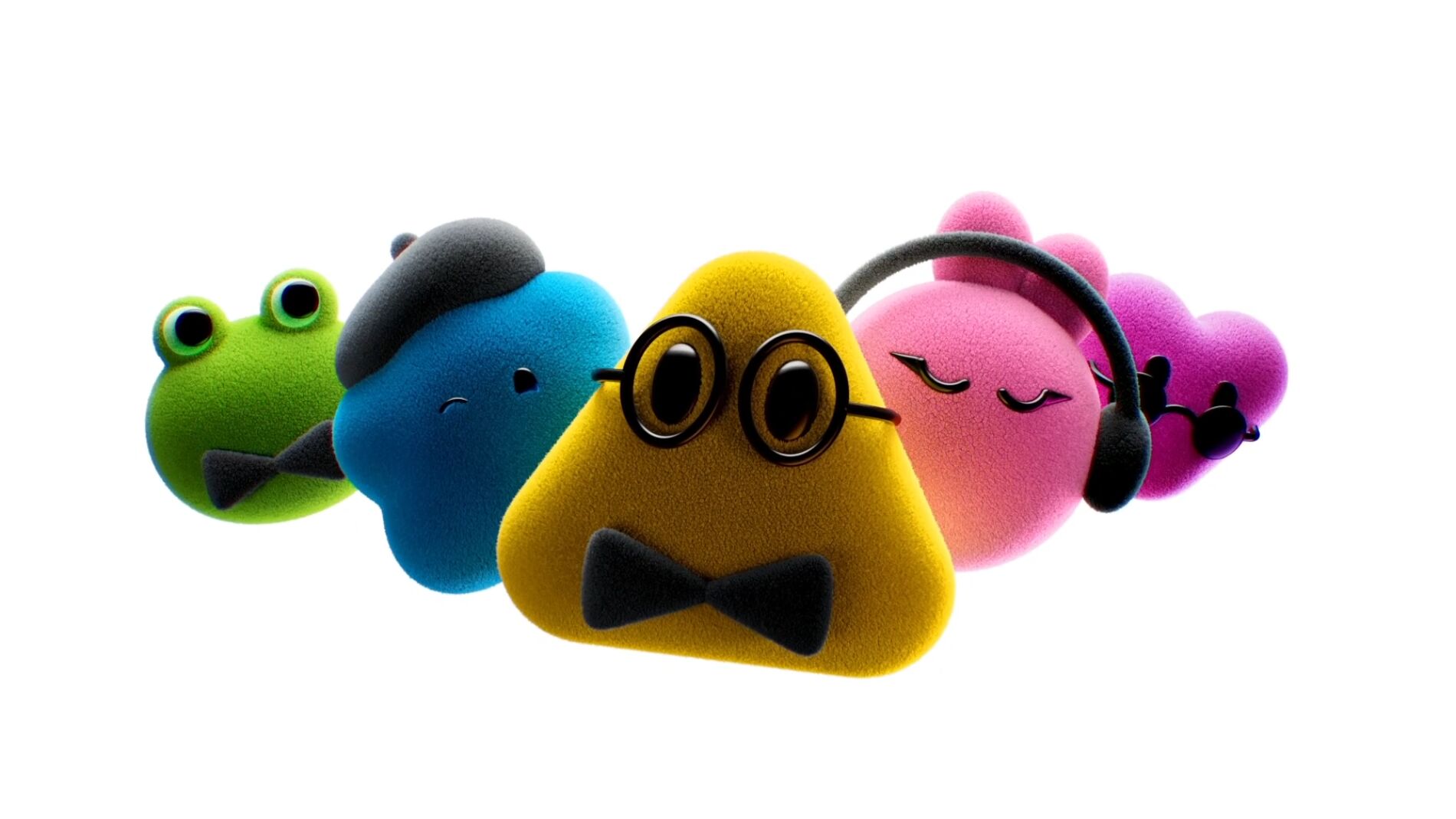
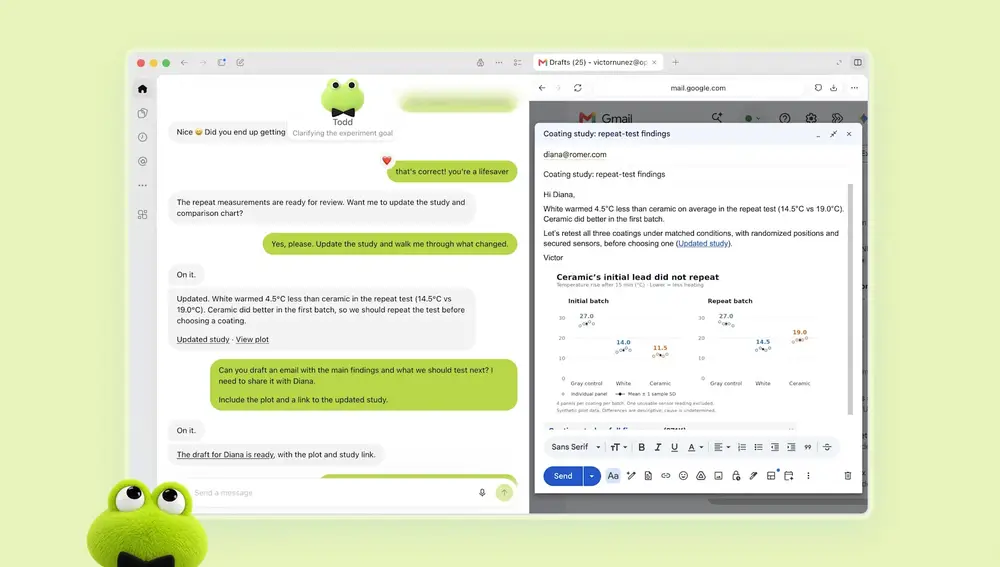
Unlike standard ChatGPT conversations that take turns and wait for instructions, a Dot receives a task and begins working independently. According to OpenAI, the agent will message users to report progress or ask questions, and learns from corrections to propose new tasks before being asked.
The launch is a direct response to Muse, the personal agent introduced by Meta several weeks ago that browses the web, makes purchases, generates documents and tracks goals. Both share the concept of an assistant acting on the user's behalf while learning their preferences.
According to CNBC, Muse gained rapid popularity but also raised security concerns. On Sept. 22, Meta patched a flaw in its Mac application that allowed attackers capable of executing code on the machine to take control of the assistant and exploit its permissions to access data including WhatsApp conversations.
Cloud computers and permissions
OpenAI stated that Dots include built-in rules dictating when they can act autonomously, and users can add custom rules to block specific actions or require explicit permission. An automated review system evaluates actions such as sending messages or modifying files to decide if they can run, need authorization, or must be performed manually by the user, as is the case with password changes.
The new agents run on GPT-6 Astra, OpenAI's most capable model, which ChatGPT Plus subscribers can already access in ChatGPT Work alongside external app connections. OpenAI distinguishes a Dot by its ability to maintain continuous tasks between conversations and learn from user feedback.
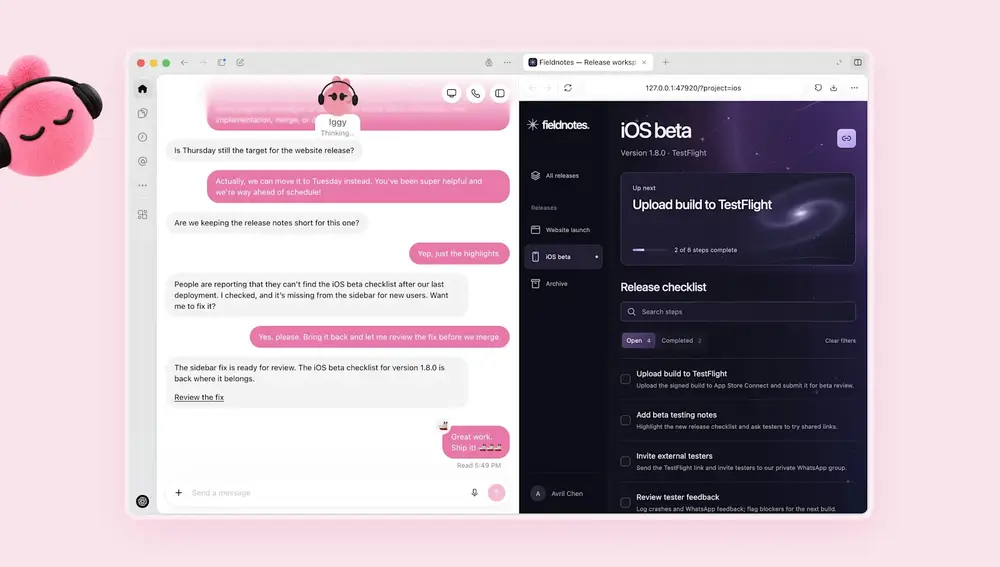
Every Dot is equipped with a cloud computer running a web browser. Users can open this environment at any time to monitor the work in progress, allowing them to oversee the agent without relying solely on its notifications. With user permission, a Dot can also connect to other devices and access more than 4,000 applications through OpenAI's plugin ecosystem, enabling workflows that span multiple platforms.
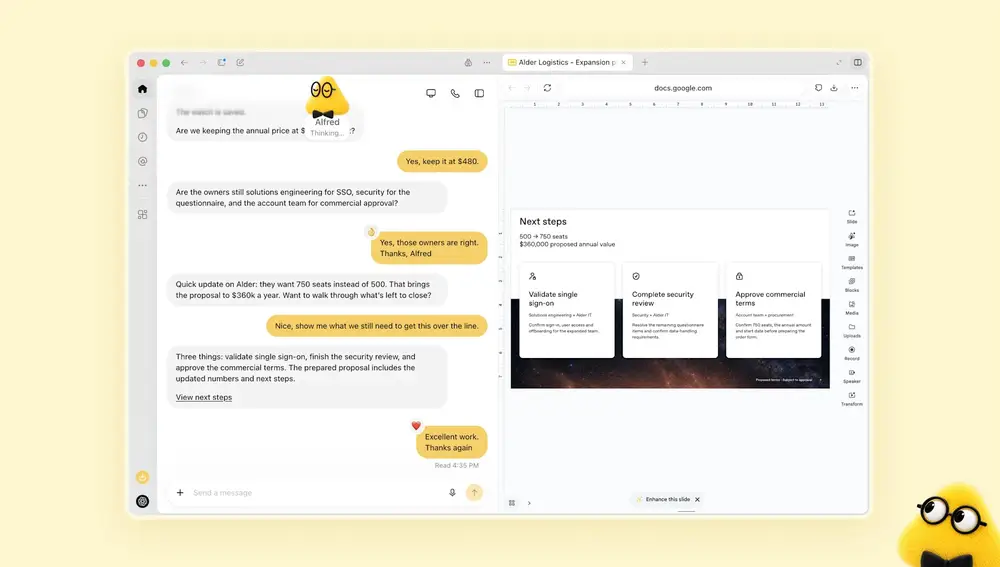
OpenAI presented examples including a developer who builds an app and tasks their Dot with using customer feedback to create and test improvements, before generating a video summarizing the changes. In another scenario, a content creator could instruct the agent to review an interview transcript, identify clips, draft show notes and write social media posts.
Collaborative workspaces and rollout
Alongside the agents, the company introduced ChatGPT Space, a collaborative workspace where multiple users can interact with the AI. The feature allows users to create shared documents and instruct the AI to update them automatically using data from connected emails, calendars and other applications. Within weeks, the space will also support simultaneous collaboration on presentations.
Dots are gradually rolling out to ChatGPT Pro and Business Premium users, with Enterprise customers able to test a beta version if activated by their organization's administrator. The rollout will take several days to reach all accounts.
The launch for Pro users currently excludes the European Economic Area, Switzerland and the United Kingdom, meaning the feature is unavailable to subscribers in Spain.
Users are currently restricted to creating a single Dot, though OpenAI plans to allow more in the future while expanding their speed and workload capacity. The company is also testing specialized Dots designed for specific enterprise roles.