

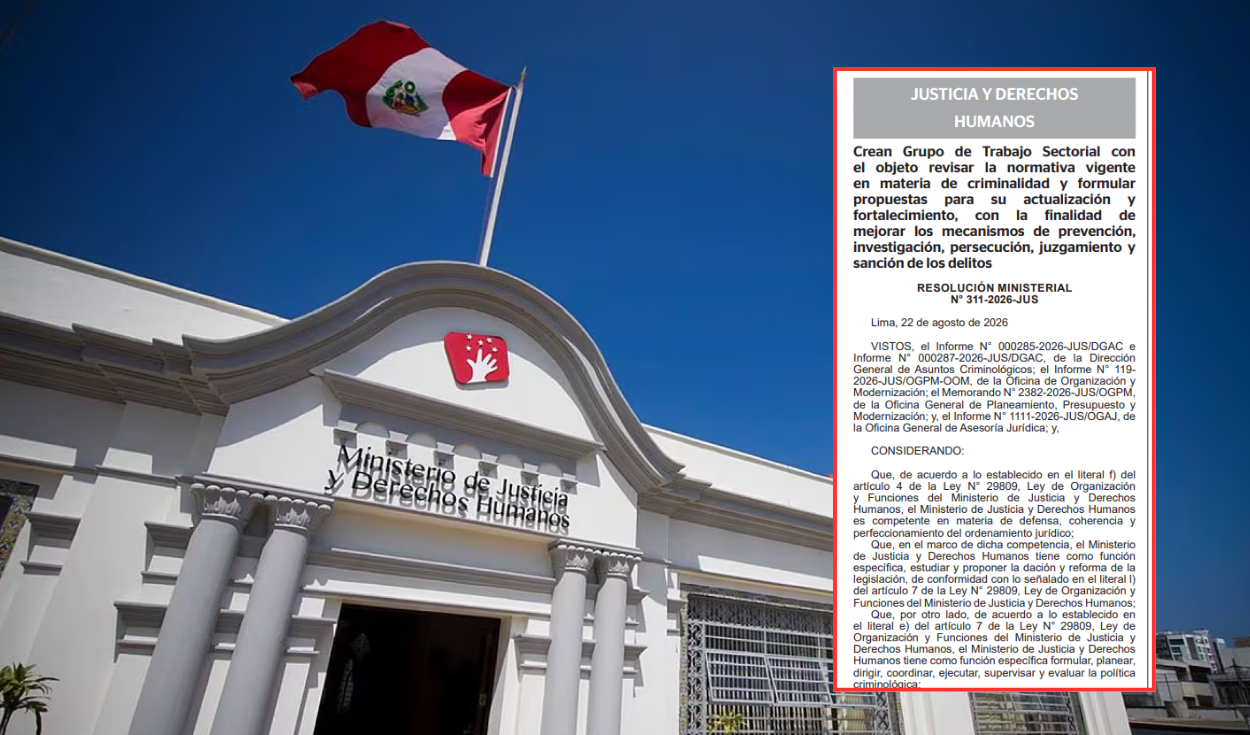
Peru's Ministry of Justice and Human Rights has created a temporary working group to evaluate national criminal laws and propose statutory reforms to fix legal loopholes.
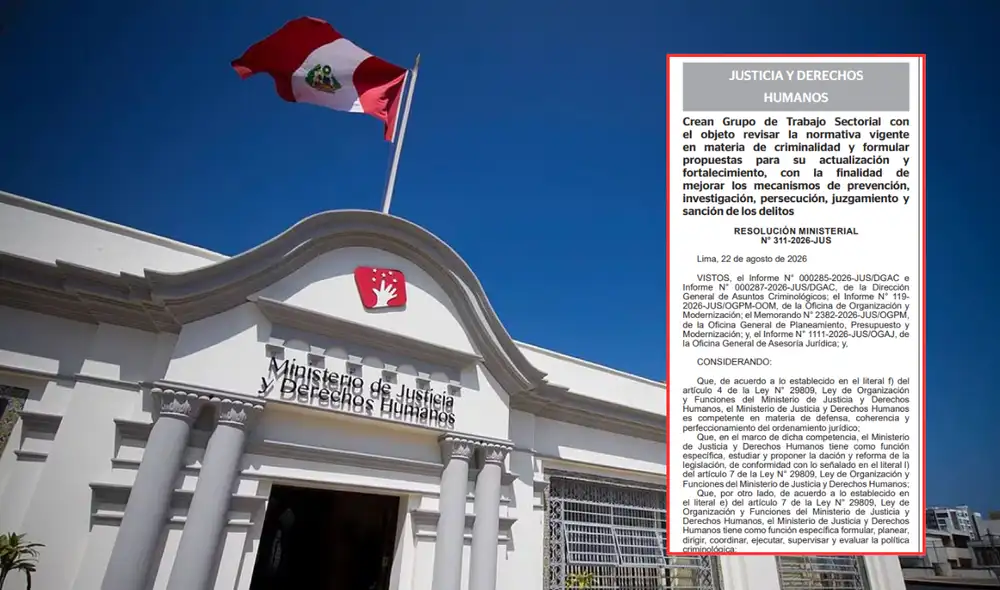
The creation of the special panel was officialised through a ministerial resolution published on Sunday, August 23, in Peru's official legal newspaper, El Peruano. The resolution carries the signature of Justice Minister Ernesto Alvarez Miranda.
The commission is tasked with formulating proposals to strengthen prevention, investigation, prosecution, and sentencing mechanisms for criminal offenses. Its review targets recent legislative changes that affected the justice system, focusing on rules governing statutes of limitation, organized crime, plea bargaining, and asset forfeiture.
Legal background and mandate
The ministry explained that several modifications have been enacted in recent years across criminal law, criminal procedure, and anti-crime measures. Official documentation indicated that these updates affected statutes of limitation, organized crime provisions, effective collaboration plea-bargaining mechanisms, and asset forfeiture legal frameworks.
In Peru, effective collaboration functions as a legal mechanism allowing suspects to provide evidence against criminal networks in exchange for judicial benefits. Asset forfeiture allows the state to confiscate property linked to unlawful activity, while statutes of limitation set fixed time limits for bringing criminal prosecutions.
Four ministry officials have been assigned to lead the review team. Vice Minister of Justice Juan Falconi Galvez heads the panel, alongside Vice Minister of Human Rights Gonzalo Munoz Hernandez, National Penitentiary Institute board president Raul Inga Garay, and Criminological Affairs Director General Edward Vega Rojas. The National Penitentiary Institute is the state body responsible for managing Peru's prison network.
Panel appointments and scrutiny
Questions have been raised regarding the suitability of the working group due to the background of its leader. Less than two weeks prior to this appointment, Falconi was removed from the board of directors of the State Attorney General's Office because Peruvian law prohibits vice ministers from holding board positions in that agency.
Falconi also chaired the government commission that expedited the December 2017 presidential pardon for former President Alberto Fujimori, who governed Peru during the 1990s. Prior to that appointment, Falconi served as legal counsel for Fuerza Popular, the right-wing political party led by Fujimori's daughter, Keiko Fujimori, during the 2016 general election campaign.
Working group members will serve in an unpaid, ad honorem capacity. The panel has been granted the authority to invite external specialists as well as representatives from public and private institutions to participate in its proceedings.
Work plan and next steps
Under its operational directive, the commission must conduct a comprehensive analysis of recent criminal statutory changes, gather contributions from academic institutions and civil society, draft legislative proposals, and submit monthly progress reports to the justice minister.
The General Directorate of Criminological Affairs will serve as the technical secretariat for the working group. Upon completing its work, the secretariat will submit a final report to the justice ministry containing the full legal review, draft bills, and accompanying statements of motives detailing the rationale behind each proposed reform.
The ministerial resolution establishes an initial operational mandate of 30 business days, starting from the date the group is formally established. Formal installation must occur within five business days of the decree's official publication, and the mandate may be extended for equal or shorter terms by subsequent ministerial resolution.


