

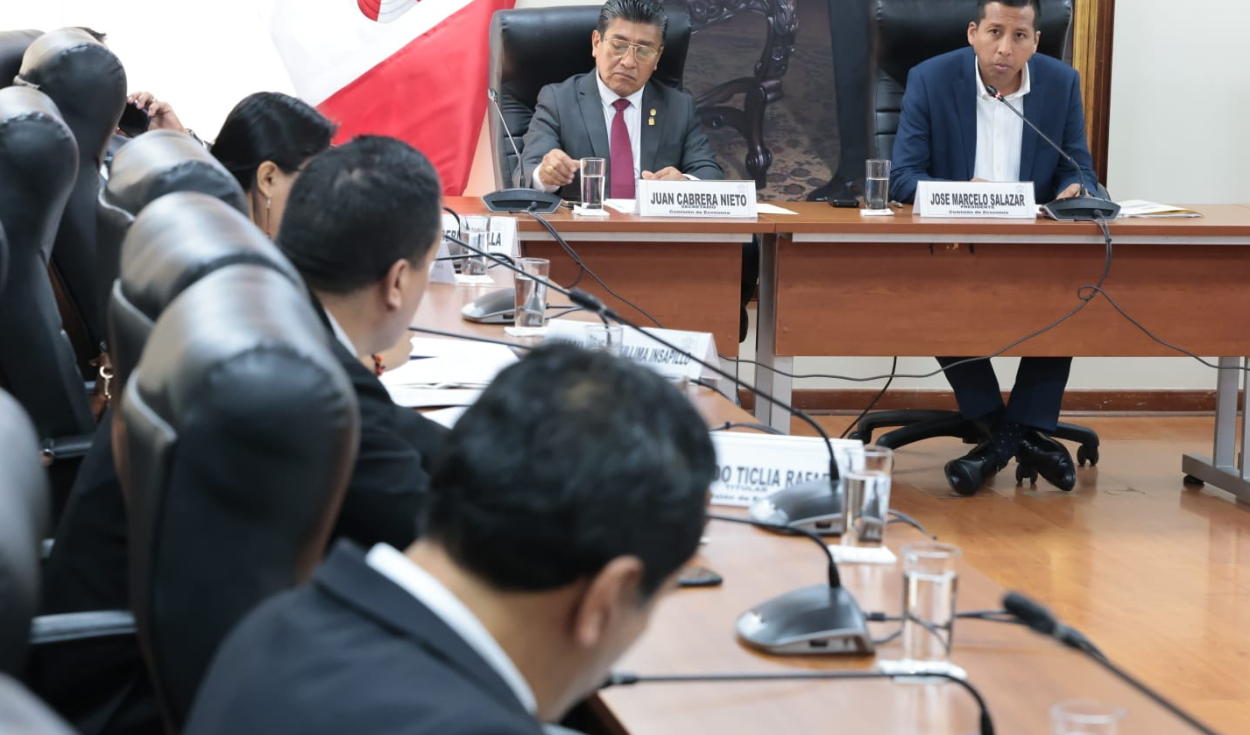
The Economy, Banking, Finance and Financial Intelligence Committee of Peru's Chamber of Deputies has agreed to summon Economy and Finance Minister Elmer Cuba and the superintendent of the National Superintendency of Customs and Tax Administration (Sunat) to explain the scope and possible effects of the government's request for legislative powers on tax matters.
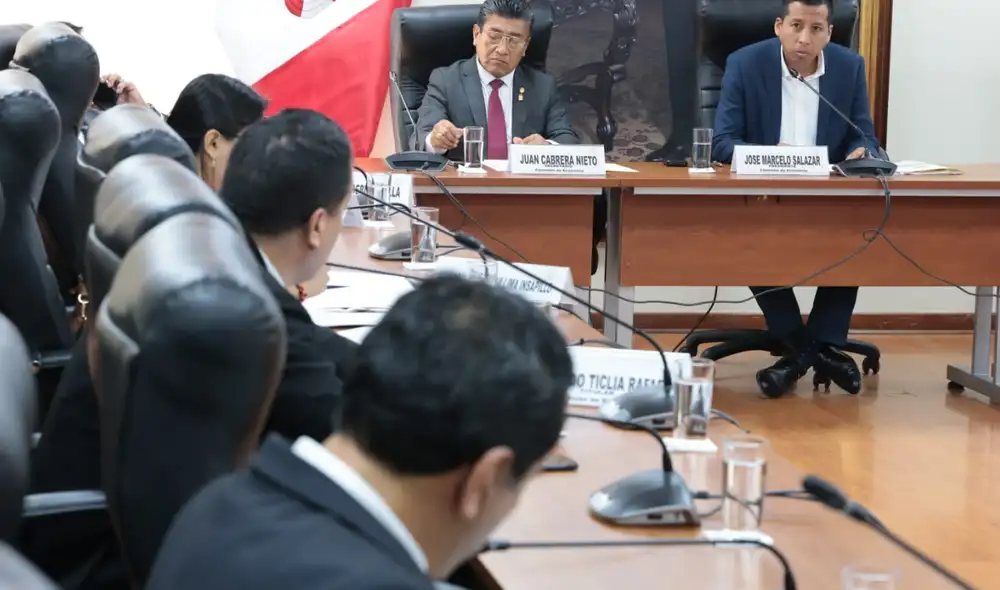
The summons comes as Congress reviews a reform that would change the structure under which companies pay income tax.
The request to call the two officials was made by Deputy Jacqueline Tapullima, who said both authorities must explain the objectives, the measures being planned and the implications of any eventual delegation of powers. Deputy Svieta Fernández backed the proposal, and other committee members also supported having the head of the Ministry of Economy and Finance (MEF) and the Sunat chief appear before Congress.
What must the government explain?
One of the main points that will need clarifying is how the proposed tax reform would actually be applied. The request for powers includes modifying and simplifying business tax regimes and moving toward a single corporate income tax with progressively rising marginal rates. However, the document submitted to Congress does not yet set out the percentages or the income levels for each bracket.
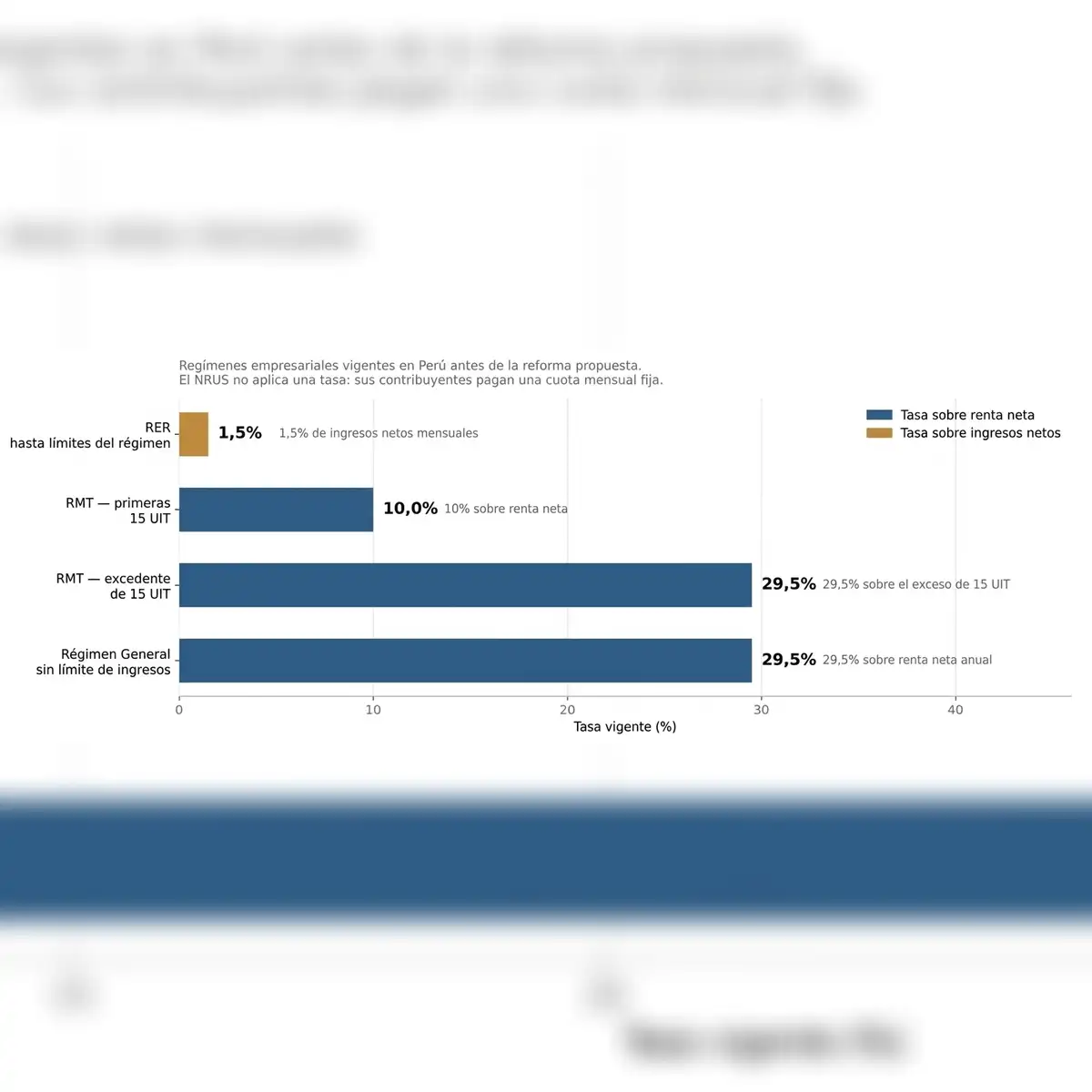
That gap matters because it makes it impossible, for now, to know which companies would end up paying more or less. Peru's current system includes several different regimes for taxpayers, among them the New Simplified Single Regime (NRUS), the Special Income Regime (RER), the MYPE Tax Regime (RMT) and the General Regime.
Under the RMT, a 10% rate currently applies to the first 15 tax units (UIT) of annual net income, and 29.5% on the excess. Under the General Regime, the rate is 29.5% on net income, while the RER uses a monthly quota equal to 1.5% of net revenue. A shift to a single scheme would alter that structure, but its effect will depend on the rates and brackets the executive ultimately sets if it receives the powers.
One of the questions Cuba will need to answer is how the government would prevent a reform presented as a simplification from ending up raising the tax burden on certain businesses, particularly those that currently benefit from differentiated rules.
MYPE and large companies at the center of the debate
Micro and small businesses, known in Peru as MYPE, could be among the sectors watching the government's explanation most closely. The RMT applies to companies with net income of up to 1,700 UIT and currently sets the tax owed based on income earned. The proposal to unify the regimes would change that treatment.
It is still too early to say MYPE will end up paying more. The outcome will depend on how the new scale is built. If the first brackets carry lower rates than today's, some taxpayers could pay less; if the rates are higher, the burden could increase.
Also worth watching is how companies currently taxed under the General Regime would be treated. They now pay 29.5% on annual net income and face no income ceiling to remain in that regime. A system of rising rates could change how the tax burden is distributed among companies with different levels of profitability.
Exemptions and tax benefits also on the table
The discussion in the Economy Committee will not be limited to income tax. While approving its 2026-2027 work plan, deputies proposed explicitly including tax expenditure within the committee's fiscal sustainability focus.
Deputy James Holguín Aguirre also proposed that lawmakers evaluate not only the creation or expansion of tax exemptions and benefits, but also their eventual elimination where appropriate.
The point carries weight because the government's own request for powers contemplates letting the executive establish or modify incentives, exemptions, credits, deductions and other special, temporary tax treatments tied to goals such as formalization, investment, employment and innovation.
Congress will therefore have to weigh two effects at once: how much revenue the new tax scheme could raise, and how much the treasury would forgo because of benefits that are eventually created, modified or kept in place.
Committee focuses on fiscal responsibility
The summons to Cuba and the Sunat chief comes as the Economy Committee sets its priorities for the new parliamentary term. Its work plan lists fiscal sustainability, taxation and fiscal risks as one of five pillars, alongside productivity, formalization, investment and territorial development.
The committee also said it wants its legislative and oversight decisions to be grounded in evidence and to preserve fiscal responsibility and legal certainty. In that context, the appearance of the economy minister and the Sunat chief will let Congress request further detail before ruling on the delegation of powers.
For now, the tax proposal does not by itself change existing rates or eliminate current regimes. The executive is asking Congress to grant the powers for 120 days, and if they are approved, the concrete changes would have to be set out later through legislative decrees.
The debate opening in Congress will therefore center not only on whether the tax system needs simplifying, but on what rules would govern that change, who would end up bearing a greater burden, and what impact it would have on tax collection and formalization.


