

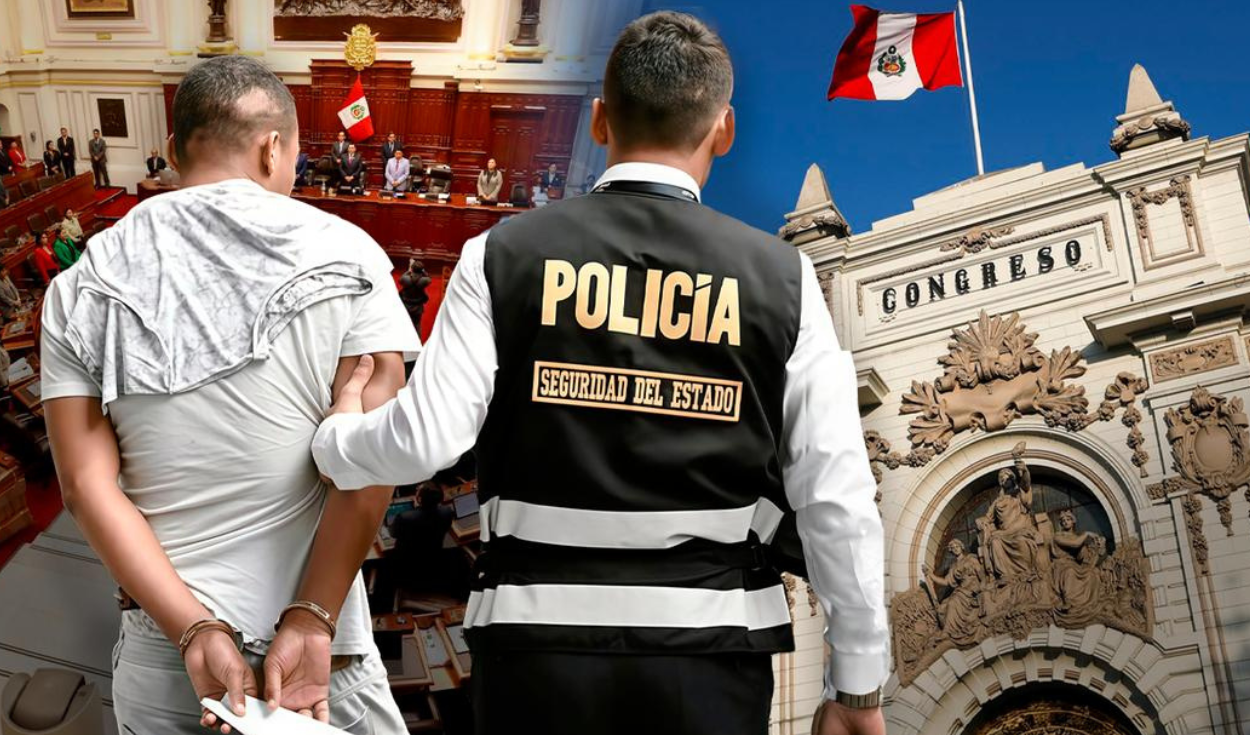
Peru's opposition alliance Consenso por la Democracia has submitted five legislative bills to the congressional Justice Commission aimed at repealing controversial pro-crime laws.
The coalition brings together the political groups Juntos por el Perú, Ahora Nación, Buen Gobierno, and Obras. Members of the alliance aim to strike down multiple penal and investigative measures passed during the previous term of the Congress of the Republic of Peru in Lima.
The proposal forms part of a broader strategy by opposition lawmakers to take control of the key parliamentary committee responsible for reviewing legal and judicial legislation before bills reach the full assembly.
Package of reforms targeting ten laws
The primary legislative proposal was submitted by Deputy César Holguín of the Ahora Nación party. His bill seeks to modify ten laws that were enacted by the previous legislative body.
Among the measures targeted in Holguín's overarching package are several high-profile changes to the penal system. These include the Soto Law, regulations altering the deadlines for effective collaboration plea bargains, rules exempting political parties from specific criminal penalties, and statutes modifying asset forfeiture procedures.
The proposal also addresses police enforcement and investigative rules. It aims to overturn laws that prevent the National Police of Peru from targeting chemical inputs used in illegal mining, regulations requiring a defense lawyer to be present during police search raids, and provisions that modified the legal definition of criminal organization.
In addition, Holguín's bill seeks to reverse measures affecting human rights cases. The proposal targets the Amnesty Law and regulations establishing a statute of limitations for crimes against humanity.
Holguín detailed in the bill that while each of the ten laws regulates a different subject, their combined impact severely undermines criminal justice. He stated that the measures restrict investigative tools, create hurdles in gathering evidence, reduce the recovery of illicit assets, hamper prosecutorial actions by the Public Ministry, and increase the likelihood of impunity.
Military and police immunity law
Holguín submitted a second bill directed specifically at repealing a law enacted through insistence by lawmaker Fernando Rospigliosi. That measure expanded the definition of military duty crimes to ensure that police officers and military personnel are investigated exclusively within military-police jurisdiction rather than civilian criminal courts.
According to Holguín's proposal, the Rospigliosi law was intended to consolidate a civic-military alliance supporting the governments of Dina Boluarte, José Jerí, and José María Balcazar. The bill notes that the legislation was enacted following incidents in which state security forces caused the deaths of protesters between 2023 and 2024.
The submission specifically cited the death of a young man inside a police station in the Manchay district of Lima, as well as the death of an eight-year-old child during a police intervention.
Proposals by Juntos por el Peru
A third initiative was presented by Deputy Catherin Palomino of Juntos por el Perú. Her proposal seeks the repeal of seven laws linked to the criminal justice framework.
Six of the laws identified in Palomino's submission overlap with Holguín's primary bill. However, her proposal includes an additional measure seeking to overturn recent changes made to the statute of limitations for criminal actions.
Separately, Deputy Ernesto Zunini, who serves as the spokesman for Juntos por el Perú in the Chamber of Deputies, introduced two further legislative projects. One proposal focuses specifically on Law 31751 and Law 32104, which regulate the suspension of statute of limitations periods. His second initiative targets legal rules that the opposition argues weaken anti-organized crime efforts and preliminary criminal investigations.
Under Peruvian law, the Public Ministry acts as the independent constitutional body responsible for leading criminal investigations and prosecuting offenses in civilian courts.
Congressional majority and commission leadership
Because of their legal nature, all five preliminary draft bills will first be assigned to the Justice Commission for review and debate before advancing to the plenary floor of the Chamber of Deputies.
In the full assembly, opposition parliamentary groups hold a combined total of 74 seats. This gives the coalition a working majority over the 56 seats held by right-wing parties Fuerza Popular and Renovación Popular, indicating that the bills would have sufficient votes to pass once cleared by committee.
As a result, leadership of the Justice Commission is seen as critical to determining the speed at which the bills reach a floor vote. The commission's leadership bureau is scheduled to be established on Tuesday, August 11, alongside other parliamentary working groups, with the opposition coalition announcing its intention to seek the committee chairmanship.


