

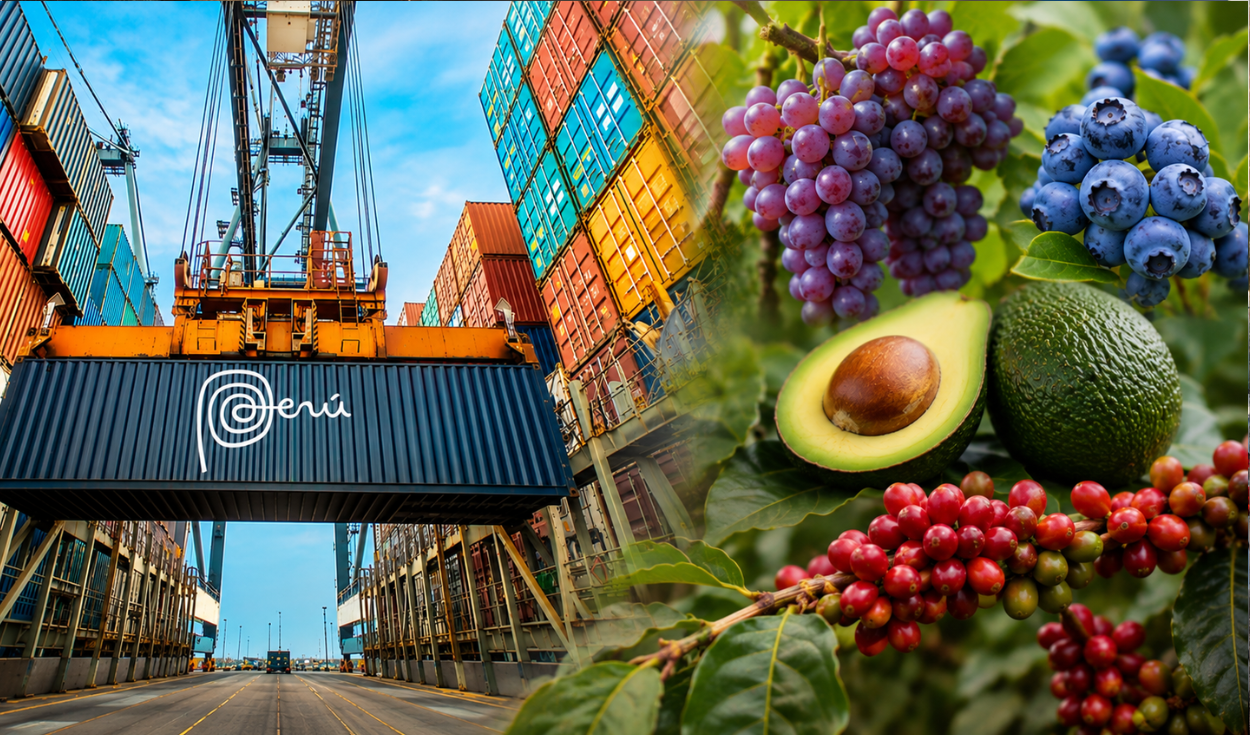
Peruvian regional exports grew 37 percent between January and June 2026 to reach US$46,592 million, according to figures from the Ministry of Foreign Trade and Tourism (Mincetur). Shipments originating from the interior of the country accounted for 86.5 percent of Peru's total exports during the first six months of the year.
The growth was driven by higher international prices for minerals and strong performances from agricultural products, including grapes, blueberries, avocados, and coffee. Export growth varied across regions, with some registering increases above 60 percent while others advanced at a more moderate pace.
A total of 19 regions increased their exports compared to the same period in 2025. Eight regions recorded growth above 50 percent: Huánuco, Pasco, Áncash, Puno, Ica, Arequipa, Junín, and Huancavelica.
Northern regional export performance
In northern Peru, Áncash exported US$4,798.6 million, an increase of 63.3 percent compared to the first half of 2025. Copper was the main product shipped from the region, placing Áncash among the top exporting territories in the country.
La Libertad registered US$3,913.7 million in exports, up 41.2 percent from the previous year, led by shipments of gold, blueberries, and avocados. Cajamarca reported exports of US$2,286.8 million, an increase of 42.9 percent, driven primarily by gold and coffee.
Piura posted a smaller gain of 2.6 percent, with exports reaching US$1,762 million. Mangoes, gold, and ethanol were among the main goods exported from Piura during the period.
Central and southern mining hubs
In the central zone, Ica recorded US$4,964.1 million in exports, representing a 55.6 percent increase. Mining accounted for a major share of Ica's total, alongside key agricultural exports such as grapes, blueberries, and avocados.
Junín exported US$3,320.8 million, up 52.2 percent, supported by shipments of copper and concentrates of silver, lead, and zinc. Pasco reached US$1,484.4 million in exports, a 63.7 percent increase, with gold and alloyed silver among its main products.
Southern mining regions also posted high export values. Arequipa reached US$5,813.3 million, up 54.6 percent from the first half of 2025, with sales concentrated in copper, gold, and concentrates of silver and lead. Puno registered US$5,312.3 million, a 57.5 percent rise led by gold and quinoa.
Moquegua recorded US$3,234 million in exports, a 36.8 percent gain, driven by copper, molybdenum, fishmeal, and fish oil. Cusco exported US$2,607 million, up 20.4 percent, primarily from copper shipments.
Metal prices and eastern export results
Higher international market prices for metals lifted the total value of Peruvian shipments, even in cases where physical volume did not increase proportionally. Data from the Central Reserve Bank of Peru (BCRP) showed that national export growth in the first quarter of 2026 resulted mainly from price increases for traditional products, particularly minerals.
In eastern Peru, Madre de Dios recorded US$170.2 million in exports, up 48.4 percent compared to the first half of 2025. Gold and Amazon nuts were the primary goods shipped from the region.
Other regional export totals showed varied growth rates. Ayacucho exports grew by 25.2 percent, Tumbes by 16.7 percent, Tacna by 13 percent, Apurímac by 8.6 percent, and Lambayeque by 3.5 percent.
Shipping ports and departure points
The growth in regional shipments was reflected across Peru's main departure points between January and June. The port of Callao concentrated US$17,491 million in exports, an increase of 23.3 percent compared to the same period in 2025.
Jorge Chávez International Airport handled US$14,326 million in goods, growing 57.6 percent, while the port of Matarani recorded US$7,025 million, up 31.2 percent. Exports departing from the Chancay Multipurpose Port Terminal reached US$379 million, a 126 percent increase, though its total volume remains below the primary exit points.
The figures illustrate a distinction between production origins and exit routes. While interior regions produce the majority of export goods, port and airport infrastructure determines the transportation paths to international destinations.


