

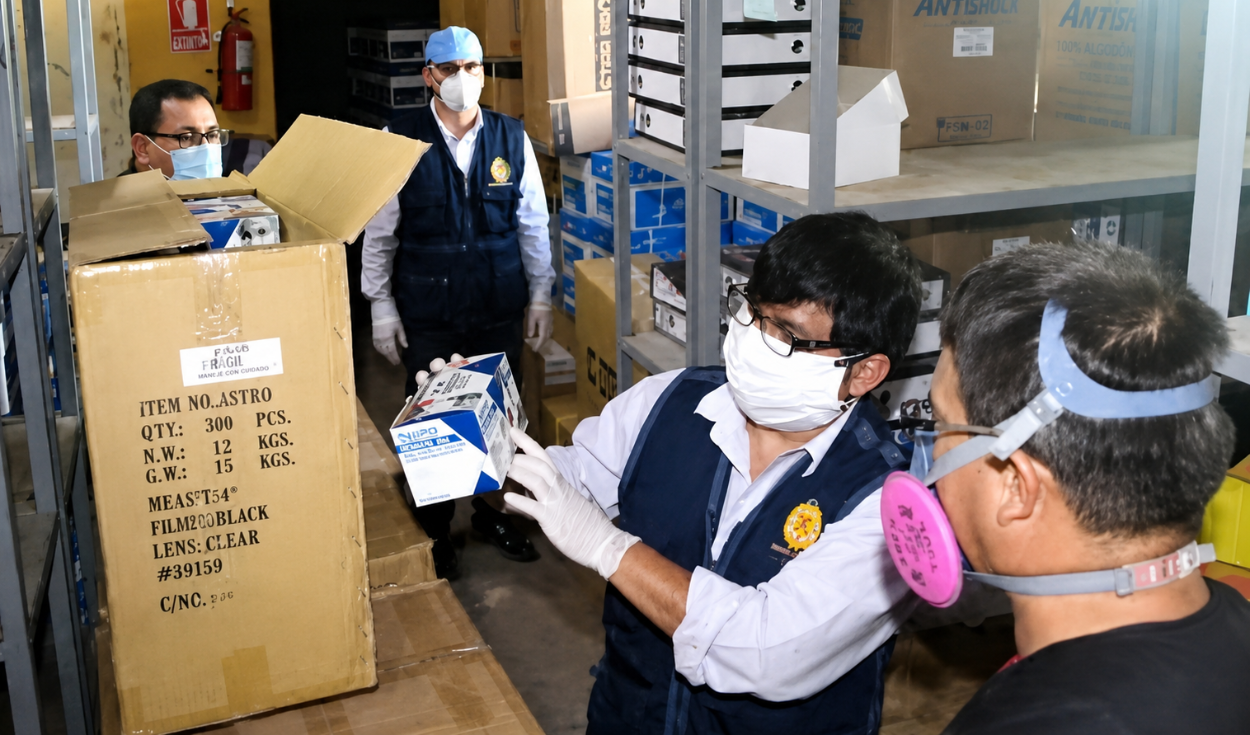
Peruvian police officers in Lambayeque have appealed a fraud conviction after prosecutors relied on an uncertified expert report to allege overpriced Covid-19 supplies.
The Second Criminal Appeals Chamber of Lambayeque will rule on the challenge brought by officers and non-commissioned officers from the Chiclayo Police Territorial Directorate. The officers were prosecuted by the Specialized Prosecutor's Office in Corruption of Officials over health equipment purchases made during the pandemic.
Defense lawyers argued from the start that the financial audit used by prosecutor Jose Guevara Gilarmas was legally invalid because it was authored by William Canario Santa Cruz, an individual who lacked legal authorization to conduct the evaluation.
The appellate chamber reviewing the case consists of judges Guillermo Piscoya, Raul Solano Chambergo, and Edwin Quispe Diaz. Lambayeque is a coastal region in northwestern Peru, with its capital at Chiclayo, where the regional police headquarters is based.
Despite being informed that Canario was not a qualified official, prosecutor Guevara used the expert report to launch a series of law enforcement actions. These included raids on police premises, interventions, and the arrest of the officers involved.
The uncertified audit
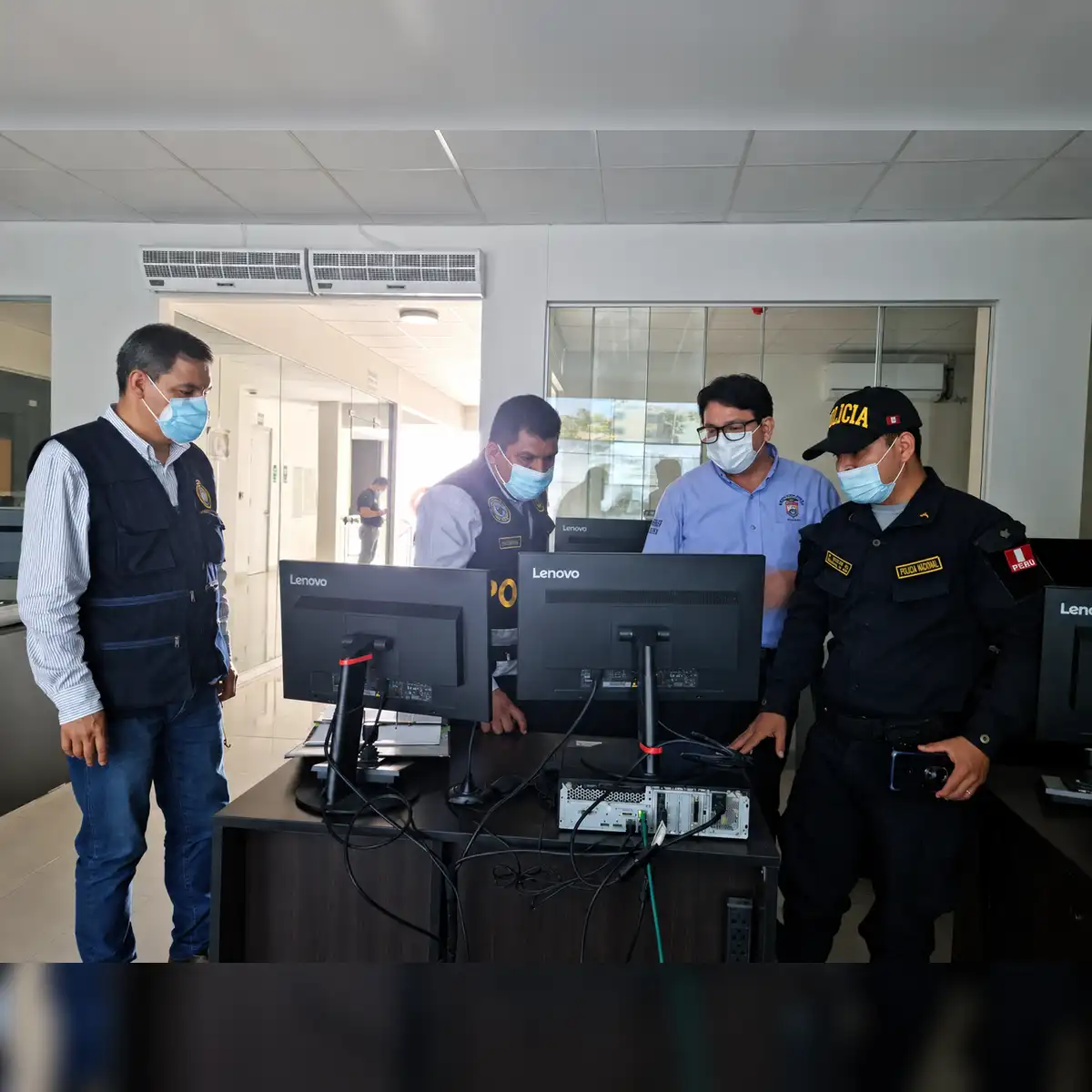
Official records show that prosecutor Guevara recorded participating in an April 28, 2020 proceeding at the Chiclayo police headquarters alongside Canario, whom he identified as an economics expert for the Public Ministry. The Public Ministry serves as Peru's national prosecutorial service.
Canario subsequently signed two technical reports on May 15 and June 3, 2020, as an economics expert for the Accounting and Finance Forensic Team. In those documents, Canario claimed that police purchased bleach, hand sanitizer gel, and face masks at prices more than 62 percent above market value.
The police acquisitions took place between March 18 and April 11, 2020, during an emergency period when nationwide shortages had driven up the cost of essential sanitary items. Canario's analysis, however, gathered price benchmarks from dates after April 11, when market costs had already begun to fall.
To challenge the prosecution, the defense submitted a counter-audit prepared by Yolino Ortega Gonzales, a registered accountant. Ortega demonstrated with documentation that no overpricing had occurred in the purchases.
Ortega revealed that Canario had drawn price comparisons from pharmacies, supermarkets, the online marketplace Mercado Libre, and Makro wholesale stores. State entities in Peru do not have purchasing access to these commercial retail platforms.
Prosecutor Guevara rejected the defense report. Defense lawyers stated that Guevara discarded Ortega's findings to prevent anyone from questioning the underlying basis of the criminal charges against the officers.
Expired contract and court absences
Official documents later confirmed that Canario had no authority to conduct the audit. In October 2021, the Human Potential Administration Office of the Public Ministry issued a written report stating that Canario did not provide services to the Office of Expert Assessments on the dates his reports were issued.
Canario's service contract with the Public Ministry had expired on March 31, 2020, prior to the police headquarters proceedings ordered by prosecutor Guevara. Although the defense repeatedly requested to cross-examine Canario and court summonses were issued, he never appeared for judicial hearings.
On February 12, 2026, almost six years after prosecutor Guevara brought the charges, the Tenth Specialized Single-Person Criminal Court in Corruption of Officials of Lambayeque convicted the police personnel. However, the trial court omitted Canario's audit from its sentencing ruling after acknowledging that he had used erroneous price comparisons to claim overvaluation.
Appeals and trial irregularities
The convicted officers appealed the February 2026 ruling, arguing that the fiscal investigation was marred by multiple procedural flaws that invalidated the case. They emphasized that the trial court itself had dismissed the main expert audit that originally justified the prosecution.
Among those appealing the ruling are retired Commander Marcel Carbajal Tarazona, who was in charge of police procurements, and Non-Commissioned Officer Jean Yampufe Sanchez. Both men served at the Chiclayo Police Territorial Directorate in Lambayeque.
Carbajal and Yampufe stated that prosecutors relied not only on the discredited expert audit but also on irregular investigative measures. These included contested witness statements, audio recordings, and the unsealing of electronic devices.
The defense team added that statements given by suppliers who entered into early termination plea agreements contained significant inconsistencies and contradictions. Under Peruvian criminal law, early termination allows defendants to accept charges in exchange for reduced penalties.


