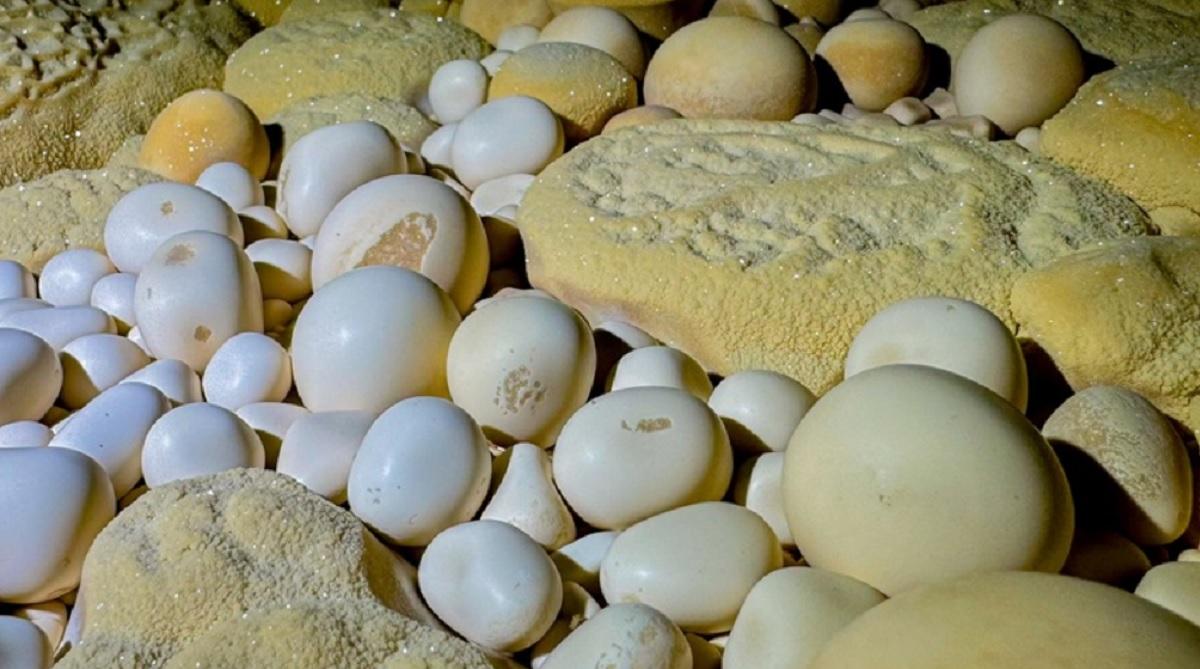
Researchers have discovered a massive cave hidden beneath limestone mountains in Vietnam's Phong Nha-Ke Bang National Park containing rare stone formations known as cave pearls. Ecoticias reported that the perfectly round white formations look like precious gems but formed from water and minerals over a very long time.
The new cavern has been named Thang, or Victory Cave. Its entrance on a limestone mountain top measures only about 16.5 square meters, forcing researchers to descend roughly 20 meters by rope to get inside. Echoes from their voices bounced off the walls for a long time, revealing large underground cavities.
Preliminary data shows the cave has an average width of about 70 meters, with some sections exceeding 100 meters wide. Certain stalactite columns reach approximately 50 meters in height. The cave also holds giant stalagmites, stone drapes, and other mineral structures, leading specialists to name one chamber the stalactite palace.
Formations and discovery of cave pearls
In natural depressions on the cave floor, researchers found a large number of smooth white spheres. Unlike pearls formed inside mollusk shells, cave pearls grow when calcite layers from water deposit around a small nucleus such as a grain of sand, a bone fragment, or another mineral fragment.
Researchers noted that even experienced speleologists rarely see such a high concentration of cave pearls in one location. Scientists have not yet determined the exact age, chemical composition, or time required for these specific pearls to form.
Environmental significance and underground water
The site sits within a karst region where the broader landscape of Phong Nha-Ke Bang and Hin Nam No formed over hundreds of millions of years, creating a vast system of caves and underground watercourses. Layers of stalactites and stalagmites can provide scientists with records of past rainfall, vegetation conditions, and climate change.
Explorers also discovered several large limestone water bodies inside Victory Cave. They hypothesize that the underground system might connect to nearby Lake Ma Da, though this connection remains unverified. The main value of the discovery is the opportunity to explore a unique underground ecosystem and geological processes spanning thousands of years.